Return to BEarth Academy: High School Edition: HERE
Conceptual Academy Science Classes
Conceptual Academy is a complete learning platform created and maintained by the authors of the “conceptual” line of science textbooks, including Conceptual Physics, Conceptual Chemistry, Conceptual Physical Science, and Conceptual Integrated Science, both college and high school editions. This system hosts hundreds of the author’s video lessons. The video lessons provide the context students need to understand the paragraphs of the textbook. This is to say: Conceptual Academy and the textbook make for a perfect complement. The textbook is where students can read. Conceptual Academy is where they can watch and listen. You can think of Conceptual Academy as the “video textbook” created by the authors of the printed textbook. But there’s much more . . .
In addition to the Conceptual Academy library of videos and textbooks, students will find study advice from the authors, worksheets, interactive simulations, chapter summaries, unit exams, podcasts, automated quizzes, an encouragement-based homework system, a grade book that tracks points, and lab activities through an innovative Course Guide Book.
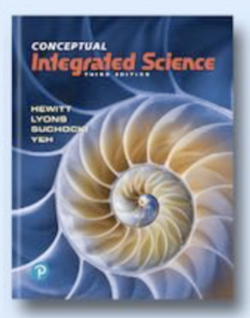
9th Grade Integrated Science: Physics and Chemistry
Physics, Chemistry, Biology, Earth Science, and Astronomy. Fold these branches of science together and the result we call Integrated Science. The breadth of integrated science is made manageable through the use of Unifying Concepts— those big ideas that cut across all the sciences and unite them as one body of knowledge about the world. This year we will focus on the first part of the text book – physics and chemistry.
This, in turn, helps us to understand the workings of our natural environment. How does water move up a tree? (Biology and Physics) How do stars shine? (Physics and Astronomy) Why do we have beaches? (Chemistry and Earth Science) Conceptual Integrated Science relates the big ideas of science to everyday life, and is presented in a friendly, personal—and sometimes humorous voice.
Table of Contents
Chapter 1: About Science
Chapter 2: Describing Motion
Chapter 3: Newton’s Laws of Motion
Chapter 4: Momentum and Energy
Chapter 5: Gravity
Chapter 6: Heat
Chapter 7: Electricity and Magnetism
Chapter 8: Waves—Sound and Light
Chapter 9: Atoms and the Periodic Table
Chapter 10: The Atomic Nucleus
Chapter 11: Investigating Matter
Chapter 12: Chemical Bonds and Mixtures
Chapter 13: Chemical Reactions
Chapter 14: Organic Compounds
10th Grade Integrated Science: Biology/Earth Science/Astronomy
Physics, Chemistry, Biology, Earth Science, and Astronomy. Fold these branches of science together and the result we call Integrated Science. The breadth of integrated science is made manageable through the use of Unifying Concepts— those big ideas that cut across all the sciences and unite them as one body of knowledge about the world. This year we will focus on the first part of the text book – physics and chemistry. This year we will focus on the second half of the textbook covering biology, earth science, and astronomy.
This, in turn, helps us to understand the workings of our natural environment. How does water move up a tree? (Biology and Physics) How do stars shine? (Physics and Astronomy) Why do we have beaches? (Chemistry and Earth Science) Conceptual Integrated Science relates the big ideas of science to everyday life, and is presented in a friendly, personal—and sometimes humorous voice.
Table of Contents
Chapter 15: The Basic Unit of Life—The Cell
Chapter 16: Genetics
Chapter 17: The Evolution of Life
Chapter 18: Diversity of Life on Earth
Chapter 19: Control and Development
Chapter 20: Care and Maintenance
Chapter 21: Ecology
Chapter 22: Plate Tectonics
Chapter 23: Rocks and Minerals
Chapter 24: Land and Water
Chapter 25: Surface Processes
Chapter 26: Weather
Chapter 27: Environmental Geology
Chapter 28: The Solar System
Chapter 29: The Universe
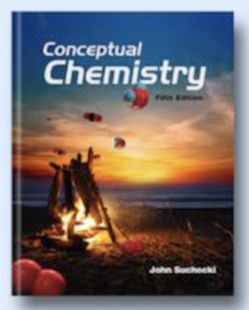 11th Grade Science: Advanced Chemistry
Conceptual Chemistry builds a conceptual base from which students may view nature more perceptively by helping them visualize the behavior of atoms and molecules and showing them how this behavior gives rise to our macroscopic environment. Numerical problem-solving skills and memorization are not stressed. Instead, chemistry concepts are developed in a storytelling fashion, with the frequent use of analogies and tightly integrated illustrations. Questions are designed to challenge students’ understanding of concepts and their ability to synthesize and articulate conclusions.
Table of Contents
Chapter 1: About Science
Chapter 2: Particles of Matter
Chapter 3: Elements of Chemistry
Chapter 4: Subatomic Particles
Chapter 5: The Atomic Nucleus
Chapter 6: How Atoms Bond
Chapter 7: How Molecules Mix
Chapter 8: How Water Behaves
Chapter 9: How Chemicals React
Chapter 10: Acids and Bases
Chapter 11: Oxidations and Reductions
Chapter 12: Organic Compounds
Chapter 13: Nutrients of Life
Chapter 14: Medicinal Chemistry
Chapter 15: Optimizing Food Production
Chapter 16: Water and Air Resources
Chapter 17: Capturing Energy
12th Grade Science: Advanced Chemistry
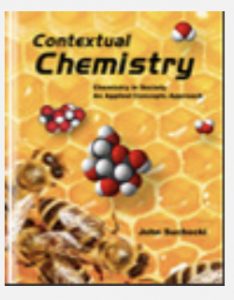
Contextual Chemistry, produced by Conceptual Academy, is the video version of Chemistry in Context, a project of the American Chemical Society. It is also an abbreviated and re-structured revision of its older sister, Conceptual Chemistry, which is a successful concept-oriented textbook designed for liberal arts college chemistry courses. Within Contextual Chemistry select key concepts are developed in a clear step-wise fashion with an emphasis given to the societal and environmental applications of those key concepts.
Table of Contents
Chapter 1: What’s Up with the Air?
Chapter 2: A Blown Zone in the Ozone
Chapter 3: Global Climate Change
Chapter 4: Energy Resources
Chapter 5: The Chemistry of Water
Chapter 6: Acid Rain, Basic Oceans
Chapter 7: Nuclear Energy
Chapter 8: Transferring Electrons
Chapter 9: Polymers and Plastics
Chapter 10: Medicinal Chemistry
Chapter 11: Nutrients of Life
Chapter 12: Molecular Genetics