
Copyright Alan Whitehead & Earthschooling: No Part of this book, post, URL, or book excerpt may be shared with anyone who has not paid for these materials.
Alan speaks in a very symbolic and esoteric manner in some parts of his books. Although they can be read anthroposophically, passages speaking of Atlantis, archangels, gods, etc. do not need to be taken literarily to be meaningful. The more you read, the more you will realize he uses many different religions to express ideas in a symbolic manner and not in a religious manner. His writings are not religious. In some places his writings are meant to refer to religious events in a historical way. In some places he is using religious figures (from Christianity, Judaism, Islam, Buddhism, Hinduism, Paganism, Ancient Roman and Greek Religions, etc.) in a symbolic manner. However, at no point is he promoting a specific religion or speaking from a religious point of view.
I have kept the writing as close to one-hundred percent original so you will also find that he speaks of Australia often and some spelling or manners of speaking may be cultural. Any words I have changed are presented like this: <word>.
Also keep in mind that these books are written by a Waldorf teacher with decades of experience who also studied with a Steiner student himself, so he speaks to an audience that is dedicating their lives to the Waldorf method without exception.
Because of this, all of his views are not reflected in the Earthschooling curriculum and not all of them may be ones you want to embrace or are able to use. In all of Alan Whitehead’s writings the opinions are his own and may not align with Earthschooling or Waldorf Books. In some cases, we will be updating some of these chapters in the future with additional and/or updated information.
Ultimately, however, as I read through these passages I find I can distill wisdom from even those paragraphs that do not resonate with me.
We invite you to read with an open mind and heart and with eagerness to learn and discuss…
Mystic Power of Asian Animal Images
Extracts from a lecture presented by the author at Lorien
Novalis School’s Seminar of the Orient, January 1983
All photos by the author.
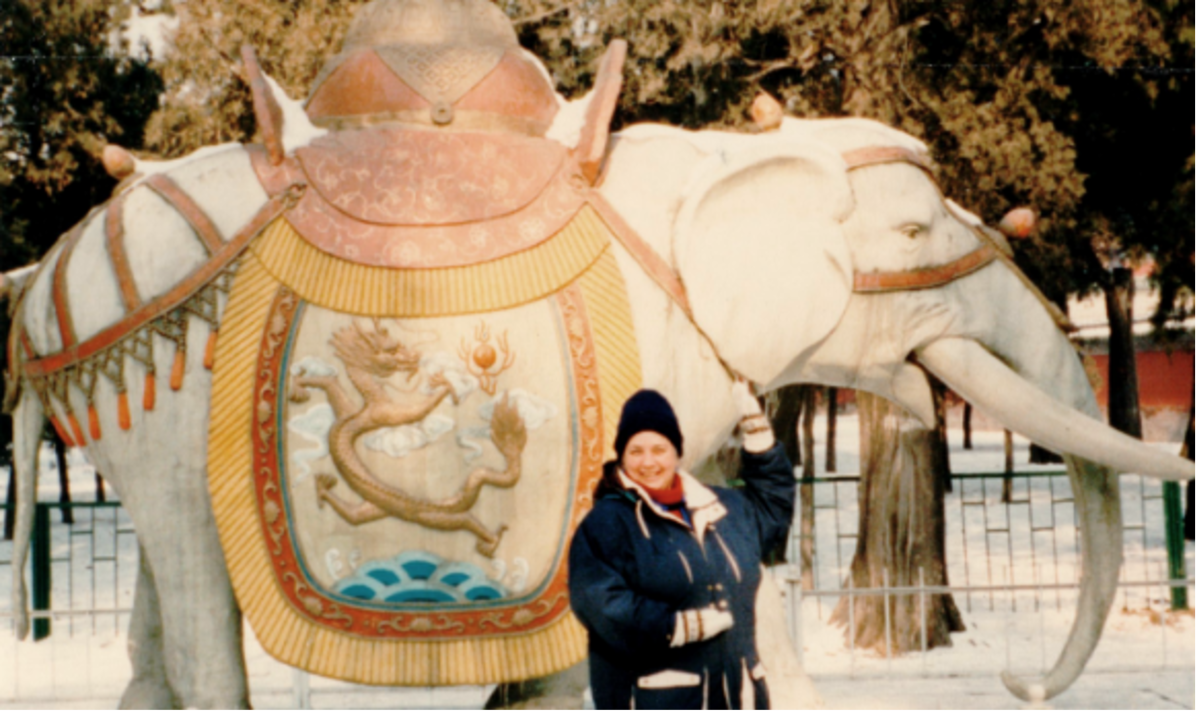
THE ELEPHANT China Shiva, Lord of the Dance, once conquered an elephant demon by making him dance. However, most elephant divinities in the east are certainly not demons, rather being exalted as few other animals. In Buddhism the elephant is a symbol of the seventh of the 8-fold Path, that of the Moon. This is, aptly, right Memory; or in its higher sense, Right Imagination; elephants of course being renowned for their uncanny memory. One cosmic pachyderm was named Iravat, meaning “from water”; the Moon being the astral-water planet. Iravat was present at the great Churning of the Waters of Creation.
THE CRANE (China) This holy avian is a manifestation of timelessness or longevity. Being a specifically Saturn expression, it is common in association with birth and death – “from womb to tomb”. The crane represents the invisible “wings of the soul”, the I was, I am, and I will be. In the Tao, for the individual to become immortal is to be transformed into a mystical feathered being, most often a crane. The equivalent in Egypt was the Ka bird.

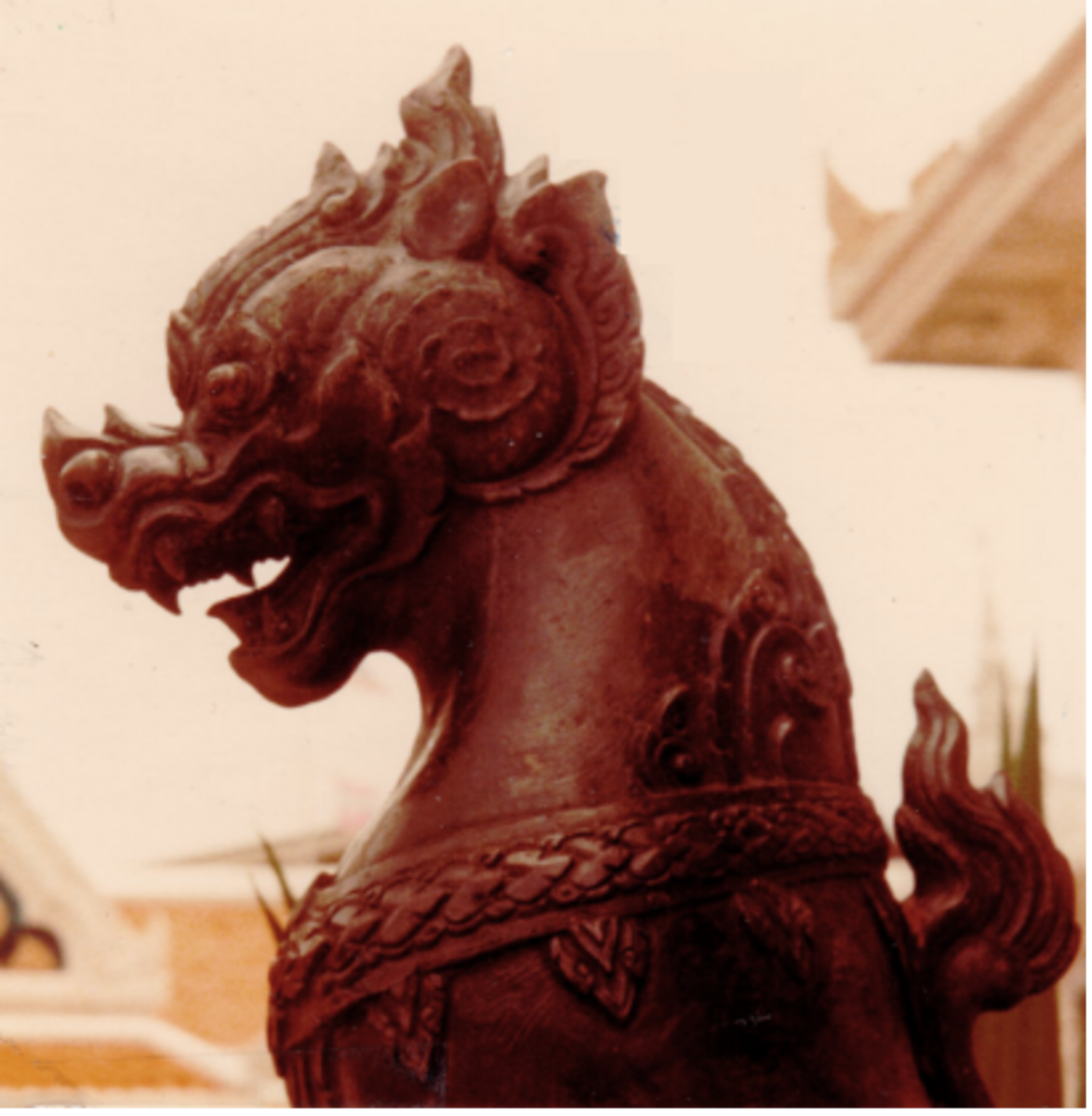
THE DOG (Thailand) As in the West, the cosmic dog is most often a guardian figure, both loyal and fierce in defense of the sacred. We see, this in Akela, of the Mowgli stories, representing the sixth Path, right conduct. (See details of the Asian Animal 8-fold Path in my book The People Pool) The downside of the dog, is as a companion of spiritual despair. This is a clue to the animal’s Ahrimanic nature. However, only its more esteemed soul forces, like loyalty, are called into the presence of the Highest; and even then just to sit snarling outside the gates. In Japan these fearsome guardians are known as Kokuryo.
THE HORSE (Japan) The noble equine has forever been a symbol of the four-fold (four-footed?) incarnation of the Ego; whether of the world or man. The horse especially embodies intelligence; if winged, then cosmicintelligence. Kalki, the winged, white horse of India represents the fifth Path, that of Right Vocation. The pentagram in the 16-petal lotus on the saddle is a cryptogram of the Individual’s attainment of the Mars chakra; Shinto being the archetypal Mars – Samurai – religion. In Japan, the heavenly horse is one of the Classic Kami, or deified nature spirits.
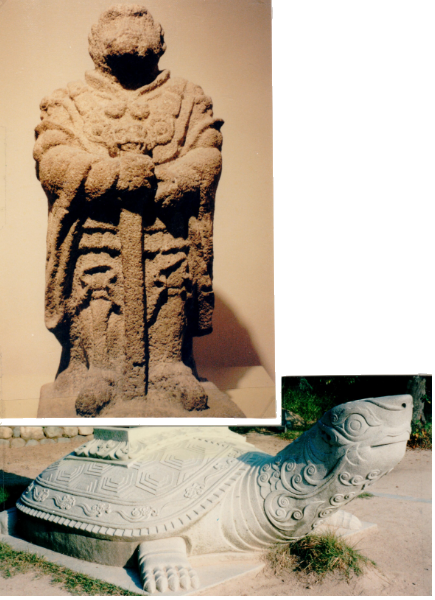
THE MONKEY (Korea) Actually, this sculpture is of a monkey-headed man (a man-bodied monkey?). This is one of the twelve sacred signs of the Oriental Zodiac, that relating to Sagittarius. In fact, both the East and West “animal circles” incarnated into human culture at about the same time, the Taurean Egyptian-Han civilization (2907 – 747BC) (See details in my book Sacred Places) The Egyptian zodiac spirits were also animal-headed men. The “quality” Rudolf Steiner ascribes to this sign is resolve, seen in the stare and stature of this grave Hanuman figures. The nominated “sense” is taste; monkeys being the most fastidious gourmands of all higher vertebrates. The monkey is the Jupiter or second 8-fold Path animal; this planet living in the House of the Archer.
THE TORTOISE (Korea) This stolid creature is usually a symbol of the earth itself, in some way or another; both the material manifestation and the cosmic principles that support it. The ancient East envisaged the world resting on the back of a giant cosmic tortoise. These holy animals were often sculpted in stone to represent the earth, silver for the air-water atmosphere, and gold for heaven. A tortoise was also one of the Ten Avatars of Vishnu. Spiritual Science sees the tortoise as belonging to the very first animal Order (reptilia) to inhabit, and more importantly incubate its eggs, on dry land; in the Mars-Permian Age actually (see Chapter 3).
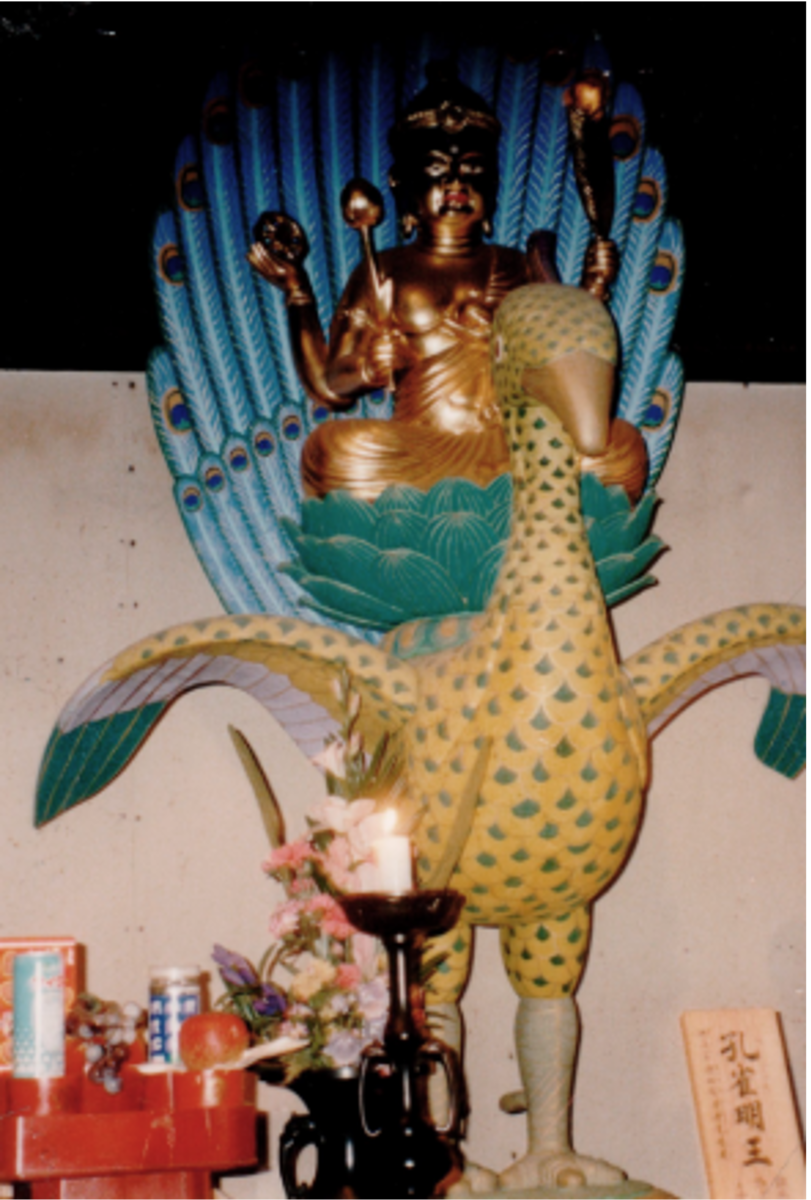
THE PEACOCK (Japan) Often expressed as a Phoenix, this bird is the many-eyed bearer of metaphysical messages, or Revelation, to earth. Birds in general are symbols of the Sun, with its role as spirit inspirer. In ancient alchemy, the “Vison of the Peacock Tail” was of such sublime beauty that long discipline has to be undertaken before one could endure its splendor. The peacock delivers to earth impulses for man’s higher life; an on the return journey takes back what is deemed worthy of the gods from his humble aspirations The Buddha figure astride the bird hold aloft a peacock feather, “a divine thought”, as Rudolf Steiner informs us. The great god-bearing Garuda is the South-east Asian equivalent of the peacock.
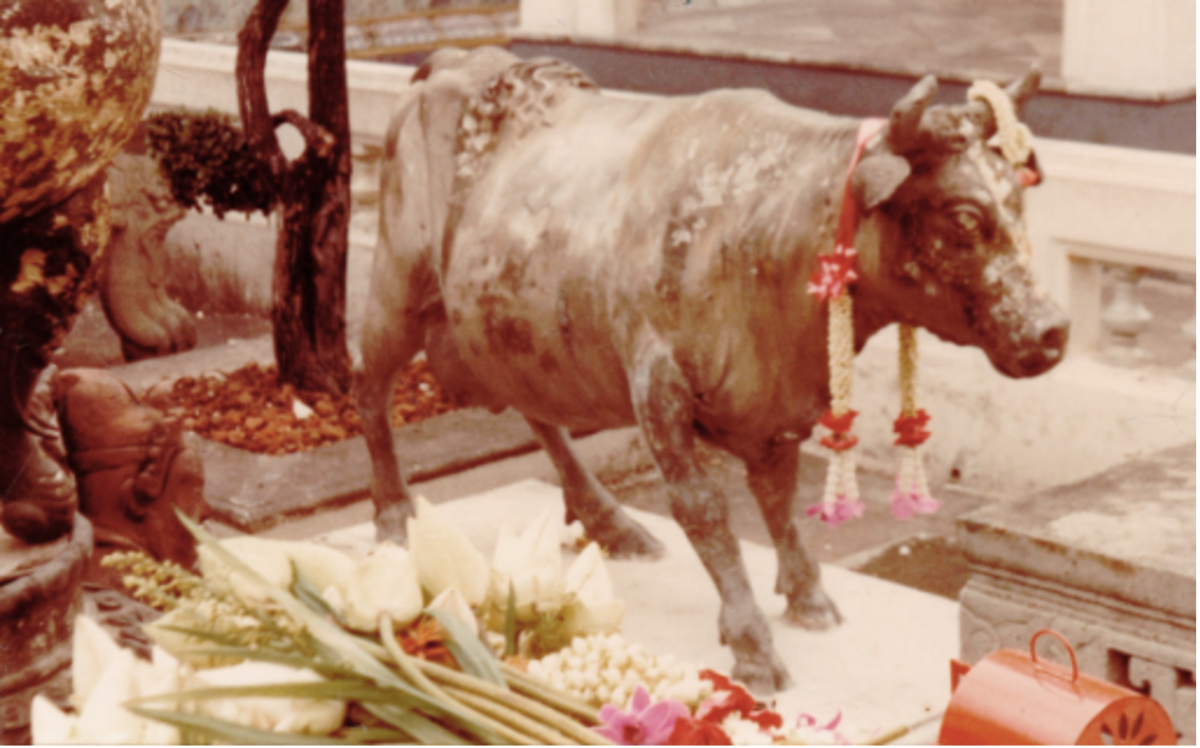
THE COW (Thailand) The cow is sacred to Brahma, the Father-Creator principle. This humble version, bestrewn with gifts and flowers, is seemingly indifferent to its ardent devotees. This is not only a familiar bovine trait, but one of its heavenly counterparts as well, it would seem. In anthroposophical symbology, the cow is the faunal representative of the astral or soul body. Steiner informs us that cows live in sweet astral dreams as they stand around chewing their cud! The symbol of world astrality is the crescent, seen here in the animal’s half-moon horns. Cow horns are of course utilized in biodynamic farming for the enrichment – indeed “ensouling” – of the soil. In most countries in the East, the idea of eating a cow is sacrilege; tantamount to devouring the Holy One! However, bulls were routinely sacrificed to Indra, the Bull of Heaven, chief of the Vedic gods. The Sakti Cow is an image of female creative energy, similar to Hathor the Moon Cow in Egypt.
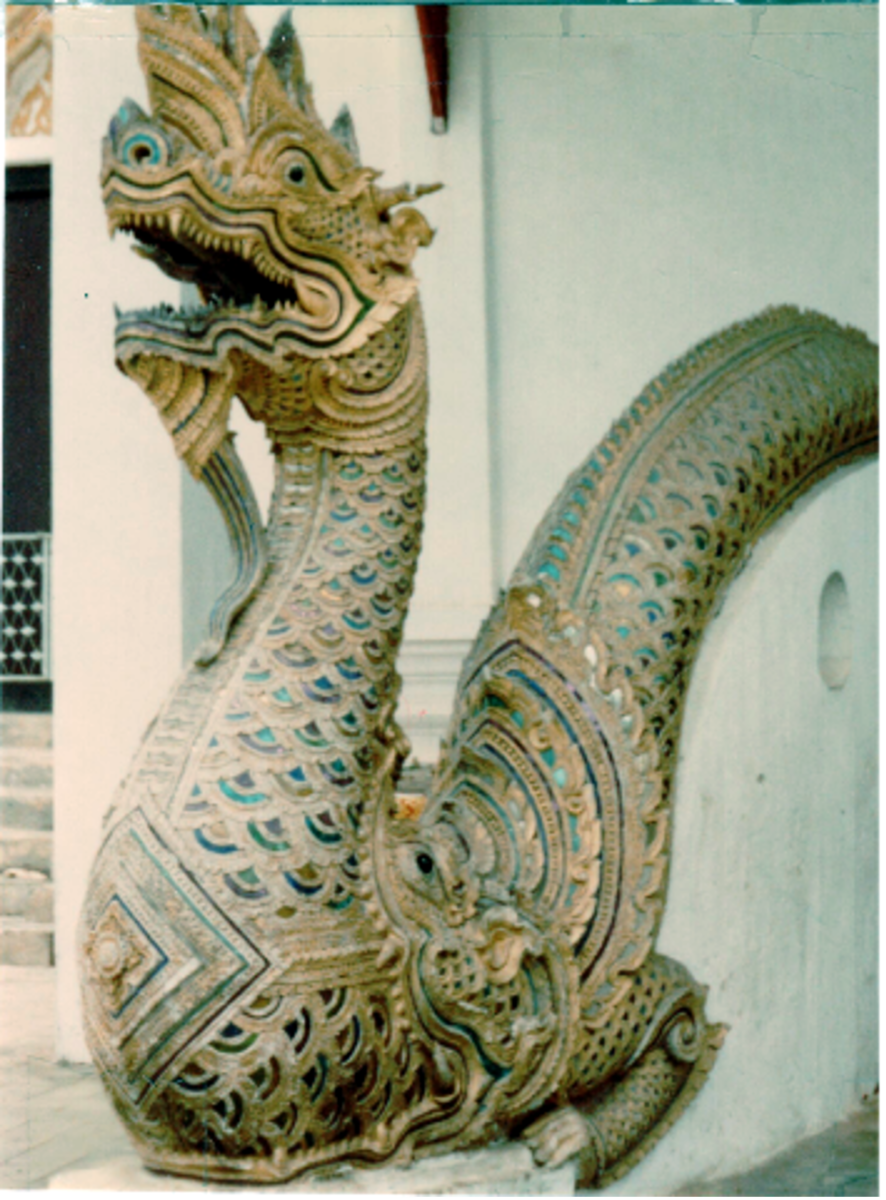
THE SERPENT (Thailand) Often represented as a dragon, this mighty Creation Being is revered in the East, representing, as it does, a bridge between heaven and earth. One of its missions is that of healing. Its presence is also required for the activation of positive feng shui (wind-water). Both these (etheric-astral in the same order) environmental influences move in serpentine – “vrill” – pathways. This is so whether in macrocosmic whole-earth geography, or the healthy functioning of our own bodies, such as the spinal Kundalini serpent. How like the Australian aboriginal Rainbow Serpent is this bejeweled beauty in Bangkok! The Japanese Zinja, after a three-day water coffin ‘death’ initiation, would hopefully experience the highest vision to which one could attain, the riding of a flying white dragon.
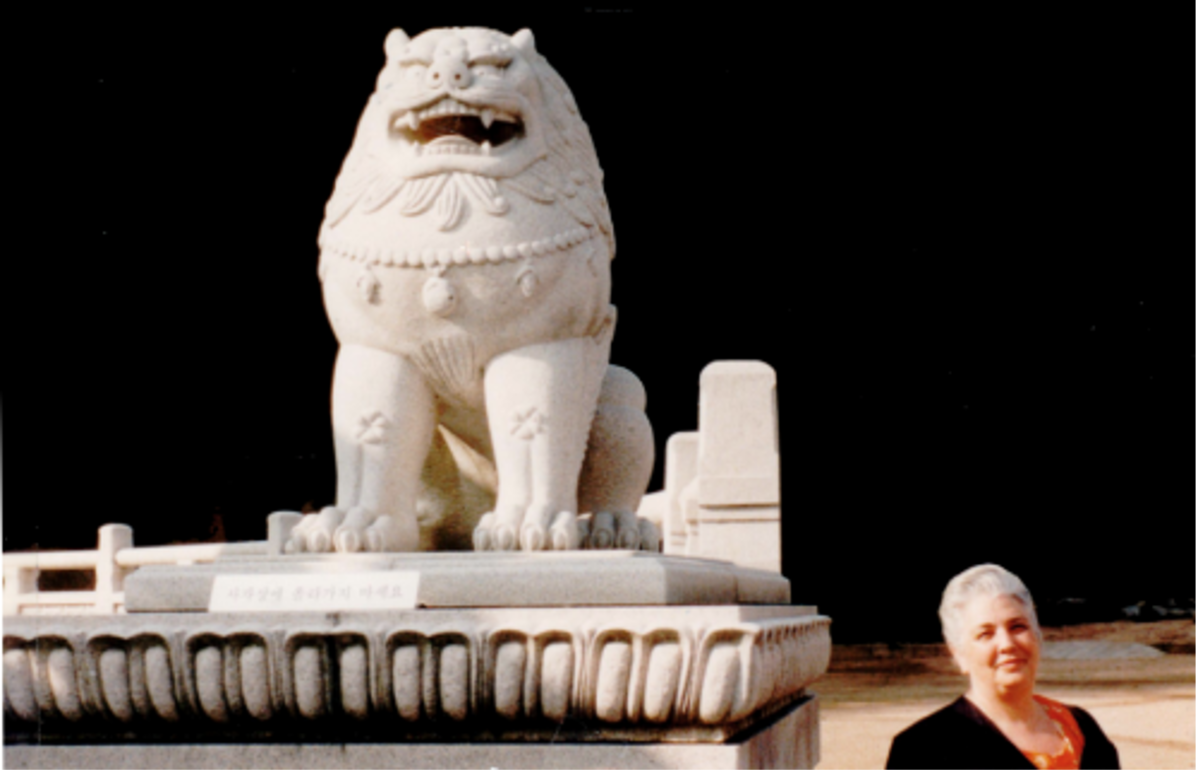
THE LION (Korea) Old Leo is almost always a symbol of the etheric body. These ‘life’ principles are especially dominant in Asia, this being, of the Seven Terra Brothers, the Life Spirit continent; Buddhi being “fully transformed etheric body” as it is. India in particular venerates the lion, being the civilization that incarnated the etheric body into human culture. Hence their famous Trimurti (“three forms”), that of three lions sitting in eternal regency over the subcontinent. The lion is also the emblem of the very heart of Asia, Singapore (“lion City”). The eminent Chinese philosopher Fa-tsang’s famous golden Lion (gold or yellow is the color of the ether body) describes this higher Life principle as one in which, as a Chaos Theory, each particle expresses the whole – an expression of cosmic unity.
FROM: Sacred Fauna: Zoology in Light of Steiner’s Spiritual Science
Four Kingdoms Companion volume to: Sacred Places Minerals & Land; Sacred Fauna Botany; Sacred Faces A Study of Man
Important Earthschooling Notes
Copyright Alan Whitehead & Earthschooling: No Part of this book, post, URL, or book excerpt may be shared with anyone who has not paid for these materials.
Alan speaks in a very symbolic and esoteric manner in some parts of his books. Although they can be read anthroposophically, passages speaking of Atlantis, archangels, gods, etc. do not need to be taken literarily to be meaningful. The more you read, the more you will realize he uses many different religions to express ideas in a symbolic manner and not in a religious manner. His writings are not religious. In some places his writings are meant to refer to religious events in a historical way. In some places he is using religious figures (from Christianity, Judaism, Islam, Buddhism, Hinduism, Paganism, Ancient Roman and Greek Religions, etc.) in a symbolic manner. However, at no point is he promoting a specific religion or speaking from a religious point of view.
I have kept the writing as close to one-hundred percent original so you will also find that he speaks of Australia often and some spelling or manners of speaking may be cultural. Any words I have changed are presented like this: <word>.
Also keep in mind that these books are written by a Waldorf teacher with decades of experience who also studied with a Steiner student himself, so he speaks to an audience that is dedicating their lives to the Waldorf method without exception.
Because of this, all of his views are not reflected in the Earthschooling curriculum and not all of them may be ones you want to embrace or are able to use. In all of Alan Whitehead’s writings the opinions are his own and may not align with Earthschooling or Waldorf Books. In some cases, we will be updating some of these chapters in the future with additional and/or updated information.
Ultimately, however, as I read through these passages I find I can distill wisdom from even those paragraphs that do not resonate with me.
We invite you to read with an open mind and heart and with eagerness to learn and discuss.
END NOTE
Alan has presented dialogue in his writings in an expressive form, where he tries to capture the accent of the person he was with to give his writing more authenticity and to allow the reader to “be with him” in his experience. In no place in his writings is he using expressive language to make fun of or demean the speaker. So, as a person with a linguistics and anthropology degree I find this enriching and informative to me as the reader. Thus, we have made the decision to leave all expressive writing in its original form.








Leave a Reply
You must be logged in to post a comment.