
TALE OF TWO HIGH SCHOOLS
Reflections of a Steiner High School Founder and Teacher
On the 16th July 2002, your author was interviewed by Ms. Glennis Mowday for her Master of Education thesis on Glenaeon Rudolf Steiner School, of which I was privileged to be one of the founding teachers of the high school. I was also the principle founder of the second Steiner school and (non-exam) high school in Australia, Lorien Novalis. Following is an edited transcript.
Glennis Mowday Just to start off then, if I could ask you when and where you were born so we can just get that on the record, that’d be great.
Alan Whitehead I was born in Crown Street Women’s Hospital, Sydney July 11 , 1941 , the day, incidentally, that eurythmy arrived in Australia, via Alice Crowther, who returned on that very day to establish her Sydney Studios, I’m always proud of that fact for some reason. I was of simple
working class origins. My father was a carpenter. And I was sent to normal state school in which I was neither distinguished, nor did I like it at all.
GM: How and when did you first become associated with anthroposophy?
AW: I was studying art at East Sydney Tech College. I had an artistic tendency that went against the grain of my normal conservative state school education. So when I left school – in disgrace! – at 16 I went to Sydney, from the country, where we’d moved earlier.
GM: Which part of the country?
AW: Coffs Harbor. Anyway, I was coming home from Art School with my painting folio. I was hitchhiking. In those days young people hitchhiked everywhere. It was safe. The question just simply didn’t arise. No-one ever said are you afraid, like today. I was picked up by Dennis Glenny, who
lived in Palm Beach. He took me home to Avalon, and we began a discussion about the arts, because he saw that I was an art student. He asked me if I was interested in drama. I said yes, I’d been in school plays. In fact this was almost the only area in my schooling in which I excelled; in none of the traditional subjects did I shine. He invited me to a small drama group in Newport, and that’s where the Steiner approach to theatre was revealed to me. I just went from there. Rudolf Steiner’s Spiritual Science seemed to me the most natural thing in the world. You know how other people have a struggle with their previous prejudices and programming. To me it was the most simple thing. Spiritual science? Yes! Rudolf Steiner said that you can demonstrate the existence of the spirit
through a scientific approach. I just simply said, ‘Of course. It’s obvious.’
GM: You didn’t have a religious …
AW: I had a normal Protestant upbringing, Sunday School, nothing special. There was certainly no feverish pursuit of religion in my family.
GM: No indoctrination in any area or dogmatism.
AW: No. A normal 1950’s childhood. But I’ve often mused on how easy anthroposophy came to me. There was no internal struggle to me at all, because it came through the vehicle of the arts. And any spiritual movement that fostered the arts to me must be valid. So from then on I joined other groups, met other people, joined study groups; eventually teacher training groups, and then I worked at Glenaeon. So it was a lovely ordained path and I enjoyed it very much and I’m very privileged and grateful for it.
GM: So you went to the drama group with Dennis Glenny, and so did you join the Anthroposophical. Society fairly early?
AW: No, always just membership of groups.
GM: So, who do you remember in the group? Alice Crowther?
AW: I did speech with Alice Crowther at Roseville. We used to go to meetings at Dalcross, where Bob Williams would give courses – Kyra Pohl from lnala would give lectures, and so would Dr Pohl. It was that group of very esteemed people in the early ’60s who were my teachers, and not least,
Sylvia Brose. She was a most impressive person to meet, and to listen to, so erudite, wonderful. Again no problem; I didn’t go to a lecture and sit there gnawing my nails arguing with myself about the rightness or wrongness of what they were speaking. It was patently true to me. It was so easy for me.
GM: So you were 19 when you met Dennis. And you finished art school?
AW: No, I didn’t. I got swept up in the drama world. I joined the Independent Theatre in North Sydney. Of course I had a day job, in an advertising agency as assistant art director, so I was very busy. I was on a different path, though still involved in the arts commercially and professionally for another 10 years – in both advertising agencies and art studios. But the art school course didn’t offer me much, it was a very dusty old antiquated thing, it didn’t have much relevance for my occupational needs, so I just did two years and left. Hence I am the most unqualified person you could meet!
GM: On the traditional sort of thing!
AW: Certainly am.
GM: And teacher training – what was that like and where did it happen?
AW: With these groups, I consider that to be teacher training. A lot of it was at Glenaeon and Dalcross.
GM: Well let’s put on the record that you were the first Steiner teacher trained in Australia.
AW: Yes. They took me on seriously as a student teacher because all the others either were trained overseas, like Ms. Brose in Edinburgh; or they came from overseas, with or without training, but that didn’t necessarily reflect on their capacity as Steiner teachers. I was the first one on which
Glenaeon placed the blessing, and said, ‘we will train him as a class teacher’. So I find it a great privilege that they thought I was worthy of this. So the training began with those groups, then it became more serious. We had a group of Glenaeon teachers that met every Friday night, this was from 1965 on, that’s when my training became quite serious; and it was literally every week after that. In quite a few different guises, eurythmy, speech, many lectures, and classroom training.
GM: This all happened during your day job?
AW: Yes I was still working in the advertising industry at that stage.
GM: Then you’d do your advertising and afterwards you’d go to something in the evening?
AW: Weekends and evenings – a lot of it. We’d study the fundamental books, and that eventually led to employment at Glenaeon.
GM: Do you remember how old you were when you started at Glenaeon?
AW: I can work it out. I started as a part time teacher in the beginning of 1967, and I was born in 1941 – so, 26 when I started.
GM: You were still very young – the same as me, I was 25 when I started teaching at Glenaeon.
AW: So in that year, 1967, I was teaching art and technical drawing to the high school, with a little primary school painting as well, water color painting. I’d work a night shift in the city and teach all day at Glenaeon. Then I’d have to do a day shift in the city when I’d have a break, every fortnight –
alternating fortnights, all through 1967. So it was very hard. I was so relieved when I was offered a full-time position at the beginning of 1968. I could actually give up my advertising career!
GM: And in 1968 you took your first class through?
AW: Yes, Class 7, 30 children. Beautiful class; the class of Christine Moncrieff. She went home to England, I think.
GM: Who were some of the children in the class?
AW: Hannah Semler – Hayden Washington who’s now a conservationist in the Blue Mountains – David Durham …
GM: He taught science at Glenaeon for a while.
AW: Martin Collis, Heather Goodman. I could name almost all of them if you give me time. I’ve got a class photograph that would make it easier.
GM: Lovely. I interviewed Elaine Goodman and Heather – she is the eldest?
AW: No.
GM: Which one is the eldest?
AW: Alison is the eldest. Heather might be the second.
GM: Yes, I think you’re right. Okay now very quickly – how would you describe the physical surroundings at Glenaeon when you first started and some of the changes?
AW: Glenaeon or Dalcross?
GM: Both
AW: You see, I trained at Dalcross. When I was doing that night shift work I would often go to Dalcross for days on end and sit in classes and take prac. teaching, and things like that. So I got a lot of my fundamental teaching experience at Dalcross with junior primary, Class 1 & 2. Gleneaon was a revelation because schools traditionally are sterile, artistically bankrupt places in the early and mid ’60’s. But Glenaeon just breathed light and life on this wonderful elevated site of wild bushland,
primal sandstone and giant angophora trees. The children loved it; they were so expressive of nature. The buildings were designed so that they followed the contours of the hill. They weren’t classically beautiful, though the first one was adventurous, with a curved concrete roof. The buildings looked like a school, but they were functional , lots of light, very large windows facing north. It was a place where the children could experience the great contrast between the city and the bush. It was surrounded by lovely wilderness including access to Middle Harbor down at the bottom of the hill – a stunning place. But with the amount of children that were being attracted to Glenaeon, it was beginning to show signs of wear and tear. So my class initiated a bush preservation
program, part of the teaching of natural history and so forth. We had certain parts of the bush where it was reserved for re-growth; we had little paths through there, and name stickers on the trees, and seating areas of rock. It was very popular. In 1968 we had an Autumn Festival, every year they had an Autumn Festival, which was great fun – a big feast – a performance, and some special event.
GM: Is this one that happened on the little oval?
AW: No, it happened right in front of the buildings. They had a spit – a great big spit. One of the parents was a butcher. It was so gross when you think of it now – I mean there’d be such a complaint. It sounds very medieval doesn’t it? They had the whole carcass of a bullock and a pig roasting over this huge spit, and this butcher with his great axe cutting off lumps of meat – with the
poor mums making the salads some distance away wondering what it was all about. However, on this occasion we organized that every family was to contribute or donate money to buy a native tree, and we would all use that event for a replanting program at one of the trodden-down sites of the playground. I just hope we can today go back and see if they grew. 34 years later those trees are now mature. We planted hundreds.
GM: We’ll have to have a look.
AW: They were roped off so people couldn’t trample them down. That way we tried to maintain the integrity of the bushland and bring it back.
GM: That’s the best description we’ve ever had. Now, what can you recall about individual Glenaeon community members? Just describe them, and your role throughout your association.
AW: Do you want a list?
GM: Yes, whatever you’ve got.
AW: Start with my wife Susan Whitehead, who was a part-time kindergarten teacher and relief teacher for junior primary. She was very young and very enthusiastic and worked at Dalcross.
GM: You obviously met at Daloross then?
AW: No, long before that – we were married by then – with two children.
GM: And how did you meet?
AW: We met – typical girl next door sweetheart. She lived at Avalon and she was an Anglican Sunday School teacher. I tried to persuade her to become an anthroposophist, and she turned me into an Anglican Sunday school teacher! But I won in the long run, because when I got her into Dalcross she saw the beauty of Steiner education in relation to spiritual life. Dalcross was the beginning of her teaching career, which she furthered in a most impressive way through the development of Lorien Novalis, and teacher training since then. So Dalcross was her beginning.
Vera Jacobsen came to be a class teacher the same time I did, in 1968. She took Class 6, the class below me and we were very close colleagues; as happens when class teachers are next door and their children play together. I loved her dearly – she is the sweetest lady imaginable. Always supportive, always intelligent, and with a certain depth that I could rely on. She was an older woman; I was in my rnid-20s and she was in her ’50s then, so I could have recourse to her for wisdom, which I certainly lacked. So she was my closest female colleague at Glenaeon.
Because the next one was my closest colleague – Rainer Fieck, primary class teacher. Very, very capable. Came over from Germany – worked at lnala first, then in 1965 went to Glenaeon for Class 1, and went through to Class 6; a very good class teacher, very energetic in the German way – you
know – ‘ze verk, ze verk, ze verk’. With Vera, I’m comparing myself to a person of wisdom, with Rainer, with an action man. He was always ahead at that level. Fantastic. He did a tremendous amount at Glenaeon. He was the woodwork teacher, and a very close friend for many years, until his sad departure ten years or so ago in a car accident. So he could be considered one of the really strong founding members of early Glenaeon, from about 1965 right through until the end of 1970.
Miss Brose – what can one say? Founder of Steiner Education in Australia. One of the handful of people in your life who you know form the very basis for your karma; gave you the opportunities that made it possible – and became a role model. The best teacher I’ve ever seen. No doubt about it. In terms of the professional way she did everything. She was loved by all the children. She was incredibly intelligent, and she was a heartfelt person as well. She had total concern for the individual child’s welfare, and they knew it. In spite of the fact that she had a certain conservatism. Even though it went against my personal grain (I ‘m a bit of a radical), it didn’t interfere in any way with my respect for her. We were, politically, almost two poles. But you look at a person of that stature, and their achievements, and you say, without her I’m nothing. I can only add to what she does. She’s first, she’s best, it’s as simple as that. I’d like it on record that I hold her in the highest possible esteem as a professional Steiner educator and I’m eternally grateful for everything she did for me.
She hired me, she trained me, she gave me standards. In those days, the late ’60s and early ’70s, there was a breakdown in values and standards everywhere. Everyone was in an iconoclastic role of
destroying everything that went before to find the new. But Miss Brose held firm, and she was my anchor to keep my values secure while I experimented on the fringes, so to speak.
Then there was another German, one of the founders of the high school, as indeed I was, because I came when the high school just began – 1967 was the first year of the high school. This was Reinhardt Drengenburg – I think he was a maths teacher, certainly a German teacher. A very tall,
very remote character. Very critical. I must say that most of the Germans who came into the school were highly critical of Glenaeon generally, and of Australianness in general. There was a kind of polarity here to what they perceived to be the German model. They also embodied an autocratic expression of anthroposophy, compared with the more fun-filled, light-filled Australian. There was almost no end of a superior, smoldering dissent on that basis from every German I could mention. I was always the Australian bad boy and I was not popular with them; I can tell you.
GM: But would you say they were fairly dogmatic anthroposophists?
AW: Yes. The children sensed it too. It’s not as if I’m making some kind of prejudiced assessment of this, because the children naturally respond to what they feel inwardly is in concert with their own nature. So it was with the Australian teachers, like Miss Brose and myself – let’s say the English speaking teachers, because Vera Jacobsen was English. She was in the same mold as we were. But with the Germans they would always be in some kind of adversarial situation – the children against the teacher. Which I didn’t realize so much at the time but when I reflect on it and look at the pattern, it was always the same. However, Reinhardt was an honorable man, and a good teacher, but he didn’t stay very long, just a few years.
Then there was David Suffolk. I don’t have much to say about David Suffolk. You’re editing this aren’t you?
GM: I am? I’ll send you the transcript and you can edit it yourself.
AW: Right – David Suffolk was English, a very good and very imaginative class teacher. Again he was tireless in his capacity. He was a single man, so he gave his life to teaching, like Miss Brose in a way. She gave her life – she was unmarried, and she could devote every ounce of energy to the school. I’m not in any way suggesting this as a criticism. If it wasn’t so, Glenaeon wouldn’t be there today. David Suffolk was in a similar vein; he lived and breathed the school. But he left under the cloud of a child sexual abuse scandal. So on saying that, perhaps the record needs to be made.
GM: I have heard.
AW: I won’t elaborate, but I’m not having him placed in some honorary position in Glenaeon when he actually exploited the children for his own salacious gratification – and that’s just bad luck for him. Someone’s going to have to say it.
GM: No, it’s been said before.
AW: Good. Mrs. Potts, I bet you never heard of her.
GM: Yes I have, but I can’t remember.
AW: Compared with our tasteful Steiner lady teachers, she was always over made-up, permed hair, heavily corseted, that kind of thing.
AW: There’s not much to say; she wasn’t a Steiner person. Pretty unpopular; pretty negative towards the school – didn’t last very long. You may see some conflicting comments in your research, but that’s what it’s all about, people’s perspectives. I certainly wasn’t impressed with her.
GM: Was she a class teacher.
AW: Yes, probably about 1968/69, probably Class 4 and 5. Sue Goodman, sports teacher.
GM: Is she related to Elaine?
AW: No. She came in as a state trained sports teacher and was so hard and materialistic, and so uncaring for the children’s more inner needs. As long as they were running around the oval and so forth, it was fine by her. She was universally disliked by the children. She was intolerant and tough. I
was the male equivalent for the sports afternoons for the high school. So Sue took the girls and did hockey or something and I took the boys to do hockey and swimming or whatever.
GM: Up to Willoughby oval.
AW: Yes; and sometimes when she wasn’t there or had something else to do, I’d have to take the girls as well – so we’d have one teacher with this amazing 50-60 children racing around the hockey field with me with a whistle blowing my head off. All I know was that because I took sport to be what it’s meant to be, fun and an afternoon of relaxation, mild competition, nothing strenuous in terms of needing to win, the children loved it.
GM: How long did she last?
AW: Not very long. She was there at least a couple of years. So that’s her.
Erwin Berney. He wasn’t a teacher; he was Chairman of the School Council. An earnest man of great dedication. I had a few run-ins with him because there were always disputes between the teachers and the Council by definition, because we had different agendas. Theirs was to run the school and save money, ours was to get everything for the children and ourselves; for us it was in terms of a pay rise, if we can.
GM: And from what I’ve heard, the dedication of the teachers was also seen in working for a very low income.
AW: Can you imagine what it was like going from working as a studio manager in the biggest art studio in Sydney, managing 15 artists on top-line jobs, to being a class teacher in Glenaeon in 1967 or 1965. It was a terrible drop in salary. Just when I was buying my home, raising my two little
children. Just when you really need money, I suddenly got this terrific drop in salary and in those early years in Glenaeon. I suffered real financial difficulty. Because you couldn’t earn money any other way, Glenaeon ate you up. You were totally involved in its life – weekends, evenings, holidays, the lot. And no one complained about that – you knew it before you went in. No better life.
Nevertheless, the price was a very low salary, and almost a seeming indifference by certain of the Council members. As I said, their agenda was different. This was to make the school profitable, and to have comfortable bank accounts, and what not. That was a problem during those days with
nearly all of us.
Ron Laycock. He was there when I was. He was quite an unpopular chairman amongst the teachers, because on that indifference level he was the worst of all. You always felt his decisions were meant to confine the teachers to a secondary-citizen status in the school. So I was never enamored of his stewardship of the Council, even though he is related to Miss Brose, I can’t help that.
GM: Only by marriage.
AW: That’s true. I’m taking the attitude for this interview of telling it as I see it. It’s not a whitewash for me. I’ve got no interest in history being a case of everything in Glenaeon was wonderful and every person was wonderful. It wasn’t, and they weren’t. But the school’s virtues and achievements a thousand times outweighed the negative things we struggled with at that time, and the negative people. But obviously Ron made a contribution, because the school stayed stable and it grew under his stewardship.
GM: Was he seen as very anthroposophical?
AW: No, not at all. He was there by default. But he was a good businessman. He kept a hand on the helm, and it was a steady hand. And that was his contribution. But I think he regarded the Steiner people as a bit wacko somehow. I’ve never had an anthroposophical conversation with him of any description. Whereas Erwin, he was definitely a born-and-bred Steiner man, so he tried everything in his power to support and sustain the Steiner impulse in the school. That’s the way I saw it, probably other people have a different view.
Gary Richardson was another chairman at the time. He was definitely into Steiner; pretty similar to Erwin on that level. He was also concerned with the economic stability of the school, but was supportive of Steiner initiatives as far as he could be. He was a generous-spirited man, as he was very accessible, and I was quite close to him. In fact Gary was our key benefactor when we began Lorien Novalis, so that was the stepping stone from the one school, the first school, to the second Steiner school in Australia. Gary Richardson made it possible for that to happen financially. So I have very warm feelings for him, and his work at Glenaeon was very commendable.
GM: Who actually was Gary Richardson? I know his name, but I don’t know much about his background.
AW: He was the son of the man who invented the Victo motor mower! As such, you can see in a global context what that means, so he was very rich. His dad was a backyard engineer. One day he was mowing the lawn and he thought – ‘There’s got to be a better way’. And he figured out how to
put a little 2-stroke engine on the top of this horizontally rotating blade – it was a brilliant breakthrough. As soon as it was released everyone had to have one! Gary was also very much into engineering and that mechanical world. He loved technology. Whereas I was more an artistic person so we had this complementary relationship. We were very close. I never had any conflict with him, and it was our friendship that gave him the confidence to back me financially when I began Lorien Novalls. So again I have to thank Glenaeon for support, and I could go into great lengths about the many gestures from Glenaeon that allowed Lorien Novalis to start.
Raol Pertiera, haven’t heard of him?
GM: Vaguely.
AW: High school maths teacher. Portuguese. Maybe the only Portuguese who has every worked in the school. Again a non-Steiner person hired in the high school. There was, as I’ve described, a perception among the children of the difference between Germanic and English speaking teachers. There was also quite a distinct perception between Steiner teachers per se and non-Steiner teachers. They somehow knew the difference, and they would express it in many ways. Even though they often liked the non-Steiner person, as they did with Raol Pertiera, they also instinctively knew that there was no spirit, in the literal sense, embodied in their content. Raol was teaching a straight state materialistic-reductionist type of program ; whereas we Steiner people would always weave some deeper level of philosophical understanding into our content. I was an art history teacher and you can imagine the access I had to infer anthroposophy into the world of art. So I had no problem with that, and to my gratification the children loved the spiritual inference. Whenever there was a suggestion of a deeper basis behind the content or the imagery they would be very attentive, and would make a lot of comment about it, especially in the high school. This was the ’60s and ‘7Os, remember!
Marj Waugh , eurythmy teacher. Marj was probably the first eurythmy teacher of children in Australia. Well, if Glenaeon was the first Steiner school , and she was their first eurythmy teacher, I guess that’s so. She was trained by Alice Crowther, joining her city studio very early on. As well as
educational eurythmy, she was the most consummate artistic eurythmist I’ve ever seen. In one performance at a seminar at Lorien Novalis in the early 1980s, she performed, with Mechthild Harkness speaking, Rudolf Steiner’s poem , The Flame. This was easily the most powerful stage duo I’ve ever had the privilege to witness. Mechthild was the daughter of the famous Lea van der Pals (and wife Lucy), the man Steiner chose to compose the first original music for eurythmy – which is still widely used today! Marj was very good. She did it hard because eurythmy is, by definition, the
hardest subject to teach. We all stand in awe of eurythmy teachers because children love, say, art and art history, my subjects, but they often don’t love eurythmy. They’ve got to be led gently to it by very skilled people – and then they love it. At first there is a resistance to it. Marj did a fantastic job
introducing eurythmy to Steiner education in Australia. She also worked in curative eurythmy at lnala, so she had a lot of experience. At Glenaeon she would have 30 children in a room as big as the average living room . This was the library, under the staff room ; it was also the College and Council meeting room , because it had a great big table. Poor Marj would have to teach eurythmy in there. She would have to get all the tables and chairs moved so that the children could stand shoulder to shoulder in a circle. This was in a room that had no atmosphere for eurythmy whatsoever – just books and school records. You have to be in awe of people who can work against that opposition. But she established the magic of eurythmy; and she did it – for I don’t know how many years, I really don’t – 7, 8, 9 – maybe? More for all I know. She is a beautiful woman; at that time she would be in her 40s then. She reminded me of Sylvia Brose in so far as there was an inner steel quality. You know you can’t break her. No matter what comes at her she stands straight and solid, and that’s a great survival technique in Steiner education. So Glenaeon should be deeply indebted to Marj – for establishing the most spiritual activity that the school had. It is like the sun about which the rest of us orbited . Eurythmy is the center. Eurythmy was Rudolf Steiner’s pet subject.
Then there was Jan Bailey. Jan was a Dutch eurythmist who came over as part of the teacher-training program ; and that bears some comment, because Glenaeon initiated the first formal Steiner teacher-training program in Australia. My training, as I mentioned earlier, was very informal – it was get what you can get. Go to groups, visiting lecturers, do courses like speech, and so forth. It was ad hoc. But it was good. It was super quality because the people were wonderful. All those I mentioned were topline professionals. In fact one of the things that distresses me about anthroposophy today is its dilettantism . People coming in, doing a two-week seminar, and then they become experts on something. It’s not like that – it’s got to be deep, almost at an inner, intuitive level. Like Sylvia Brose, who worked for years and years in both normal education and Steiner education before she could radiate the authority. You’ve got to do your time, and all those older teachers did. Jan Bailey was another of these steely tough women; but she again brought
that Germanism , so she was really disliked by the children. And by some of the teachers, me in particular. She used to aggravate me with her: “Zis has got to be done! Zat’s got to be done! Must be like zis!’. I used to get frustrated with her. But this does not really diminish from her ability. She was a genuine anthroposophist, and a good eurythmist; she really knew her stuff. But as a
person to get along with … ! Maybe I’ve got a problem with Germans! Perhaps there should be a disclaimer: ‘Please don’t place too much emphasis on what Alan Whitehead says about Germans.’
Another person at the time was Roger Begbie. He came in as class teacher. He was the son of a prominent Sydney Anglican bishop. He came by a peculiar path to anthroposophy, because he would have been guaranteed a perfect ride to the top in the Anglican Church in Australia. He was very personable. Good looking and so forth , But somewhere along the line he discovered anthroposophy, and abandoned the church to become a Glenaeon teacher. He was a reasonably good teacher; though a bit serious. Steiner education is meant to be fun , full of light and life, and laughter. Roger’s approach was a bit sepulchered. But he was an honorable and effective teacher, around the Class 3/4 area when I knew him. That is until we had one of our regular inspections from the Department of Education. He completely caved in. He collapsed at the idea of some gruff philistine coming in and thumping the table about what must be done with the children’s reading and writing, So he wouldn’t even attend! He also had difficulty with children that weren’t like him, that weren’t serious and studious. So he began a campaign of expelling children – which Glenaeon had almost never done up to that time. This is a Christian school, ‘suffer the little children to come
unto me’, and all that. So Roger started a trend that if children were not thought to be contributing as they should, they could go somewhere else. The reason I say this is that one of the children he expelled was my wife’s brother (two of her brothers were in the school). The child was not
particularly naughty. I was there, he was just spirited, and we had lots of them . We were good at it. Steiner education is good at it. We could deal with it; but because he wouldn’t sit still and ran out and hid in the bamboo or something – he was expelled. We were appalled. Roger said he simply
wouldn’t teach him anymore. And whenever that happens my bristles go up, because I believe it’s our solemn duty to receive the children and do our very best to help them on their way. And our very best is not just booting them out the gate when they’re a bit troublesome. So that’s a policy of mine, which I am very staunch about. He betrayed that, and was one of the first to do so.
Graham Shakespeare, Miss Brose’s favorite, if she had a de facto lover, he was it. He was everything she admired. He was English, he taught history in the high school. He always wore a dark suit, navy blue to black; the whiteness of the shirt hurt your eyes! We Glenaeon teachers weren’t badly dressed, but we were pretty scruffy compared with Graham. You know, we were rough, we went and played with the children, and the job was so hard you didn’t always have time to brush your shoes. I’m not putting this up as a virtue, but it was just the way it was. We did our best under the
circumstances. But Graham Shakespeare appeared with sartorial elegance every day and rarely took his coat off. On the hottest day he would be perfectly groomed, the hair smooth, beautiful appearance, beautiful projection of himself, and a very good teacher. If any of this sounds like
criticism it’s not, it’s just a kind of peculiarity. We’d never seen a teacher like that before. I liked him a lot. He was very friendly, highly professional, and the children sensed that. His lessons were popular, and I think very intelligent from what I heard. But he definitely wasn’t a Steiner man. He had a kind of inner contempt for this silly Steiner nonsense he had to endure. He contributed a lot to Glenaeon because he gave it style, he gave it a sense of professional excellence.
GM: I heard he wanted to become a headmaster, and he ended up going back to England, and did become a headmaster.
AW: Possibly, I don’t know what happened to him; but he would never have become a headmaster in Glenaeon, because he would have had to unseat Sylvia, which would not have been an easy task. In a vote between Graham and Silvia for headmaster/mistress, Silvia would score one hundred percent – even with the non-Steiner teachers! She was that well thought of.
Dale Latter – he was some kind of bursar, an office person.
GM: He was definitely an anthroposophist.
AW: Oh yes. Evelyn was his wife. I actually saw him descend into a kind of dementia in later years, it was a real shock. I was very friendly with him; in fact he was one of my first contacts in anthroposophy – after meeting Dennis Glenny. There were Steiner rooms in the city, in Angel Place, and they had a library. In my lunch hours I would rush up to borrow books. Dale was always there; he was the librarian. He was a jolly fellow, English. An extraordinary looking man, he looked like an anthroposophist, with one of those huge domed foreheads. He was a boxer in his youth. There are snippets here I bet you are not getting from anyone else! That’s a contradiction isn’t it, a Steiner
man who was a pugilist in his youth. So when he came to work at Glenaeon, as the paymaster, the relationship became even warmer and deeper, and I have a great deal of affection for him. A lot of those anthroposophists at the time, on the fringes of Glenaeon, used to help in many, many ways, all voluntarily. Dale probably got paid to work in the office, but Glenaeon had a very strong anthroposophical support base of people who would be always there when you needed them , to help at the fetes or the fund raising, or specific skills. They were always supporting the school. So Glenaeon was born from the Society, the St Johns group, therefore they had a certain obligation
to support it. But it was more than that, it was a conviction, in the Steiner community, that Glenaeon had to work. So we mustn’t think of Sylvia Brose struggling alone. She was the single
absolute that the school had to have to survive, without her the school wouldn’t survive. But there were so many people, like Eric Nicholls, who supported. People like Dale Latter and Sturm a Jacobson. Dozens of these people were supporting Glenaeon in real terms, so there was a lot of depth and strength, and Dale was one of them. Again to bring this teacher training program back. As I said, my training in the early sixties was ad hoc but good. Then Glenaeon got serious about a training program, and they brought in mainly people from overseas, seasoned or retired Steiner teachers, and it was a very good program. Jan Bailey was part of that, The next person I would speak of is Edwin Ayre, who was a diminutive, small-statured English Steiner teacher, softly spoken, but again with that depth of character and resoluteness of values. You could guarantee where he
stood on anything. There was no compromise with a lot of these.
GM: So he taught the teachers, he didn’t actually teach the children?
AW: No, occasionally for demonstration lessons, his son was in my class.
GM: So how long did he stay?
AW: Only a few years, but he used to run weekend seminars as well as being in the school every day. He was hired full time, and he was a constant resource to we younger teachers. It was absolutely marvelous to be puzzled or bewildered by his insights. You’d say: ‘What about this child?’. Edwin had a ready ear; he had dealt with children for over thirty years. He’d give you the answer, just like that; and it was always right.
GM: Did he become part of the College of teachers?
AW: Yes, these teacher-educators were embraced by the school. It was a really good program, because it was ongoing, it was every hour of every day. They were of huge value; and prevented many mistakes and errors. You know if you have to learn everything by trial and error – how long does it take you? But to come against a problem and then have access to somebody like Edwin. Sylvia was the same; let’s not put her out of the loop on this teacher training, she was constantly available. And I say that in terms of how can one be constantly available when you are running a school and doing full time teaching? Edwin was another resource to give us confidence that there
were answers to these questions; there were always answers. If people tell you that education is just filled with dilemma and the inexplicable, it’s not true. In Steiner education, we’ve been there, someone’s been there, they know the situation, and that’s what I found with these wonderful old Steiner teachers – especially the English.
Mary Teviotdale, came out about the same time. Why are English teachers always only about five foot tall?! You’d think you could knock them over with a feather, yet in a class of children they had such authority, such instant control and discipline, in a kindly way. No desk thumping or anything, just the power of the inner authority of their content, and their knowledge of the children. It was sensed straight away. Sylvia had it, obviously. They talk about discipline problems today, but it’s a
myth. Those old Steiner teachers never had discipline problems. If they walk into a classroom , the room falls silent, simple as that. They never punished anyone. They never raised their voice; they just walked in and taught. Why? Because of the spiritual depth of their convictions, and the richness of their content, the children instinctively knew when that person comes in the door: ‘Let’s be good, it’s going to be a lesson worth having.’. That was the difference, so when people say, ‘Oh the children are different these days’, they’re not, because the same quality of teacher could do exactly the same today as those teachers could then. So Mary Teviotdale was even smaller than Edwin, plus she was a woman, plus she was English, and she wore, shall we say, less than complimentary clothes; old tweeds and things. But such a wonderful woman, such an intense spiritual person, that every minute in her presence was a privilege. She even visited our home at Maraylya. So did Edwin. They both came out and stayed a night, walked around our garden, and told us marvelous things.
So I have great gratitude to Glenaeon for putting those people at my disposal when I was a young
struggling teacher. Your progress is so quick when you’ve got a good teacher, when you’ve got guidance – because you don’t make the usual stupid mistakes, or you only make them once. Like Susan; she gives this example of her kindergarten work in Dalcross.
She was telling the children a story; but they were restless. Edwin was observing. ‘Why didn’t they seem to like the story?’ she asked. ‘You have to drop your voice, it’s too high pitched, it’s irritating.’ he told her. Can you believe it? She goes into the next lesson, deliberately speaks at this lower tone, and the children are totally calm. I mean, how long does it take you to learn that?! Wonderful; that’s the sort of knowledge they had of human nature, these people. Some of them may have even been in the generation
that knew Steiner. They were old then in the sixties.
GM: Was Lute Drummond still in the library. She was in the library at one stage, she met Steiner.
AW: No, she was long gone before I even met anthroposophy.
GM: Sorry, not Lute, her niece.
AW: Ruth Ainsworth; yes she knew Steiner.
GM: Was Ruth in the library then?
AW: Yes, she’s still alive.
GM: She is still alive, she’s about 100.
AW: She seemed about 100 then! Betty Ainsworth, her sister, helped in our school, first of all by lending us her house; and secondly by playing piano for the eurythmy.
GM: Which house was that?
AW: She had a house at Normanhurst; and we had trouble with the council when we just started. Betty let us use her house for a few weeks – imagine. We only had about eight children, but nevertheless it was such a generous offer. Anyway, Glenaeon’s was a good teacher-education program, I don’t want to lose the emphasis on how valuable it was for the school to get these
seasoned professionals in, and to continue running all kinds of courses for us. It was exhausting, having to come in on the weekend. We lived way out near Windsor. But these courses were always so rich and fulfilling . Sylvia would get various other people, experts in their field, to come and speak to us on education and anthroposophy; which of course has to be the basis for your Steiner teaching. People like Bob Williams and the Pohls. So it was very culturally rich at that time – very stimulating.
She got Francis Edmunds out a lot. He was the founder of Emerson College, fabulous speaker, and fabulous teacher; he would do demonstration lessons as well. The children would just love it, because he would come with that same quality, that same inner assurance, that same aura of spirituality, if you like, that convinced children that hem was a special person: ‘We’re quiet when he’s here, we learn from him, we don’t throw things around the room.” I had a very warm relationship with Francis Edmunds, I was always glad when he returned to Sydney, and attended everything he did. It was good, the late sixties and the early seventies. There was a parade of
impressive people coming through Glenaeon and lifting the standards.
Mrs. Collins in the office had two children in the school, She was lovely, not a Steiner person but very elegant.
Ah then the villain. We had a villain. I wonder if anyone speaks of him, Colin Mitchell. They all tend to forget Mitchell. He was Sylvia’s bete noir. If Graham Shakespeare was the golden boy, Mitchell was the villain. She disliked him intensely. He had a habit of actually caning the children. Imagine, in a Steiner school! He was a geography high school teacher. The children often got out of hand in his lessons, he was such a pathetically boring character. He had a face like a hatchet, hard uncompromising. Any of the children that resisted were caned. Of course this gave Sylvia a lot of problems. Parents did not send their children to Glenaeon to get caned. He had many of those ills. The children disliked him. I can’t think of any exceptions. The teachers universally disliked him; the parents disliked him.
GM: He couldn’t have lasted very long?
AW: Whenever you ask me about how long, I can never actually recall when people come and go, I just remember them. I’d say it wasn’t all that long, a few years? Silvia wasn’t infallible; she wasn’t the Pope! In the end she didn’t know what to do. She had trouble actually confronting people in a hostile way, she didn’t like doing that. She began to realize that I was good at it, because I’ve got a fairly combative nature, just naturally. (I’m a really nice person deep down!) So she used to get me to bring it up in the College, bring things up in the College that she didn’t want to, and I would raise it as a point of debate; I literally did her dirty work. This is again not a criticism of her, it’s just using
human resources. She got me aside one day and said, ‘Look this can’t go on, so many complaints from the parents, and besides, we don’t approve of it.’ No other teacher who came to Glenaeon had ever thought of it, didn’t need to. So I brought it up in the College, and I had this full on fight with this character. He began to create slurs against the rest of us Steiner teachers ‘You’re just bringing up a lot of cushioned children that will never be able to face life’, and it went on like this. So I’m getting redder and hotter and I took him on real hard, I said things such as, ‘This is a corruption of the values of Steiner education to let this person into the school’. Sylvia sat back and watched it almost with delight, and hardly said anything, apart from a nod of approval when I made some Steiner point about the lack of necessity for caning children.
GM: So was everyone on College then, all the teachers?
AW: Yes.
GM: Do you know when that changed, when it became selective?
AW: Not in my time; up to the end of 1972.
GM: I’ll have to work out that date, because that changes things, it’s a very them and us thing now.
AW: When I was there it was just an us, but in the College there was the them and us, the Steiner people and the non-Steiner. Mind you, Mitchell didn’t get any support even from his non-Steiner colleagues, like Shakespeare or anybody like that. He was on his own. He was like a hard-immovable character who had his way. Even though he moved into a Steiner school, his way wasn’t going to change one iota. He came from some tradition of flog them if they step out of line, that sort of thing. He simply didn’t fit.
Mrs. Bowie was in the kindergarten. She was a state school kindergarten teacher who they had to have because the condition of the registration was that the children had to have a state school kindergarten teacher. Susan was her assistant at Dalcross; and because she came with values that were different from Steiner, she just created a kindergarten that was indistinguishable from any other state kindergarten, and that was a problem at the time. Susan became all idealistic, all Steiner, and tried to change things. There was a bit of a problem there because Mrs. Bowie would complain to Sylvia that Susan was trying to bring in the Steiner dolls and other anthroposophical practices.
Sylvia told Susan straight out, ‘You can’t make this woman a Steiner kindergarten teacher, she’s not going to, just let it be, we’ve got to have her, so you do what you can do, but you don’t try and change her.’.
GM: How long did those departmental requirements last?
AW: I’ve got no idea. Mrs. Bowie was a good teacher, but she wasn’t a Steiner kindergarten teacher, and her content wasn’t what we agree with.
GM: It was just the way to get registered, or there wouldn’t be school.
AW: Well that’s what Sylvia told us; she said we don’t have a choice on this one. Her plan was to train Susan, 10 get her qualified and become the kindergarten teacher, a proper Steiner teacher; but Lorien Novalis happened. After Mrs. Bowie, they had an English woman called Mrs. Cook. You
haven’t run into her? She was a plump, sweet round-faced lady, middle-aged Steiner kindergarten teacher – a complete contrast to Mrs. Bowie. She taught Susan. As earlier Susan had nobody to learn from in terms of Steiner kindergarten at Dalcross. Because Sylvia was at Glenaeon, and there was
nobody with Steiner kindergarten expertise in Pymble at all.
GM: So, did Mrs. Cook teach at Dalcross?
AW: Yes. She replaced Mrs. Bowie. The point I’m making here is the dramatic change from a state presentation kindergarten with Mrs. Bowie and then Mrs. Cook coming in and filling the place with color.
GM: So was Mrs. Cook also state trained, did she have both, because how would you get that passed then?
AW: I don’t know. There might have been a change, or she had state – English – qualifications. The point here was that Susan saw the two worlds starkly. From Mrs. Bowie who ran a good, efficient kindergarten but with no color and life, and Mrs. Cook, with a proper Steiner kindergarten. She was at Kings Langley I think. So Susan learnt her craft from Mrs. Cook. That was a great gift from Glenaeon to Lorien. So that’s my list – there’s probably more, but I can’t remember right now.
GM: Are there any events or anecdotes that you can recall in relation to any aspect of the school. It’s a bit open ended but …
AW: Hundreds!
GM: I know, do you have some of those written in your memoirs? That would be a help, yes? And there are some good ones, some amusing ones?
AW: They’re the best I’ve got.
GM: Well let’s move on. Photographs or memorabilia are in your book too?
AW: Yes that’s right, I wouldn’t have anything that’s not in the book, because there was so little. We didn’t take photographs in those days. No, there is not so much from way back then. I could name almost every child in my Class 8 picture. You know they had a photographer come in 1969, you may have seen some other classes, and he took photos of all the classes.
GM: Is that in your book?
AW: Yes. With all their names, no. But if you ever need them I could supply them; there’s thirty children or more.
GM: Have you got a picture that we could label that would be good for the general school history, because that’s what people like looking for, a picture with their names?
AW: Yes, but I couldn’t give it to you straight away because it takes time for some of the names to filter in. You might know that child like your own son, out what’s his name? A week after you remember.
GM: What do you think have been the main obstacles faced by Glenaeon and with what success have they been met. Now obviously getting good teachers was one of them. Any other obstacles in those days, late sixties early seventies?
AW: Number one is getting good teachers, Steiner teachers – or getting good Steiner teachers. You can always get teachers, but you want Steiner teachers in a Steiner school. But Steiner teachers aren’t enough, because they have to be good; because there are, believe it or not, bad Steiner teachers. They’re ill trained, or they’re not suited for the thing, or they’re from another culture that
does not fit in, and so forth.
GM: And would you say the economic thing was a problem as well?
AW: Not especially, they said it was, but I know it wasn’t; because the school had an aura of prosperity. I’ve been in education long enough to see when a school is struck financially. There were enough people, enough skills to keep the place running. They had really good fundraising. We had the Artists Holiday each year, which was a huge hit, attracting media attention and everything. They’re on every corner now, every school has its art or craft show. Glenaeon started it; no one had it before that. It was so stunningly original; and it was such a beautiful name, ‘The Artists Holiday’. It was run by Erwin Berney and Dick van Leer. They were the keys to that, both men of enormous
artistic vision and range. And they were such great events. The school was totally transformed into a place of breathtaking beauty full of art and craft and brilliant, beautiful people. Sydney’s elite use to go; people from all areas of the artistic fraternity. Thousands of them; and with their cheque books open. So we would invite many of Sydney’s artists to exhibit their paintings, sculpture, tapestries, etc., and the school would get a commission. They made big money. So, no, I was never in the position of agonizing over Glenaeon’s economic stability. I’m sure some people were, but it wasn’t the talking point; apart from when we grizzled that they didn’t pay us enough.
GM: Any other obstacles that you might have noted?
AW: No, Glenaeon had a pretty good run.
GM: I suppose another one would have been departmental requirements coming in and doing these inspections, and things like that.
AW: Nothing unusual, Glenaeon had a good name, and it got general acceptance. Mind you, it got it because it made compromises, which I wouldn’t make, but that wasn’t my role, I was a young teacher. Miss Brose made those decisions, but she’s always justified it by the fact that either that or nothing. We either do it their way and gradually by a process of osmosis we bring in Steiner education, or they’ll just cut us down. Now I can’t question her judgement on that, because I wasn’t at that cutting edge dealing with these people. I just had to write my programs and that was it. But at Lorien Novalis I was in her role, and I decided to draw the line, and said no more compromises, we will do it our way, the Steiner way, and they can take it or leave it. And I regard that as the next step. Although, philosophically critical of the way Glenaeon was run in terms of doing the Higher School Certificate, and the rest of it, I am still in the position of saying, better that than nothing. After all, I got my start there, so I am still grateful for it. I am also grateful that I could operate a high school without compromise, which I did later. They are complex issues, and I am not really qualified
to speak about them because I was so young at the time and I didn’t have to deal with it.
GM: Now you’ve answered the next question. Is there a particular period when the anthroposophical ideals were stronger. It sounds like they were very strong then.
AW: Oh yes.
GM: Where do you think the school needed to improve?
AW: I think, under the circumstances, it was doing as well as it could. We can all improve forever, but Glenaeon was the pioneer school, that must never be forgotten. They had to make al l the running for Steiner Education, and they had to solve every problem. We came after, and it was relatively easy for us. It had all been done. For instance they had cut the ground with the Dept of Education, suddenly when our second school came around in 1971 we didn’t get the inspector saying, ‘What is Steiner education?’; they knew, the community knew. When we had to establish our credibility in our area we would just refer to Glenaeon: ‘Oh Glenaeon is a respectable school, it’s not some ratbag outfit’. So they prepared the way for us. That can be illustrated in many, many ways. So Glenaeon is unique, it did all the hard work for the rest of us. So I am not going to criticize the compromises they made to do it.
GM: The St Johns Group in Sydney?
AW: They have always been supportive of Glenaeon,
GM: Were Francis Edmunds’ ideas the same as Steiner’s?
AW: I had no quarrel with his ideas at all. He was a great teacher.
GM: What is your definition of a RS school?
AW: I haven’t got a definition it is too complex.
GM: What do you see as the main tenets of Steiner Education?
AW: I’ll use the human being analogy. You and l are exactly the same, two human beings, defined; the only slight difference is that you are female and I’m male. All the Steiner schools in the world are also exactly the same, they’re all Steiner Schools. The hitch to this is that you and I are not the same, we are completely different, even though we are both human beings. Likewise, any two schools’ entire constitutions, physical, soul, spiritual, is different. It doesn’t make one right and one wrong. What I see as a Steiner School is if it manifests the intention of its guardian angel, its guiding spirit. I’ve spent a lot of time looking at Steiner schools and trying to identify the guiding spirit; not looking at how they function, because that is so influenced by all sorts external affairs and so forth. But is there a guiding spirit you can say that’s the Spirit of Glenaeon, that’s the Spirit of Lorien Novalis? Sometimes the spirit manifests, sometimes it doesn’t. Sometimes what’s happening in the school is a betrayal of its own spirit, other times it expresses it perfectly. Now I know those two schools better than any, and I believe I know their spirit. I would suggest that a Steiner school is as individual as a human being. I don’t know of any two schools that are even remotely alike, yet they are all Steiner schools. The Melbourne Rudolf Steiner School is completely different from Glenaeon, their philosophy, their cultural activities, the teachers of their children, their families, and their socio-economic drawing areas – all totally different.
But the one thing that is the same is that they both draw from the one well of wisdom, the Steiner indications. They draw from the same well but then they don’t interpret the same thing from that wisdom. They’ll do things differently. If they are in accord with the intention of their spiritual guardian, then they are doing the right thing; even if it is not approved of by another Steiner School doing it a different way in relation to their own spiritual guardian. That’s why I say judging a Steiner school is a very difficult thing. A school can be defined, but the definition is invariably too simplistic.
When you get to the bottom of it, Anthroposophy is the cult of the individual, the cult of uniqueness, so every Steiner school is a cult of a school’s individuality, of its own uniqueness, and it’s valid. When it becomes invalid it dies. Many, like Lorien Novalis and Glenaeon don’t die, they are strong, they somehow maintain the momentum of their spiritual beings. Others I’ve seen die; so I studied their spiritual reality and realized that what is happening on the ground is nothing like their higher being, and they die. I’m glad the first two Steiner schools in this country didn’t. Plenty have up and gone since.
GM: Your motivation for leaving and starting Lorien; was it mainly Rainer?
AW: No, he was already long gone. Rainer Fieck had a very strong German input into the school. The Germans have this wonderful side of them, and also a negative side when comes to bumping their heads up against the British mentality. He and Sylvia didn’t get on ·at all, they were quite hostile, and she harnessed a strong ally in Jan Bailey, Jan really started to put the pressure on Rainer, accusing him of this and criticizing him of such and such – nothing substantial. The atmosphere became very difficult, and Rainer became isolated. I was his ally, and at one College meeting at the end of 1970, he was told, because he had concluded Class Six, that he wouldn’t be required to stay in the school; he was effectively fired. When we look at the contractual reality of traditional Steiner schools, when you’re a class teacher, you should go to Class 8.
GM: They never went to Eight, I can tell you that.
AW: Nor in those days; they conformed to the state requirements, namely, those that exist today that the primary goes to Class Six, and the high school begins in Class Seven. Glenaeon followed that, so of the class teachers that came through – there may have been one or two exceptions that I’m not aware of – none expected to go beyond Six, because they were primary teachers and you had to have different qualifications to teach high school. Therefore after Rainer came through to Class Six, his option naturally would be to go back and take another Class One, not to continue through to Class Eight. That’s why I was hired in 1968 as a Class Guardian of a nominal high school Class Seven; I was never a Class teacher. Christine Moncrieff, from whom I inherited my class, ended in Class Six, that’s how it was done in Glenaeon in those days. We conformed to the structure of the state, which exists to this day. I don’t even think Miss Brose went to Class Eight with her first class through. I think she finished at Class Six and someone else carried on. So Rainer’s tenure had ended and he expected to become a class teacher again, but Jan Bailey said that he wasn’t helpful to the school and was causing dissent in College and god knows what he did. Let’s not gild the lily here, he was a very difficult character, particularly on a political, adult level, but an excellent teacher, top class – but he was let go.
At the beginning of 1971 my lack of qualifications was starting to be a worry to Miss Brose, so she very generously said: ‘We’ll give you a lighter timetable if you’ll get your HSC.’. I didn’t even have that, I was a working class kid; as such, I didn’t have any aspirations. So I agreed. This would only take one year, because I’m a smart boy and can work hard. After that I was to do a tertiary course and become a qualified teacher. I was a real 1inch pin in the high school at that time, teaching matriculation art, and other subjects to the junior high school, like geography, and sometimes even mathematics (God help them!). Then there was technical drawing and sport. I was really one of the key people in the high school, certainly, with Miss Brose, the key Steiner teacher. You had to be a Renaissance person. But she felt the position of the school would be stronger, and indeed myself, if I had the qualification. So I embarked on my HSC at the beginning of 1971.
One day on the way home, it was about mid-March, I picked Susan up from Dalcross, she was working with Mrs. Cook, and apparently there had been some altercation between Mrs. Cook and Miss Brose where Susan perceived that Mrs. Cook had been dealt with unfairly. The issue is so small we have forgotten it. Susan was cranky on the way home, she loved Mrs. Cook, she was her mentor, just as Miss Brose was mine, and out of the blue she said to me: ‘Would you be prepared to work for no wages next year?’. I had no idea what she was talking about, ‘Why don’t we start our own school?’ It was a terribly audacious thing to say. I had no answer to this; but I had my own frustrations, especially the failure of Glenaeon to move towards a more Steiner orientated high school program, instead of the higher school certificate.
I was probably ripe for change, or for revolution indeed, and I said: ‘Yes, okay. So there’s the two of us in the car driving home, somehow having committed ourselves to starting the second Steiner school in Australia next year. On the way home we called into the Fieck’s place, Rainer and Eva Fieck. We started to feel this well of excitement that something was happening, and we put it to them and straight away, just like that: ‘Yes, we’ll be in it,’. Rainer was still fuming about his treatment at Glenaeon, so he almost saw it as a way to create an alternative, or something like that. The idea literally spread logarithmically after that, people were ringing each other up and saying there’s new school starting. As it was to be somewhere in Sydney’s north-west, quite a long way from Glenaeon, it wasn’t a rival school, though the irony was that it started just 50 meters from Dalcross; on Rudolf Marx’s verandah. He lived literally across the road from Dalcross.
GM: Who is Rudolf Marx?
AW: He was an old anthroposophist; his wife Myra Marx is well known in the Society; his daughter Ruth Marx did speech with Mechthild Harkness. His son Peter, with wife Jenny, worked at Warrah. Two of their daughters, Rudy’s grand-children, were among the first enrollees in Lorien. But the
synchronicity was incredible: in a continent the size of Australia, the first two Steiner schools, by accident, occurred just across the road from each other! Mind you, we were only there for a week or two; still , if karma had something to do with it, then the same spiritual inspiration had to happen twice at Pyrnble in the one little block – God knows why? By the time people started talking about the new school-to-be, I knew I had to move fast.
I didn’t want Glenaeon to find out I was going behind their back and starting a new school, so the very next College meeting, about two days later, I simply said : ‘As grateful as I am for everything Glenaeon has given me, I feel that I want to be part of a new impulse and start a second Steiner school, in the Hills.’. I expected a very hostile response; I didn’t get it, to my eternal relief. Pamela Moore was a teacher then, a very good English Steiner teacher; she was the only one who seemed to give me a sense of opposition. But even that wasn’t much. I’m saying it to put on the record; there was an element but a very small element of opposition. But I didn’t care; the only one I cared about was Miss Brose. I was so eager and anxious for her approval – and she gave it, she gave her approval, no opposition at all. She could have said, ‘You’re not ready, you’re not qualified.’. She could have brought out ten valid arguments why it wouldn’t work, and if it did work it would be hopeless. But she didn’t; she had all the armaments to oppose it and she didn’t. So I was extremely relieved, and this will go into every record that I ever write that she was a key to the new school working. If she had mustered her opposition, she could have crushed us, she could have made it
impossible. She not only did not do that, she supported me because of some kind of native faith in me. She knew Rainer had something to do with it, and she wouldn’t have a bar of him, but she felt that I could pull it off.
Consequently she must have given the blessing also via Gary Richardson, the very next person I told after the College. I asked for an appointment with Gary who was the Chairman of the Council, merely to inform him. I wanted to do it as quickly as possible to avoid the conspiracy stuff. I think he may have spoken to Sylvia by that time. He even offered his financial support, what a bonus! I never asked for nor did I expect it; least of all from Glenaeon, where you’d think: ‘Hello we’re going to have warfare here’. But from Glenaeon came the support. Gary said: ‘You find the property and I’ll
buy it, and let you use it to get going. The house I found was at Normanhurst, and, the school grew quickly. It was an ordinary house. Gary bought the property and we were there for one-and-a-half years. By half-way through 1972 (I was still working at Glenaeon part-time) we told him we’d
already grown out of the place. Gary said, ‘Then find a bigger property to build a full school on, and I’ll buy that; and I’ll sell Normanhurst, and you can keep the profit.’.
He bought the place at Dural, five acres. I can’t express how solid the support from the Glenaeon Spirit was for the launching of the second Steiner school. There is no way we could have done it with Sylvia’s opposition, or without Gary’s money. The College and the Council both supported it.
Not only that, here I am in this onerous position of being given a lighter timetable to do my HSC. I thought: ‘They’re going to scuttle that, so I’m going to have to somehow get this school up and running while still working fulltime at Glenaeon – if I’m lucky! My absolute certainty was that as soon as they knew I was going to start another school; they were going to fire me. They didn’t fire me. They actually maintained the HSC program. Silvia said: ‘With the time you can find with your lighter timetable you can still do your HSC, it’s not going to be pushed to the side – but you can also spend some of the time getting the school ready. I couldn’t believe it that she actually
gave me this on a silver platter.
According to Erwin Berney, she took this bomb-shell to the Council, where she was met with an absolute wall of opposition. None of the Council members were, going to support me (including him, apparently!) being given the privilege of a light timetable and a full wage while I started another school. Sylvia simply stonewalled; she had the power of veto in the Council. Erwin said every other council member opposed it. But she wouldn’t be moved. She wanted to give this baby school the support that only Glenaeon at that time could give. So there are three levels. Three dramatically important levels of support that Glenaeon gave the second school, and that will never be forgotten.
GM: And what do you think were her main reasons for that?
AW: It’s a spiritual thing. Glenaeon had been going for 14 years and somewhere she knew; she must have sensed, that the impulse for a second school was growing stronger and stronger, that it was going to burst out. Plus she knew that Melbourne was starting a school. They had been preparing for a long time and were planning to start in the beginning of 1972.
We started in Spring 1971, so we beat them by one term. Now whether that went through her mind or not, I don’t know. She certainly knew about it. There was a very strong rivalry between Sydney and Melbourne, with Alex Podalinsky running the Melbourne crowd. He was again Germanic, and
highly critical of Glenaeon. They seem to get their credibility by criticizing other people, by denouncing others. They make themselves look good by comparing themselves with others, and that’s such an ahrimanic way. Anthroposophy doesn’t work like that; it’s about community and cooperation. We all grow stronger by feeding off each other’s strengths, and that’s how I’ve always conducted Lorien Novalis. Lorien and Glenaeon are partner schools, we are not rival schools. Different ethos, different spiritual beings inspiring us, but working for the same end goal. I think the Glenaeon community might have felt that it would be better to have the second Steiner school started in Sydney by someone they knew, rather than by those people in Melbourne. She knew it had to happen soon whether it was Melbourne or somewhere else. At least I was her student, the next generation after her. I remember Sylvia’s words in the College, something to the effect of starting a school can be a great deal of heartache. Those words have stuck with me ever since. She was warning of what we were getting into: ‘You’re all excited now, but there will be heartache.’. I’ve thought of it a million times that she was so right. You are so often confronted with human tragedy and disappointment. Because she had experienced it for so long, I knew it was true as soon as I heard it.
GM: What heartache was visible at the time you were there?
AW: It’s mainly people who disappoint you. They come full of promise, and they either don’t live up to the promise, or they actually betray you in some way. Their conduct is often morally defective. As a consequence children get hurt, and the impulse is corrupted. But there’s always the balance of the good things; the light far outweighs the darkness. She copped the lot, she was at the head of the school and when anything went wrong she was the one to have to deal with it; or feel responsible for it happening. Or her judgement might be off, like Mitchell and his caning; all those things hurt her. But she was stoic, more than anyone I’ve ever known. But heartache there was, and always will be.
GM: Was there a lot of heartache for you founding your school? A Not at first, only well into the journey.
GM: What impact did Rainer being killed have?
AW: He had a wooden toy-making business, so he didn’t really come into the school that much in the early years, apart from being one of those supporting anthropops. He didn’t become a full-time teacher until 1976. He was a successful class teacher for seven years; then he left. He died a few
years later, in 1987 I think. His main function in the school was as a strong supporter, always at working bees and into building; but it wasn’t as sustained as some people believe. One year, 1974, we made desks at Rainer’s factory at Annangrove already for the new Class One. A bushfire came through and destroyed everything. As soon as Miss Brose heard, she generously said that we could load up a truck with spare desks from Glenaeon – terrific! I was in a perpetual struggle to overcome that insidious tendency of people to want to combat the two schools against each other.
GM: Where did it come from then?
AW: I don’t know. Through the ‘7Os and early ’80s the two schools had exchange lectures/seminars all the time when I was in charge there. Glenaeon and Lorien literally started the Rudolf Steiner Schools Association together. Miss Brose came and lectured in our kindergarten on various subjects. I was the person who initiated the RSSA, and the first person on board was Sylvia Brose. In 1980 I sent out a circular, and the first return was from Glenaeon. If they had opposed the RSSA, it wouldn’t have worked. Lorien were the initiators, the adventurous ones, Glenaeon the solid established ones. From that time on, because we worked together, the RSSA flourished. To be cast as an opponent of Miss Brose is really painful to me. And there is nothing I can do about it, other
than continually re-state the obvious. I do this in books, I do it in lectures, I do it in articles for magazines, I do it everywhere I can. Glenaeon is my Alma mater.
GM: And with the new generation, that will stick?
AW: Well I hope so.
GM: To what extent do you see Steiner’s ideas being practiced in Glenaeon?
AW: I wouldn’t have clue, I haven’t been there for ages.
GM: I always thought your original idea for starting Lorien was so that you could adapt to the Australian culture and environment?
AW: It certainly was a strong impulse, because I am uncomfortable with an overabundance of foreign content in my teaching. Things like, ‘We only teach Grimms’ fairy stories’. I can’t wear that. They’re a bit grim! I’ve tried many ways; I’ve tried original stories, I’ve tried aboriginal stories, and goodness knows what. So I know the range of children’s acceptance and I know the spiritual background. So the Australian ethos is certainly strong in me as an individual, because I’m a fifth generation Australian and I love Australian culture and Australian imagery. I believe it embodies a unique spirituality.
GM: Did it make it more difficult for you with the Department of Education to get funding and everything, because you didn’t do exams?
AW:: Yes, my word it did. The whole time I was running the high school we didn’t have full registration, we kept getting provisional, provisional, provisional. The school got it just after I left.
GM: And is that because they decided to do the school certificate?
AW: They did, and failed dismally, as I knew they would, because they weren’t structured to it.
GM: How long were you at Lorien?
AW: 14 years. As a class guardian I pioneered the high school program. I struggled to incorporate Steiner’s universal, non-exam curriculum for those five years under provisional registration with enormous difficulties. No grants at all. My two children are the result of it. They were in it right through. Children are a real incentive: when you asked the main reason for starting Lorien Novalls, my children were probably it. Because they were always at the right age when everything happened. When I was at Glenaeon they were under seven, they were very little; Aanya was at Dalcross. When we started the Lorien primary they had just come from kindergarten into Class One.
When we started our high school they were 13, 14. And when I left Lorien, Stephen left Class 12, with Aanya a year earlier. So they started with me and ended with me. It might have been mere circumstance, but I know your own children are an incentive to hang in when you might otherwise not do so.
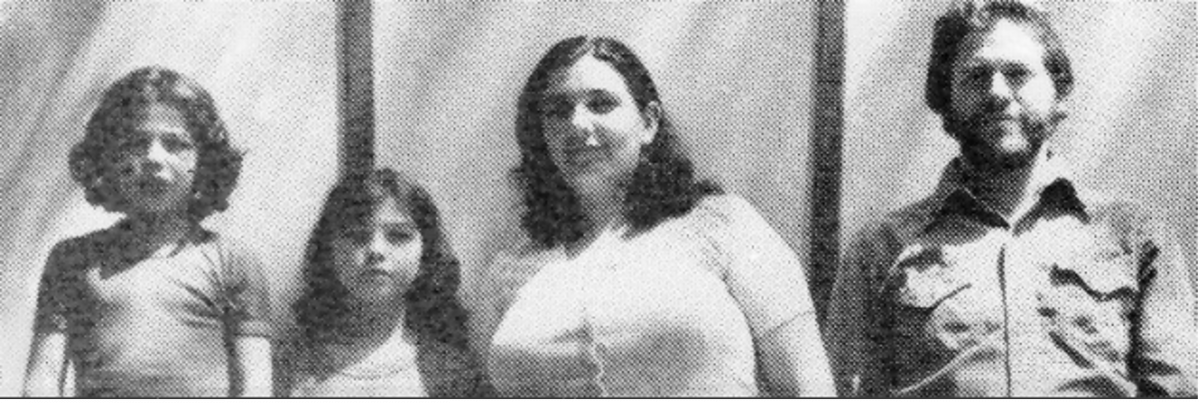
“The true nature of the ego-organization can be studied in the subject of Language.”
Rudolf Steiner, Berne, April 1924
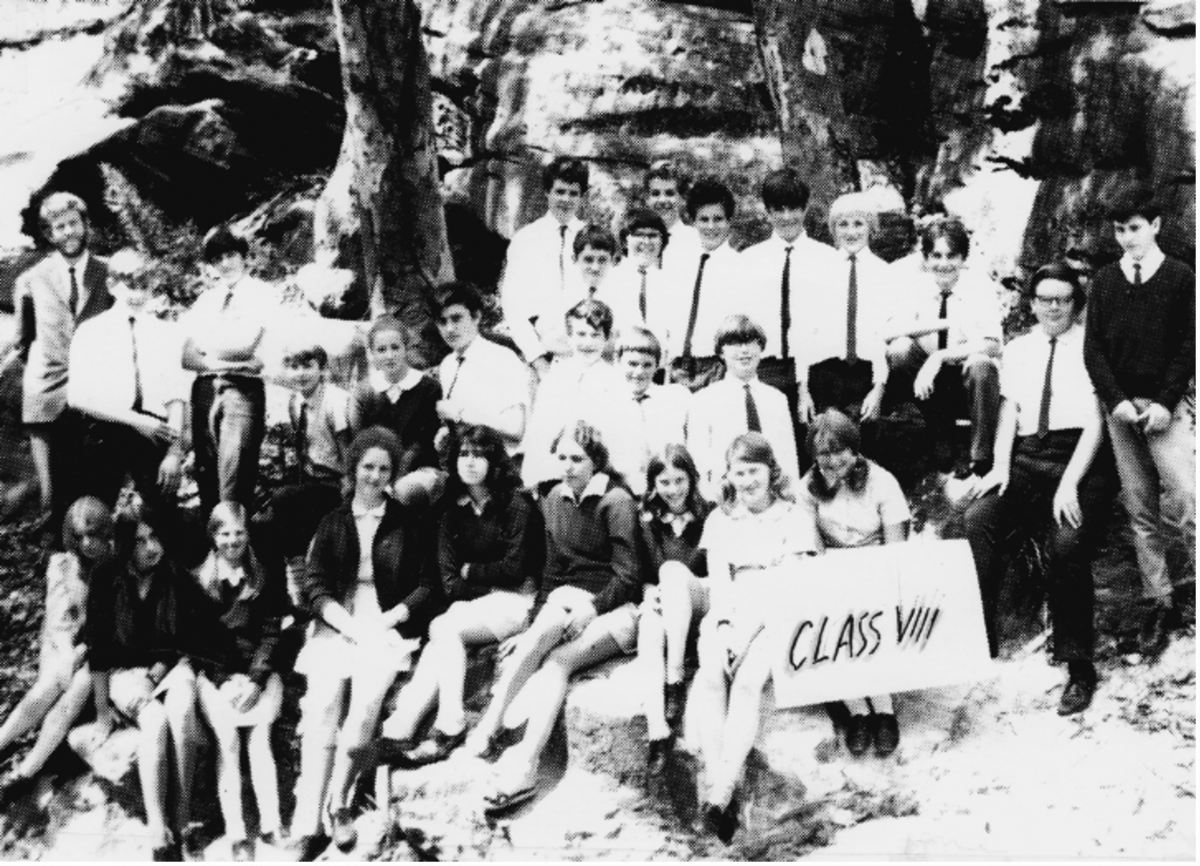
The author’s Class 8, Glenaeon School, Sydney, 1969










Leave a Reply