
Copyright Alan Whitehead & Earthschooling: No Part of this book, post, URL, or book excerpt may be shared with anyone who has not paid for these materials.
Alan speaks in a very symbolic and esoteric manner in some parts of his books. Although they can be read anthroposophically, passages speaking of Atlantis, archangels, gods, etc. do not need to be taken literarily to be meaningful. The more you read, the more you will realize he uses many different religions to express ideas in a symbolic manner and not in a religious manner. His writings are not religious. In some places his writings are meant to refer to religious events in a historical way. In some places he is using religious figures (from Christianity, Judaism, Islam, Buddhism, Hinduism, Paganism, Ancient Roman and Greek Religions, etc.) in a symbolic manner. However, at no point is he promoting a specific religion or speaking from a religious point of view.
I have kept the writing as close to one-hundred percent original so you will also find that he speaks of Australia often and some spelling or manners of speaking may be cultural. Any words I have changed are presented like this: <word>.
Also keep in mind that these books are written by a Waldorf teacher with decades of experience who also studied with a Steiner student himself, so he speaks to an audience that is dedicating their lives to the Waldorf method without exception.
Because of this, all of his views are not reflected in the Earthschooling curriculum and not all of them may be ones you want to embrace or are able to use. In all of Alan Whitehead’s writings the opinions are his own and may not align with Earthschooling or Waldorf Books. In some cases, we will be updating some of these chapters in the future with additional and/or updated information.
Ultimately, however, as I read through these passages I find I can distill wisdom from even those paragraphs that do not resonate with me.
We invite you to read with an open mind and heart and with eagerness to learn and discuss…
A COVENANT OF COMPASSION
Veterinary Science – Class 11 – Middle Lesson
The word ‘veterinary’ derives from the Latin vetus – meaning mature (as in ‘veteran’). This referred to the fact that only a mature animal could carry a burden. Vets of yore apparently only treated sick animals which had this valuable vetal virtue. This ‘beasts of burden’ theme, this eternal suffering of the animal world, and the complementary compassion it engenders in the human heart, can set a noble tone for a 3-week middle lesson on Veterinary Science. The unit can truly become a manifestation of the spirit (if not the corrupted practice!) of Buddhism; the Eastern equivalent of what Rudolf Steiner describes as the ‘Shepherds’ or St. Luck stream of human evolutionary consciousness.
Beasts of burden were the first of earth’s habitués to behold the divine child in their humble stable. Steiner tells us that Luck is the ‘Gospel of Love’. This humane spirit is also known as the “Franciscan’ stream. Stories abound of the love of, and care for, our fellow travelers in evolution by this Patron Saint of Animals. How nice if this unit falls on October 4, the celebration of the Feast of St. Francis, hence World Animal Day.
Franciscans are traditionally the heart-inspiring Christians; their more cerebral peers, the Dominicans, tend to enjoy inquisitions! St. Francis never killed an animal; even the savage (rampant astrality) Wolf of Gubbio he tamed rather than terminated. The Oriental equivalent of Francis, Gautama, while walking in the forest, was saddened by the fact that all the wild creatures, as was their wont due to man’s timeless brutality, fled from him. His cries of appeal to stay were heeded by one animal only, the most hated, the most lowly, the rat! Only he, cleverest of creatures, could hear the truth. On seeing this, the other animals soon grained trust and, as in the Francis story, freely discoursed with The Great One.
So what has all this to do with Science? Actually it is these kinds of wisdom-filled apocryphal tales and parables which help raise Steiner Education above the hum-drum. It is integrative to a fault, introducing all aspects of Life to an otherwise narrow-band subject. These anecdotes and imaginative narratives can help counteract the inherent contraction – at a spiritual level at least – of a veterinary career. One usually chooses to become a vet because one has an abiding love of animals – because one has a good, Franciscan, heart. Yet one has to undertake a long and demanding university course – Dominican by definition! – to become a vet. Hence the need for the balance of compassion.
Sadly I failed to conquer this hear-heart conflict; all through my childhood years I wanted to be a vet, due to my passionate love of animals. I was prevented from doing so by my Dominican shortcomings (I was a dunce at school!). An important component of this unit is to show students of every cognitive capacity how they can pursue an animal-caring career, without being compelled to qualify as a vet. They might become wildlife carers, pet shop owners, zoo workers, stable hands, animal boarders, groomers, exercisers, trainers… (see articles at end).
This heart factor suggests the programming of Veterinary Science as a middle lesson, in the ‘heart’ part of the 3-fold teaching day. One reason we introduce the subject in Class 11 is because this is their 19th Century year in evolutionary recapitulation (starting Ancient Saturn in the first year). It was only I the Industrial Age that Veterinary Science became universally formalized in the Western world. However the first school for vets actually opened in France forty years earlier, in 1760.
A quick journey in the time machine through animal-care history is of value in placing today’s increasingly humane attitudes in context. This can go as far back as Ancient Egypt, where wall paintings depict beasts of burden being treated for nameless ailments. An overview like this helps build a foundation upon which to present the contemporary Veterinary Science or general animal care picture. Prior to the 19th Century, every farmer was a vet; many human doctors performed this role as well.
Class 11 is also the ‘Sun’ year in the 7-planet unfolding from Saturn in Class 8. A convenient synchronicity is that the animal world had its genesis on Ancient Sun (as we humans did on Ancient Saturn). As such, animalia has evolved through there planetary incarnations, or Manvantaras, to use the Sanskrit term. This represents three stages of development – physical body on Old Sun, etheric body Old Moon, and astral body on our present earth. The ego of each animal species is embodied in the particular Group Soul; that which guides the evolution, the karma indeed, of the whole species (through not the individual animal). This is achieved through that incomprehensible principle science, in its ignorance of animal genius, so impotently refers to as ‘instinct’.
Here on earth we, humanity, act as the ego of the animal, both collectively and individually. This carries with it great responsibility; much as our Guardian Angels have towards us. To abuse an animal is a betrayal of this holy task. Vets and other animal carers are of course in the vanguard of providing this ego mantle of protection to our ‘dumb’ (ego-less) animal friends. Occult Science states that any offense against animals, as in killing or cruelty, must be compensated for a Kamaloca. Pity the poor whalers, hunters, fishers and slaughterhouse workers when the gates of Kamaloca slam behind them!
Veterinary Science is programmed in the first of these three middle lesson streams, the Professions; embracing those vocations from which one can expect to obtain a university degree. Professions are also the Ego middle lesson (the other three being Cultural-astral, Service-etheric, Industrial-physical) – perfect programming if we consider the ‘ego of the animals’.
The Professions is further divided into a thinking-feeling-will troika of Physical, Living and Human Professions; Veterinary Science obviously being a Living profession. This yet again calls on the feeling or heart forces of teacher and taught. A synonym for feeling is soul; which all animals have, especially higher species like vertebrates, which of course this unit is exclusively concerned with. We need a soul-emphatic lesson to empathize with our soul-expressive creatures.
This Living Professions strand has been represented from Class 8 by Ecology (see my book La Pieroma); ornithology 9; Marine Biology 10 (both in A Spiritual Science); and later in this book, Conservation Class 12.
It has also been found opportune to program an Animal Husbandry afternoon block lesson in the same 3-week period. This of course is a highly practical unit, compared with the more scholarly approach – yeasted with the Aesthetic of course – taken in Veterinary Science.
Another mother lode of interest for the class is to recount one’s own vet or animal care experiences or exploits; just one personal example: One day my cattle dog, Crib, chased a bed-bellied black snake into a large grass tuft. Crib was a master snake killer (I’m ashamed to admit!), when he caught one in the open, he would kill it by striking lightning fast and breaking it back in a single terrible whip crack! But this one, from its germinal refuge, bit poor Crib on the nose!
In minutes he had collapsed, his eyes glazed over and his tongue lolled out, swollen and blue. Driving our trusty old Hillman Minx like a maniac, I rushed him the half hour to the local vet. He sadly shook his head, observing that, even though Crib’s brave heart was still feebly beating, he couldn’t possibly survive. Naturally our whole family was distraught as we returned in the morning to collect the body and pay the bill. (We had no phone in those early Steiner-teaching days!)
Even before we went into the office, we heard Crib’s furious barking – he knew the sound of the old Hillman! Apparently the attractive vet nurse stayed with our beloved friend for hours giving him heart massage, before she too gave up the task as hopeless. To the vet’s utter astonishment, next morning he saw Crib, not only alive, but on his four feet fighting fit!
Cattle dogs are part Dingo, so there may have been an immune factor in play against Australian snakes. There certainly was against the lethal cattle ticks. It usually only takes one of those bloated monsters to kill a large dog. Crib could have many, and be seemingly unaffected!
Poor old Crib wasn’t totally unaffected by the snake bit, alas; from that time on his nose began to degenerate. But it took another seven years till the condition was so bad (he was about 13 by then, a doggy geriatric) that I tragically had to shoot him. This was one of the most difficult tasks I’ve ever had to perform. They say you only have one really good dog in your life, Crib was mine. If I’d allowed it, Crib anecdotes could have taken up the whole three-week unit – and this treatise!
Rudolf Steiner was a Dominican type, a Doctor of Philosophy, teacher, writer and scholar; yet he was an uncompromising lover of animals, venerating nature in the purest Franciscan spirit. There is only one account where The Doctor recommends the killing of an animal.
This was right at the end of his life, when he gave the famous Biodynamic course. He was asked how to rid a property of a rabbit plague – his reply was as novel as it was effective. He told the farmer that a single rabbit should be caught, killed and its skin burnt to fine ash. When done, this was then, in homeopathic solution, spread about the property. The result was that the rabbits departed in droves – to occupy another property perhaps?! It should be noted that Steiner didn’t actually kill the rabbit, maintaining his unblemished reputation as never killing an animal. It could be argued that one rabbit death saved the lives of many, as the endless war of trapping, poisoning and shooting ceased.
We see in the two examples above an important two-fold distinction in Veterinary Science, that between domestic and wild animals. Most vets are faced with this vocational choice on the threshold of their career. The majority choose domestic, perhaps due to the fact that these sick and injured creatures have owners (surrogate egos!) who can pay the bills!
There are however specialized areas of wild animal veterinary care, like zoos, animal refuges, national parks and so on. This raises the issue of how much there is to learn about animal physiology, disease and treatment. Human doctors have to be familiar with only one creature, but a vet, before graduation as a Doctor of Veterinary Medicine, has to have detailed knowledge and skills about everything from fish to amphibians, reptiles, birds, monotremes, marsupials, and placental mammals. (to scan across the 7-planet vertebrates, beginning fish-Saturn!)
There is a more equitable division between the domestic and the wild in the animal paramedics, with (usually voluntary) about half caring for sick and abandoned pets, the rest for wildlife road injuries and the like. Many vets treat the latter as pro-bono, a wonderful Franciscan gesture.
Even Noah, the world’s most famous – and ancient – animal carer, knew the import of the distinction between wild and domestic animals – though he called them ‘unclean’ and ‘clean’! Not only was he biased in his terminology, he only took a single pair of each wild animal species.
No surprises there right? But if one is familiar with only the picture book version of the Bible rather than the real thing, one is very surprised when one discovers that Noah took Seven of the ‘clean’ or domestic animals, including fowls! If you see a picture of, say, just two sheep on the ark, it is a distortion of the Genesis account: “Of every clean beast thou shalt take to thee by sevens, the male and his female; and of beasts that are not clean by two, the male and his female.” Old Noah and his family must have had advanced animal-care skills – imagine if one of a pair, say of the giraffes – or the numbats! – were to die!?
This would probably have happened if Noah was an Asian; there is a curious complement between East and West in animal perceptions. Under the influence of Buddhism, great store is placed on the spirit of the creature. Sadly this is often coupled with unconscionable neglect, or even cruelty, of the body. We see this devotion to the animal spirit in the sacred cows of India.
In contrast to this veneration, in the West the Catholic Church long ago renounced the metaphysical animal, contending that only man has a soul. The logical extension of this being that animals do not even feel pain! This error has led, over the centuries and still today, to a history of incalculable brutality of man to long-suffering beast.
Descartes took this to its materialistic conclusion (yes, the so-called spirit-based church was, according to Steiner, a materialistic institution!) by comparing a mouse trap to a mouse. He asserted that the mouse only responds to negative stimuli, as in struggling and squeaking, due to matter-only in-built physiological responses. What looks like terror and agony is no different in principle than the snap of the trap!
Steiner teaches of course that animals do indeed have a soul, an astral body. This is blindingly evident to anyone with eyes to see – of course only man has a spirit. Even modern Veterinary Science discounts the existence of animal soul; science is after all, of the 12 nominal subjects, inspired by the zodiacal sign of Cancer. Steiner describes, of the 12 Philosophical Standpoints, Materialism to Cancer. Perhaps the compassion found in the veterinary and animal-care industries in the West is due to them Not being church-based! It’s rare to see an establishment church in the forefront of animal rights or environmental activism!
The goal for the 3red Millennium is to elevate and ennoble natural science to Spiritual Science; to behold the supersensible reality behind all matter. This unit can assist the students along this path of righteousness. One who feels compassion for, or protects animals, is truly enjoying the view from the moral high ground. Indeed hunting today – and fishing even – in increasingly being regarded by the more enlightened community not with admiration, but disgust.
Schools sometimes capitalize on the Veterinary Science unit by arranging a Pet Show as a climax; and what a popular event his is! Children from kindergarten to senior high bring to school their bewildered cats, dogs, birds, horses, goats – even insects! – for a day of showing, performing and judging. This not only elevates the animals to a new plateau of high esteem, but enhances community spirit.
Few forces gain entry to the heart easier than soft, cute and cuddly animals. Indeed experiments (why not solid policies?!) in prisons prove that hardened criminals, many intractably obdurate, become big pussycats when allowed to have a canary in their cells (not the best pairing of images!). this could be an incentive for good behavior: “Cool it Big Al, or we’ll confiscate your brace of attack Rottweilers!” Animal therapy with problem children has also proved highly effective.
In spite of his church’s recalcitrance, Jesus was a friend of the animals; after all, he was the babe in the St. Luke (‘heart’ gospel) stable. The following are two of several references to Jesus the Animal Lover and Protector in the apocryphal Gospel of the Holy Twelve…
And on a certain day the child Jesus came to a place where a snare was set for birds, and there were some boys there. And Jesus said to them, who hath set this snare for the innocent creatures of God? Behold in a snare they in like manner be caught (Kamaloca!). And he beheld twelve sparrows as it were dead.
And he moved his hands over them, and said to them, Go, fly away, and while ye live remember me. And they arose and fled away making a noise.
***
For the Spirit of Divine Humanity filling him, filled all things around him, and made all things subject unto him, and thus shall be fulfilled the words of the prophets, The lion shall lie down with the calf, and the leopard with the kid…
And none shall hurt or destroy in my holy mountain, for the earth shall be full of the knowledge of the Holy One…and I that day I will make a covenant with the beasts of the earth and the fowls of the air, and the fishes of the sea and all created things. And I will break the bow and the sword and all the instruments of warfare will I banish from the earth, and will make them to lie down in safety, and to live without fear.
And on a certain day as he was passing by a mountain side nigh unto the desert, there met him a lion and many men were pursuing him with stones and javelins to slay him.
But Jesus rebuked them, saying, Why hunt ye these creatures of God, which are more noble than you? By the cruelties of many generations they were made the enemies of man who should have been his friends.
If the power of God is known in them, so also is shown his long suffering and compassion. Cease ye to persecute this creature who desireth not to harm you, see ye how he fleeth from you, and is terrified by your violence.
And the lion came and lay at the feet of Jesus, and showed love to him; and the people were astonished, and said, Lo, this man loveth all creatures and hath power to command even these beasts from the desert, and they obey him.
Following is the Veterinary Science Report given to one Class 11. The teacher was inspired as a child by the wonderful love-of-animals tales of Gerald Durrell; if anyone could evince the soul of an animal, he could! The teacher, after concluding her own Steiner education, worked in a veterinary supplies firm, prior to becoming a Steiner teacher herself.
INTRODUCTION TO VETERINARY SCIENCE
CLASS 11, TERM 2, 1984
This unit covered the history of Veterinary Medicine from its beginning in ancient India, Greece and Rome to the first college of Veterinary Science in Lyons, France in the 1700’s.
It also covered: – 1] Qualifications needed to become a Vet and the difficulties and costs required to set up practice. 2] The diversities of Veterinary science, meat inspection, quarantine, experimental medicine, conservation, zoology, parasitology, obstetrics, bacteriology, immunization.
Mr. B. Lakin B.V.S.C. gave a talk on small animal practice. He covered:-
- Common diseases in cats and dog; distemper, feline enteritis, cat flue, parvo virus, and their symptoms, vaccinations and possible cures.
- Clinical examinations – he gave a demonstration on a dog.
- The effects of man on the surrounding wildlife, demonstrating with one of the many shot or run-over possums he receives.
- Worms and other parasites.
- Quarantine regulations for diseases like rabies.
Mr. N. Judge M.R.C.V.S. kindly invited us to his Quarter Horse Stud where he used his stallion to demonstrate the points of the horse. He talked about:-
- I. (Artificial insemination)
- Buying a horse, signs of soundness
- Typical illnesses, colic, laminitis, strangles, tetanus
- Foaling difficulties
- Worms, in horses, bots, and roundworms and their treatment
- Teeth – their care – rasping every 6 months
- Feeding for the horse at work and at pasture.
A local farmer gave us a tour of her farm and talked about preventative medicine such as:-
- Separating infected stock
- Rotating pasture
- Symptoms to watch
- Home remedies
- Signs of healthy farm animals, good production, etc.
The manager of one of the United Dairies Company gave us a tour of his dairy where he talked about:-
- B. and Brucellosis tests, 2 diseases transferable to man
- Hygiene in the milking stalls
- Diseases such as mastitis and milk fever
- Calving in a dairy – the calves are removed from the mother a week after birth.
A choice of essays was given at the end of the unit.
- The care of Exotic Animals
- A day in the Life of a Vet
- Diseases in Cattle
- Horse Care and Diseases
- Conservation
The following are a selection of newspaper articles I have had published over the years on an animal carers theme:
NORTHERN LIGHTS
With ALAN WHITEHEAD
Mullumbimby’s ‘femme fauna’ is no newcomer to the wonderful world of animals. As a child she would a-hunting go with her Dad into the Melbourne hinterland. One would think that this would predispose Keerrie Black to work in an abattoir, rather than their animal lovin’ Mullumbimby Pet Shop. Actually, Dad hunted rabbits to feed his family, all 13 of them. That’s how things were in the late 50’s in working class Australia. Dad was a painter and docker on the Victorian wharves and they don’t get much more working class than that.
It was the orphan and captured animals little Kerrie brought home in her pockets, rather than those hanging on the wire, that turned her head towards a lifetime of animal care and she had done it all from greyhound racing and training to taming cockatoos. Kerrie was born somewhere in the middle of the 11 siblings (4 girls, 7 boys) of this large family, so she had no shortage of sympathetic accomplices in hiding the ever-expanding menagerie of snakes, lizards, birds and other critters from her frazzled Mum. As they say, the more thing change, the more they stay the same.
Kerrie Black may have changed her family to the smaller-scaled husband bob and their three children, but her home is still an open-house for the halt, the lame and the blind of the animal world. The Pet Shop in Stuart Street is Mullum’s drop-off point for those sad, bleeding little creatures one finds on the road.
Kerrie provides emergency care, before, in most cases, dispatching them off to Raylee Rayward, shire-head of the Wildlife Carers Association. Kerrie says most animals mend quickly, if they’re going to mend at all.
Those known by WCA to be condemned, through trauma, to a life of crippled dependency are sadly but mercifully put down. Kerrie has been with Bob for 21 years. They farmed cattle, poultry and kangaroos in the Hunter Valley before moving north – kangaroos?
Well Kerrie’s animal care reputation was legendary then with people bringing in orphaned macropods for her TLC.
“I would sew up the sleeves and necks of old jumpers and hang them up to make pouches for their joeys.” She told me.
“Jumpers for jumpers”, I joked, but this was trumped by the image of house-trained Arnold, a wild pig who insisted on sleeping on tan electric blanket.
I wasn’t quite sure if there were more animals at home, at present I Ocean Shores, or in the shop, the background chirps and tweets over the phone were reassuring as I was given a list of fur-finned-feathered tenants wandering around the Black household: ferrets, fish, galahs, dogs, mice and until recently a nine-and-a-half-year-old rooster named Cheep!
Quality breeders are invited to provide the Pet Shop with domestic and native animals.
The latter are on the N.P.W.S. list of wild animals one can sell and keep. Kerrie is a lady of strong opinions, like her wharfie dad no doubt and would have all cats (except show breeders) due to their appetite for wildlife, desexed. Ironically it was an animal that was responsible for the family’s highest drama when son Daniel was bitten by a deadly Rough Scale Snake. Mum has never been afraid of snakes; she handled the crisis expertly and calmly, probably saving her son’s life.
Kerrie was recently a judge at a charming fundraiser at Mullum Primary – The Pet Show. Here they employed a neat idea called the Pal package. The ‘meaty chunks” pet food people supply a range of accessories, like ribbons and prizes to help make the event run smoothly – in exchange for promotional exposure of course.
“The children bought in a lovely range of pets,” she enthused.
“What was your favorite?” I asked.
“The Flea Circus”.
Is there no bottom line to his animal-lover’s affection for our fellow travelers in evolution?
NORTHERN LIGHTS
With ALAN WHITEHEAD
Cats and dogs get bad press these days; but someone who hasn’t lost sight of the needs of these timeless companions to humanity is Susan Whyte. Sue was one of the founders of the local chapter of The NSW Animal Welfare League, begun just over a year ago in her home at Ocean Shores.
“At that first meeting, we had our first ‘client’, a blue heeler who just wandered in off the street. Happily we found him a home on a property I Mullumbimby.” Said Sue.
And that’s what the League is all about, giving strays or unwanted domestic animals a second chance. The AWL helps save these frightened creatures from bullet, bait – or whatever method the pitiless employ to dispatch their pets to eternity.
The AWL is not alone in their humane endeavors; last year Byron Council, under the kindly eye of Bede Cooney, kicked in $1000 to help with vet fees for the increasing number of forsaken pets scratching at the door of Sue and her co-workers. Then there are the vets themselves, who provide discount desexing; making an unwanted animal more attractive to a prospective owner. Most notable of these in Byron Bay’s Tony Moore, who will desex a male cat for the League for $25.
Even the local businesses help, sponsoring those bins near the supermarket checkouts, where shoppers toss in an extra can of pet food to help the heedful feed the needy. The AWL system works like this: people who find a stray, or who want to terminate their relationship with their loyal moggie or pooch, contact Sue (803731) or other League members, who then find ‘carers’ for the animals.
The League urgently needs more carers, members and sponsors. “We’ve never had an animal destroyed,” exclaimed Sue proudly; but went on to describe appalling behavior of people towards their pets. Such as those who, before going on holidays, conveniently ‘lose’ their animal to (maybe) retrieve it a week or so later at the pound – free board! The AWL, stresses Sue, is NOT a boarding facility. Sue and co. do not just send a pet anywhere, they first ascertain that the new home is ‘correct’.
The AWL’s mandate is not merely ‘prevention of cruelty to animals’, but a pro-active one in caring for the overall welfare, the ‘companionship’, of their furry charges. (Though not all are furry, Sue saved a ‘sick’ goldfish from being flushed down the toilet; she has it still!) The League meets each 3rd Sunday of the month at 3pm in the CWA Hall, Park St. Brunswick.
The organization is funded by sponsors, gifts, will bequests (a substantial deceased estate actually launched the AWL), and fundraising. The local AWL conducts a regular market stall, selling hats, T-shirts and other pet-lovin’ paraphernalia. They also provide counselling and practical advice on pet ownership. Susan’s love of animals began as a child in the 1950s. With her pocket money who would go straight to the pet shop, and select the runt in the litter, the one not only the mother, but other customers, rejected. Susan Whyte is still there for the underdog – so to speak – 30 compassionate years later.
NORTHERN LIGHTS
With ALAN WHITEHEAD
An invitation to lunch at Bob and Desley Oehlman’s can be a memorable experience. Bob is the Bush Tucker man of Brunswick Heads. My group of privileged teenagers regarded the unfamiliar banquet with a mixture of suspicion and healthy curiosity. I later asked how Bob acquired such extensive bush-survival knowledge.
“Self-taught mainly,” he replied. “With a lot of help from local and regional Aboriginal communities.”
Your correspondent was delighted with many of the new taste sensations, including Mistletoe, Buyah Nuts and Midyims. The latter, small, grey-blue fruits are an unexpected sweet treat. My attention from swallowing whole a live Pipi was arrested by a glass case containing two large green tree frogs.
“Very good replicas.” I observed – till one blinked!
On inquiry, I found that the Oehlman house is the north—of-the-shire center for Northern Rivers Wildlife Carers.
This can be a heart-rending, but often a heart-warming job with up to a dozen calls a day to rescue, rehouse or sadly retire (or to use the euphemism, euthanasia) our battered wild creatures.
“A rewarding aspect of the work is education,” he told me. “Like teaching people how to hang, say a sparkling glass crystal in a window to prevent birds killing themselves.” Another method is a simple falcon silhouette pasted on the window. Ring Bob on 851730 to access his excellent educational resources. He also gives talks to schools and groups.
And speaking of schools, Bob also works as a special teacher’s aide helping “challenged” children – not too far removed from his animal care work I’d say. This altruistic soul benefited from a bush-loving upbringing. He brought his first animal casualty, an introduced Turtle Dove, home when he was just 10 years old and he hasn’t stopped since! Born in Gympie in 1951, Bob was the sone (one of three children) of a bank manager.
As such the family migrated a lot. On leaving school he entered a retail industry rising to managerial level in firms like Woolworths and David Jones mostly in the Newcastle area. But, it was the seduction of the nearby, oft -snow-capped Barrington wilderness area that kept his spirit nourished.
The family, now with two boys, moved up to our supposed “green shire about five years ago. “I’ve seen nothing but rampant and insensitive development ever since,” he lamented. But, Bob’s main concern is with the new North Ocean Shores (or Billinudgel as it is called) Nature Reserve.
The State Government’s recent purchase of 550 of the 950 hectares of this remarkable bushland was a triumph for CONOS (Conservation of North Ocean Shores) and other wild places defenders. This is a sacred place for Aboriginal culture containing the only double bora ring in the NSW and in its natural state.
“We have no ulterior motive like wanting to preserve the area to hide our dope plantations as our accusers often allege. We just want the area for everyone, for the future.”
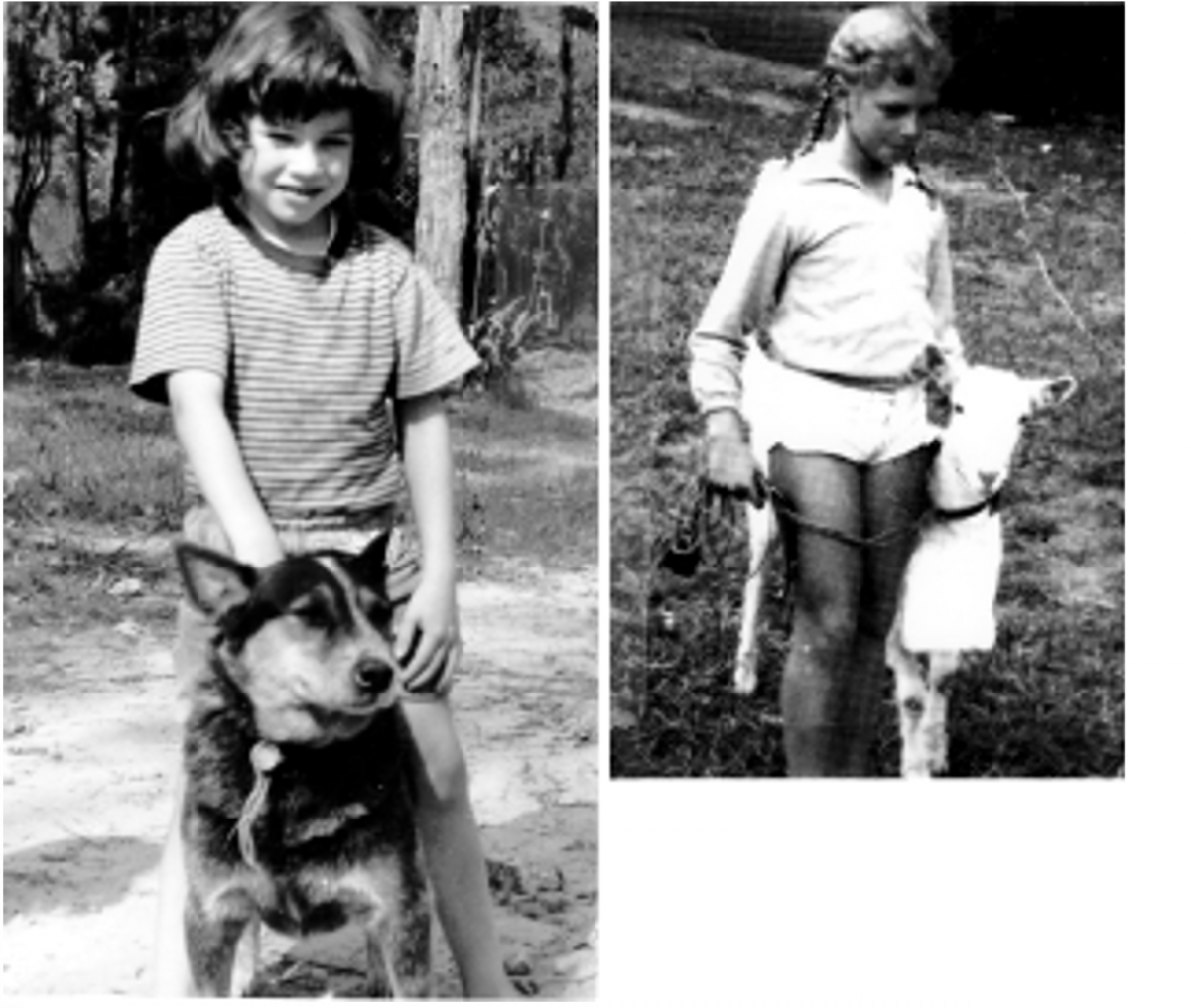 Above: Annelise Brackensieck
with her goat at the Great Pet show.
Left: Son Stephen with our faithful
and brave cattle dog, Crib










Leave a Reply