
Copyright Alan Whitehead & Earthschooling: No Part of this book, post, URL, or book excerpt may be shared with anyone who has not paid for these materials.
Alan speaks in a very symbolic and esoteric manner in some parts of his books. Although they can be read anthroposophically, passages speaking of Atlantis, archangels, gods, etc. do not need to be taken literarily to be meaningful. The more you read, the more you will realize he uses many different religions to express ideas in a symbolic manner and not in a religious manner. His writings are not religious. In some places his writings are meant to refer to religious events in a historical way. In some places he is using religious figures (from Christianity, Judaism, Islam, Buddhism, Hinduism, Paganism, Ancient Roman and Greek Religions, etc.) in a symbolic manner. However, at no point is he promoting a specific religion or speaking from a religious point of view.
I have kept the writing as close to one-hundred percent original so you will also find that he speaks of Australia often and some spelling or manners of speaking may be cultural. Any words I have changed are presented like this: <word>.
Also keep in mind that these books are written by a Waldorf teacher with decades of experience who also studied with a Steiner student himself, so he speaks to an audience that is dedicating their lives to the Waldorf method without exception.
Because of this, all of his views are not reflected in the Earthschooling curriculum and not all of them may be ones you want to embrace or are able to use. In all of Alan Whitehead’s writings the opinions are his own and may not align with Earthschooling or Waldorf Books. In some cases, we will be updating some of these chapters in the future with additional and/or updated information.
Ultimately, however, as I read through these passages I find I can distill wisdom from even those paragraphs that do not resonate with me.
We invite you to read with an open mind and heart and with eagerness to learn and discuss…
HEALING WATERS
Pharmacology – Class 12 – Main Lesson
Canberra’s bitter pill is hard to swallow
Proposed new drug regulations are a pain, not a panacea, says Alan Whitehead
All medicinal drugs can heal all of the sick some of the time and some of the sick all of the time – but no drug can heal all of the sick all of the time. This is a verity, whether referring to natural or synthetic drugs. In the debate over the strangling regulations threatening the natural healing industry, there is a failure to distinguish between these two equal but opposite – yet often complementary – substances.
If I rub the juice of a rainforest cunjevoi lily on my smarting stinging-tree rash, I am using a timeless and effective natural drug. If I rummage through my first-aid kit for brand X patented skin cream, it is a clever synthetic equivalent that provides relief.
There are new regulations foreshadowed by the Federal Government for increased control of the natural therapies industry. The more ominous of these relates to the restriction of free speech – or, by extension, freedom of the press.
If these are passed, on returning from a rainforest ramble, I may appear on talk shows or write letters to the editor extolling the virtues of brand X. However, I could be compelled to keep a Trappist silence on my simple lily remedy.
A strenuous defense of the synthetic over the natural is that the former’s owners, the multinational drug companies, have spent millions on research and development. This is to assure both the substance’s efficacy and safety. Actually there has been even more R & D – in time, if not money – in assuring certainty on both these vital issues with most of the broadly accepted natural therapies.
Indigenous Australians have known for thousands of years that the antidote to a plant poison can be found growing nearby. The cunjevoi lily is a companion plant to the stinging tree. Aborigines do not have exclusive knowledge of this geographic wonder: our own western (and/or eastern) culture is equally wise.
Swamp-dwelling Europeans always sought the inner back of the swamp-loving willow to cure swamp-induced fever. These fever-ameliorates and analgesics were salicylates that were later synthesized to become common aspirin. The R & D for aspirin has been in process for perhaps thousands of years – in the great laboratory of life, that is. Its synthetic equivalent would have been under the microscope for only a tiny fraction of this time.
Healing by experience, like chewing willow bark, is known as the rational method in pharmacology experimentation is the empirical. One cannot detract from the benefits brought to a long-suffering humankind by either therapeutic system. However, the risks to free speech posed by the proposed law are unethical and inimical to community wellbeing.
“Someone, sometime, may have an allergic reaction to some of these natural products – even die!” one pro-regulationist ominously predicted. This was countered on the same talk show by the big Australian natural therapy company Blackmores (to which I have no connection). The company’s chief executive officer, Marcus Blackmore, sone of the founder, claimed that it was never, in its six decades, registered a customer complaint about its prodigious array of essences, capsules, gargles, sprays, oils, ointments, gels, inhalants, syrups and lozenges. Incredible? His right to state, I suppose; other to disprove.
No such shiny slate with the latest horror statistics on hospital accidental injury and death: a large slice of the latter, about 14,000, being drug related. This sits in sharp contrast with the statistics on casualties for the use of natural therapies, which number in the tens rather than the tens of thousands.
To provide a full range of options, both natural and patent medicines must be available to our halt lame and blind. To assure those choices are well informed, there must be no restriction on promotion, labelling and advertising – in accord with current laws, of course.
There seems to be grudging acceptance by orthodox practitioners of natural therapies for minor ailments, but when their proponents claim they help heal serious or life-threatening illnesses, such as cancer or AIDS, that’s just going too far. Chances are, if history be our guide, that the miracle breakthrough in combatting intractable diseases will be found in the pharmacopoeia of the rational, probably via the empirical.
A natural healing center in Switzerland prescribes preparations of the common mistletoe to its cancer patients. The therapeutic principle is based on the ancient lore surrounding the supposed healing powers of mistletoe. This parasite is a kind of botanical equivalent of cancer, attaching to a healthy tree and flourishing as it sucks the host’s like blood dry. Healing of like with like is called the signature method. Its proponents purport that it works for some of the sick some of the time.
A gloomy reflection – even this seemingly innocuous assertion may be illegal if the proposed regulations are passed.
It has been said that this increase in government regulation – and, more seriously, the threat to free speech – is a response to community concerns. As a compulsive community watcher, I have detected no social discomfort caused by the presence of the ever-expanding natural remedies industry. Whose concerns then?
The market share of the drug companies is diminishing as the unwell explore wider horizons for their therapy choices. Alas the ailing, from the hypochondriac to the terminal, do not a powerful lobby group make. However, actions that stifle free speech in this country unwittingly enlist a wider horizon of opposition – much wider.
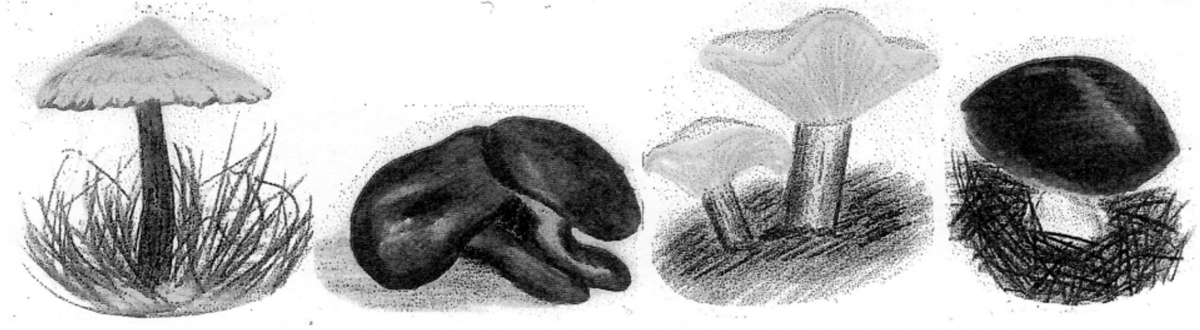
“Where the love of man is, there is also the love of healing” – Hippocrates
The foregoing is an article I had published in a national newspaper in response to a venal government initiative, backed by the drug companies, to put intolerable pressure on natural remedies. It must have been successful, as the proposed legislation demanding strict registration requirements for ago-old medicaments was withdrawn soon after – but then maybe public outrage also had something to do with it. Pharmacology is the last of five Chemistry units in the Steiner high school syllabus. This began in Class 8 with Inorganic Chemistry (see my book La Pleroma), Organic and Nutritional Chemistry in 9 and 10 – both in A Spiritual Science; and Industrial Chemistry in Class 11, earlier in this book. This program strives not only for depth and breadth, but to explorer spiritual principles in this supposed material subject.
Class 12 is the Gemini Year in the Educational Zodiac, beginning Cancer in Class 1. Mercury lives in the House of Gemini; this divine peregrinator is the classical God of Healing; his legendary Caduceus being a universal symbol of the medical profession even today. Mercury (GK. Hermes) is an etheric manifestation, it is the ‘life body’ living in the medicinal (astral) waters which provides the healing valency. The Egyptian Hermes Trismegistos (Thoth) was a healer of the metaphysical persuasion, the inventor of a magic seal (‘hermetic’ – airtight). He was also the inspirer of the later alchemists.
Science is the Physical Body representative of the four main lessons; the physical is the particular concern of pharmacologists, especially the allopathic fraternity. Physical Body Science has three strands, Physics, Chemistry and Biology; relating to volition, emotion and cognition, in the same order. So an emphasis on the liquid-borne feeling or soul aspects of this mysterious science is of particular value. Healing sans heart is an incomplete process at best, a travesty at worst.
Chemistry is also, of the Seven Classical Sciences, the Science of Spirit Self – fully-transformed Astral (water) Body. This again conforms to a development stage being enjoyed (under the auspices of a Steiner Education at least!) by 18-year-olds, the Conceptual-Pictorial Aspect of the Astral Body. This is the Spirit Selfstage of the 7-year adolescent Sentient Body unfolding in this 40-fold vision. This thought-picture faculty of ‘Manas’ allows the spiritually inspired pharmacologist to imagine, in the highest sense of the word, both the illness w/he is required to address, and the effect of the therapy upon it. Science is also the Cancer discipline in the 12-fold Subject Zodiac, The Crab is represented in Greece by Dionysus, a master of the liquid element in his own right – and not just in wine-making! This liquidity has always been recognized as the physical medium for healing, from the sacred medicinal founts of ancient times, to the Priest Healers of Egypt, to Bible stories like the Well of Bethesda. In fact springs, streams and mineralized waters have long been regarded as embodying mysterious therapeutic powers. Then there are the aforementioned Medieval Alchemists.
Apothecaries of all cultures have considered water to be the basis of the therapeutic arts This liquid wisdom extended even to so-called ‘primitive’ cultures. The world center for healing substances is after all Central America, the ‘etheric’ of the seven continents, where one tribe of Indians is said to know of 1500 plant-based contraceptives. The inspirational center for modern medical advance is however Scotland.
Pharmaceutical drugs devolve into four main groups:
- Mineral substances, such as chemical elements (iron), salts (Epsom), free acids (boric), and metallic hydroxides (aluminum).
- Plant substances; by far the most numerous of the four categories. These include initially ‘crude drugs’ which contain eight ‘active principles’.
- Alkaloids, white crystals containing C, O, N, and H which combine with acids to form, salts which are then soluble in water, e.g. quinine (‘cinchona’). The four above elements are strangely those classically expressing the four ‘bodies’ of the earth, in the same order; physical, etheric, astral and ego.
- Glycosides – sugars which do not react with acids, e.g. digitalis (a heart stimulant).
- Oils – fixed, like olive, and volatile, such as eucalyptus, highly aromatic and evaporative.
- Resins – oxidized volatile oils (podophyllum, a cathartic).
- Gums – secreted substances like agar (a laxative).
- Gum Resins – a combination, like myrrh
- Balsams – like benzoic acid
- Tannins, such as tea for treating the trots. (I can’t spell the official name of this malady!)
- Animal (including man) drug substances include thyroid and liver extracts (for pernicious anemia); insulin (for diabetes); cortisone for arthritis; and immune serums, such as the Salk vaccine for polio.
- Synthetic drugs cover a range so vast it is impractical to categorize them. About 18,000 new drugs are released each year. Alas many doubts are held regarding their possible side and other deleterious effects. The synthetics present a formidable array for prescribing doctors, who must increasingly rely on drug manufacturers for information.
There is also a dazzling choice of dosage forms in the four main categories of drugs; the following are in so special order: waters, as solutions, suspensions; mixtures; emulsions (fats); gels; powers; syrups; elixirs; injections; essences; tinctures; solids (capsules, spanules, tablets, pellets); sprays; inhalants; aerosols; liniments (from L. ‘to anoint’); lotions; ointments; plasters; pastes; suppositories – and more!
Drugs are named according to strict Regulation. 1. Scientific, which internationally describes the arrangement of molecules, e.g. (3-chloro-10-(3 dimethyl-aminopropyl) phenothiazine. 2. Generic name of the same drug – chlorpromazine. 3. Trade name of same, Largactyl (R).
Prescriptions are also rigidly formalized; first there is the Superscript, the patient’s name and the date, etc.; RX (‘take thou recipe’); the Inscript (the essence, so to speak, of the prescription) included the drug itself, its adjunct, corrective and vehicle. Then the Subscript, directions to pharmacist, such as M (L. misce – ‘to mix’). The Signatura is the directions to the patient; finally there is the doctor’s signature, address, etc.
All drugs are by definition, poisons, and all poisons are potentially drugs, being highly concentrated volatile substances as they usually are. The words poison and potion curiously have the same origin. Even water, as a salt-leacher, is a poison in excess. With the explosion of chemical in the environment, life has become vulnerable. Where an organism’s inner resources have become weak, the immune system succumbs, and susceptibility to disease occurs, as in those ‘new’ ailments, allergies and asthma. (I’d never heard of them as a child?)
Even though pharmaceutical advances have solved many problems for an ailing mankind, and eased much misery, they have also created a Pandora’s box of new problems. One in twenty patients are in hospital for drug-related illness. This overdose of medicaments is often so unnecessary, as most diseases are ‘self-limiting’; i.e. they cure themselves, usually in a known time frame (many colds last seven days, no more, no less).
The modern drug revolution in the West began in 1806, when Serturner isolated morphine crystals from the ‘crude’ drug, opium. Meanwhile the Chinese, in their inscrutable way, had 365 official medicinal substances, one for every day of the year!
During the 1840s, James Simpson of Edinburgh discovered the miraculous properties of chloroform. Previously a good slug of whisky was used to minimize the pain of operations. Chloroform is still one of the most widespread of drugs; however its use as a tranquilizer has been overtaken by more efficient treatments.
Of the 100% of illnesses, 75% cure themselves, needing no treatment except in the easing of discomfort. For instance there is still no cure for the common cold, but the legion medicaments readily available from any corner store sure ease the symptoms. 20% of diseases are incurable, hence requiring no treatment, with the exception of pain relief as above.
This leave just a tiny 5% of illnesses which respond to, are indeed cured by, treatment. If this bald fact were better known, the drug companies would be staring into the abyss of irrelevance. Many of their prescriptions are not only unnecessary, but directed to non-diseases; one in seven being for tranquilizers, like Valium and Prozac.
The latter not only does not cure anything, it has been shown to accelerate the suicide rate of the depressed people it is supposed to help! Another gold mine is sleeping tablets, again for a non-disease; taken in most cases to compensate for wrong lifestyle – 50% of people in the physically and psychically frenetic West suffer from insomnia! Meditation is the more common treatment for this malady in the East.
18-year-olds learn lots from vocabulary, in this case that used by the local chemist. The hope is that their love of language has not been corroded by crass commercialism. As well as basic term familiarity, the etymology should be explored as well.
Pharmacology, study of medicinal substances; pharmacognosy, description of above; posology, study of dosage; pharmacodynamics, study of responses to drugs; pharmacotherapeutics, the art of healing with drugs; pharmacopoeia, a stock or book of drugs; toxicology, study of poisons; amebicide, amoeba killing agent; anaerobic, the absence of oxygen; analgesic, pain-relieving drug; anesthetic, sensation-removing drugs; aedine, removes pain on local application; anthelmintic, a worm-removing drug; antibiotic, a drug produced by a living organism to kill others; antidote, counteracts poison; antipyretic, reduces temperature; anti-spasmodic, reduces convulsions of smooth muscle; asepsis, absence of disease-producing bacteria; astringent, a tissue contractant; cardiotonic, heart remedy; contra-indication, a condition prohibiting use of a drug; demulcent, an agent that soothes irritations (like this list!); diuretic, increases volume of urine; emetic, produces vomiting; emollient, softens surface tissue; episomes, transferred drug resistance factors in micro-organisms; fungistatic, inhibits fungi growth; hemostatic, inhibits bleeding; lipids, fatty substances; metabolite, a substance connected to digestion; miscible, capable of being mixed; oxytocic, a labor inducer (for pregnant women, also, not authors!); prophylactic, pertaining to the prevention of disease; sedative, quietens activity; sequelae, after-events of treatment; topical, surface application; trauma, physical injury (never used in contexts like, ‘their marriage break-up was traumatic’); vesicant, a blistering agent.
The different means of drug application should also be canvassed: oral, absorbed through metabolism; parenteral, injection, whether subcutaneous (under the skin), intramuscular (into muscle tissue), or intravenous (into the blood stream). Then there is inhalation, absorption through the respiratory system; sublingual (by-passes the liver); rectaletal (as it sounds!); topical (on the skin).
The greatest success story for modern medicine has been won in the battle against infection. Firstly in the 1860s, with Lister’s discovery of the carbolic acid effect on micro-organisms, later with Pasteur’s development of vaccines, and then with Fleming’s discovery of penicillin in 1928. These bactericides were 10,000 times more potent than the previously used sulfonamides. There was a great leap forward with the broad-spectrum antibiotics (‘against life’) like streptomycin, for which they tested 10,000 substances. In medicine at appears that the smaller they are, the harder they fall.
A curious parallel has been observed between the rise and fall of virulent infectious diseases, and the psychological demeanor of a culture, such as the Medieval fear of torturous damnation. As materialism rejected these fallacious ideas in the 19th Century, infectious diseases, like plague, cholera and leprosy, also diminished. Alas the fight against bacteria is never won, as new resistant strains evolve ahead of the treatments. One organism even needs Streptomycin to exist!
Bacteria are only partially susceptible to treatment because they have cell walls (like plants) andmembranes (like animals). The diseases of the 20th Century are those of the neo-plastic (‘new forms’) persuasion – the cancers, blood and heart diseases. Almost all of these are resistant to drugs, and therefore officially incurable. Though with the rise of surgical and radioactive techniques, there are legion success stories. However the body’s own chemistry, if properly activated, is still the best treatment.
It has been shown that, through mental discipline, cortisone excess can be reduced. This body chemical attacks the immune system, hence the disease flourishes. Most neo-plastic diseases are best treated with narcotics; especially in palliative care, morphine being the best – ever! Sadly these old but reliable drugs have created a sub-culture where, due to prohibition, they have contributed to pernicious addiction and serious physical and psychological ill health. Wherever narcotics have been accepted as a natural part of a culture, they have had only minimal deleterious effects. Alcoholism is an aberration in wine-bibbing Italy; and tobacco had no known negative effects on American indigenes.
These narcotics 9yes, liquor and tobacco are narcotics, Gk. ‘numbness’) include cocaine, nicotine, alcohol and morphine. Neo-plastic diseases resist treatment because the tumors and other symptoms often resemble the host, remissions look like cures, while the psychosomatic aspects remain unchanged, i.e. stresses brought about by modern life.
These factors also contribute to the deadliest illness of our time, heart disease. Four main drugs relieve (but not cure) heart disease symptoms – digitalis, an impulse stimulator; quinine, a rhythm regulator; amyl nitrate, increases blood flow to the heart; nor-epinephrine, injection of blood to the heart. (There is a four-body factor here, in the same order, physical, etheric, astral bodies, and ego).
Natural pharmacology was universal up to the mide-19th Century; the remedies were wither handed down through tradition, or arrived at through the Rational approach of Descartes. An example is swamp-creating fevers being eased by bog-lovin’ willow bark (aspirin). The remedy accompanies the malady! This wise healing science was discredited by the emerging Empirical approach of experimentation, or trial and error.
An unholy alliance took place between the two in the Great Patent Medicine Era, with spurious claims for miracle cures from medicines containing little else than alcohol and opium – miracles indeed!
All drug methods have some success, even if only a placebo effect; you’re convinced you’re getting better, so you (sometimes) do. Confidence in the drug dispenser is also important, a pretty, friendly nurse has been shown to have greater efficacy than her grizzled, irascible colleague!
Many drugs thought to be effective have been shown, in the field, to be worthless, like the tetanus tests conducted in India which demonstrated the same mortality rate with or without the remedy. However, a new era in natural or rational healing has emerged during the last few decades, based perhaps on the hazards associated with orthodox drugs; such as the thousands of malformed Thalidomide children.
Natural remedies tend to be safer, with little or no side effects. The basic difference is that allopathic medicine attacks the malady directly, while natural substances ten to act as catalysts for self-healing. Animals instinctively practice natural pharmacology (have they any choice?); an example being dogs curing their own mammary cancer by eating violet leaves. Also folk medicine has left a legacy of wisdom to posterity in its many plant remedies which have proved efficacious for centuries. Indeed many are still used in modern medicine, either directly or synthesized (like aspirin), and come from all round the globe; such as:
Hops, which are a sedative; oak bark and plantain for hemorrhoids; eucalyptus eases bronchitis; oats help depression; chickweed for eczema; beth root for excessive, and palsatilla for painful, menstruation; passion flower for headache; St John’s wort for bruises; wild indigo for throat infections; burdock for boils; black Sampson for catarrh; black cascara and licorice for constipation; black horehound for nausea; black cohosh for rheumatism…have you ever noticed how many medicines are black? Actually it’s to do with maximum contraction; all being mild poisons as they are.
Herbs are a special division of medicinal plants, identified by their strong aromatic volatile (etheric) oils. These have great penetration power. Some plants, like eucalyptus above, which come from a tree rather than a small shrub like most herbs, can be slotted in either the normal or herb categories. Many herbs are of Middle East origin, legion Bible references attesting to their ancient reputation.
Herbal treatment tends to be individualized, taking aspects of the patient’s psychic, physical, genealogical and environmental circumstances into account. Paracelsus, the 17th Century physician, was the first ‘modern’ herbalist to apply scientific method to understand the wisdom of herb lore. With his Doctrine of Signatures, like walnuts being good brain food, he introduced individualized rather than standardized treatment – oh how much has modern ‘production-line’ medicine forgotten! Following is a mere selection of his profound pharmacopoeia:
Valerian for acne; Melissa, stomach ulcers; thyme, asthma; peppermint, vomiting; onion, burns; myrrh, mouth ulcers; ginger, colds; sorrel, fever; chamomile, headache; garlic, influenza; anise, insomnia; rosemary, depression (aptly the plant emblem of remembrance of the fallen); caraway, nausea; sage, nerves; fennel, obesity.
There are Severn Golden Keys in Anthroposophical pharmacology; which has always laid emphasis on the responsibility of the patient to apply effort in assisting his/her own healing. One or other of the following are also recognized by the many alternative medicine schools. They relate to the seven aspects of man, from the Physical Body, to that arcane member of the distant future, Spirit Man – Atman. Steiner pharmaceuticals, are marketed under the trade names Weleda, Wala and Dr. Hauschka. Is there any area of endeavor which Steiner did not inspire?!
ENVIRONMENT – a physical body principle, can exacerbate conditions like limestones’ association with lack of energy. This is due to calcium carbonate’s suctional nature (as occurs when one is living in a mainly concrete building). Elderberry, with its vivacious growth habits can provide a rejuvenating force.
FORM – in all its variations, like contracted, expanded, spherical, triangular, curved or cubic. Each of these can be either a copy of the diseased organ t is supposed to heal, or be the opposite, as in a curved plant healing a triangular organ. An example is the spherical form of a lemon curing the angular nasal shape, as in a cold. Also the form and thickness of the skin, has a containing function – inhaling the squeezed mist will even relieve that bane of Spring, hay fever. By the way, the common cold has over 100 infection agents; so avoidance is mostly futile. An epithet of the etheric is “Body of Formative Forces’.
COLOR – is an active power in healing; even the color of a physician’s surgery can have a beneficial effect on its ailing habitués. The violet flowers of digitalis (foxglove) are a main feature of its action as a heart stimulant, affecting the blue-red element in the blood as it does. The mustard color of curry, or curry color of mustard, is at least partly responsible for the pair’s like-attacking-like efficacy in combating Delhi Belly. When I was a child, I would run bawling to get the intensely cobalt little blocks of Reckitt’s Blue (which curiously made washday whites whiter?!) to apply to my red bee stings. Brilliant yellow tetracyclines are used to ease pneumonia and whooping cough. It is the yellow, the color of ‘life’, which combats these debilitating ailments. The color world is, before all else, astral in nature.
POSITION – i.e. whether a substance comes from the inside or outside of a plant, or the top or bottom. Ipecac is a root, hence a ‘head’ in Steiner plant physiology (the plant being an inverted human – or ego); hence it is a powerful emetic, being violently rejected by the stomach. Snake root woks in the opposite way, like-to-like, curing nervous disorders.
IMAGE – Comfrey looks just like human skin, down to the tiny hairs even. No wonder then that this cures all kinds of dermal ailments, like abrasion, burns and rashes. Image is a higher manifestation of color, as spirit self is of astrality. Another image therapy is the fang-like cloves used everywhere to ease toothache.
FUNCTION – or habit, is that which a plant actually performs. Steiner researchers are working on a cure for cancer called Iscador, based on the habit of mistletoe being a parasite – as indeed a tumor is. They call on life spirit to guide them in this rarified super-etheric realm.
TRANFORMATION – plain rice helps ease that ubiquitous malady of the tropics, amoeboid dysentery, transforming it to a sold; the opposite, molasses, softens constipation. In both cases the substance is transformed; Spirit Man is fully transformed physical body.
Vita Florum and Exultation remedies work on the basis of the sun drawing healing forces from flowers floating in water. The flower forces working, as is presumed, on the soul itself. This is also the basis of the famous Bach remedies. From 38 flowers are derived the seven basic medicines (e.g. rescue remedy, which tends to overkill, er, over heal, containing 5 of the 7!) These seven focus on the seven main psychic disturbances Bach isolated: fear; uncertainty; indifference; loneliness; hypersensitivity; despair; concern. From these negative states of mind are thought to derive almost all physical ailments. Cure the mind, and the body is left free to cure itself.
Aromatherapy works on the sense of smell, obviously; especially that derived from the essential oils of flowers and leaves. The flowers are picked by night, the astral time, the leaves by day, for their etheric strength. It takes one ton of rose petals to refine one kilogram of essence. There are over 200 flowers used. This smell science originating in France from the perfume industry, has found many applications, as in massage and general toiletries.
Homeopathy was bequeathed to the world by the 18th Century Scot, William Cullen. It is based on three main principles: The Law of Similars; The Minimum Dose; The Single Remedy. Homeopathy mixes unbelievably tiny amounts of an active agent in water. This is beyond even chemical testing to detect, suggesting a spiritual dimension to these rarified potions. Bio-dynamic farmers use a similar process in their 500 and 501 preparations in earth nourishing and healing.
A serious talk should be given to the students on the scandal that is animal testing for new drugs. My class was outraged by case histories I described, like the bankruptcy of medical ethics in the experimenting on rabbits eyes to find out which substance burned the most! Animal rights activists may go over the top sometimes – literally! – as in the invasion of Dr. Mengele-type labs in order to liberate the suffering captives; but happily this has led to many companies proudly asserting that their products have never been tested on animals. I would rather my own eyes suffer discomfort then to have my healing based on the torture of innocent creatures. This is a vital moral issue of the new millennium; and one which your 18-year-olds should have to grapple with.
All drugs, whether of the allopathic, homeopathic or naturopathic persuasion, must take into account many factors in their prescribing. These include the patient’s age, size, other drug use, pregnancy, lactation, menstruation, environment, idiosyncrasy, tolerance (e.g. to morphine, with ever-increasing doses required to relive permanent pain), allergies, cumulative effects (stomach bleeding from too much aspirin); synergism where two medicaments work better together than separately; antagonisms, where two separate effective drugs are canceled out when used together.
Even simple information is useful for the students, like a teaspoon being 5 milliliters and a teacup being 180ml. Some drugs are highly specific, and cure only the illness for which they are intended, others work on the ‘shotgun’ effect; like many antibiotics, which just blast away indiscriminately at any micro-organism in range, bad as well as good (like those of the immune system). While on resistance, the strongest resistant bacteria are found in hospitals; an anti-penicillin enzyme being particularly robust. These have had to adapt to a hostile environment; which renders these halls of healing dangerous places indeed, especially when one is already on a low clinical ebb!
This factor throw light on a hidden agenda in this lesson, the ‘doctor heal thyself’ factor. If students know that there are medicines all around them, in every field, by every roadside, they can at least begin to inform themselves on the basics of self-healing. Only when this fails, do they need to call on the many excellent natural healers; especially those of a Steiner persuasion. And when even these are finally confounded, should they reluctantly add to the ever-burgeoning profits of the drug companies.
The most prolific disease in our age is hypochondria; in wisely addressing this, Rudolf Stiner humorously title one of his lectures The Feverish Pursuit of Health!
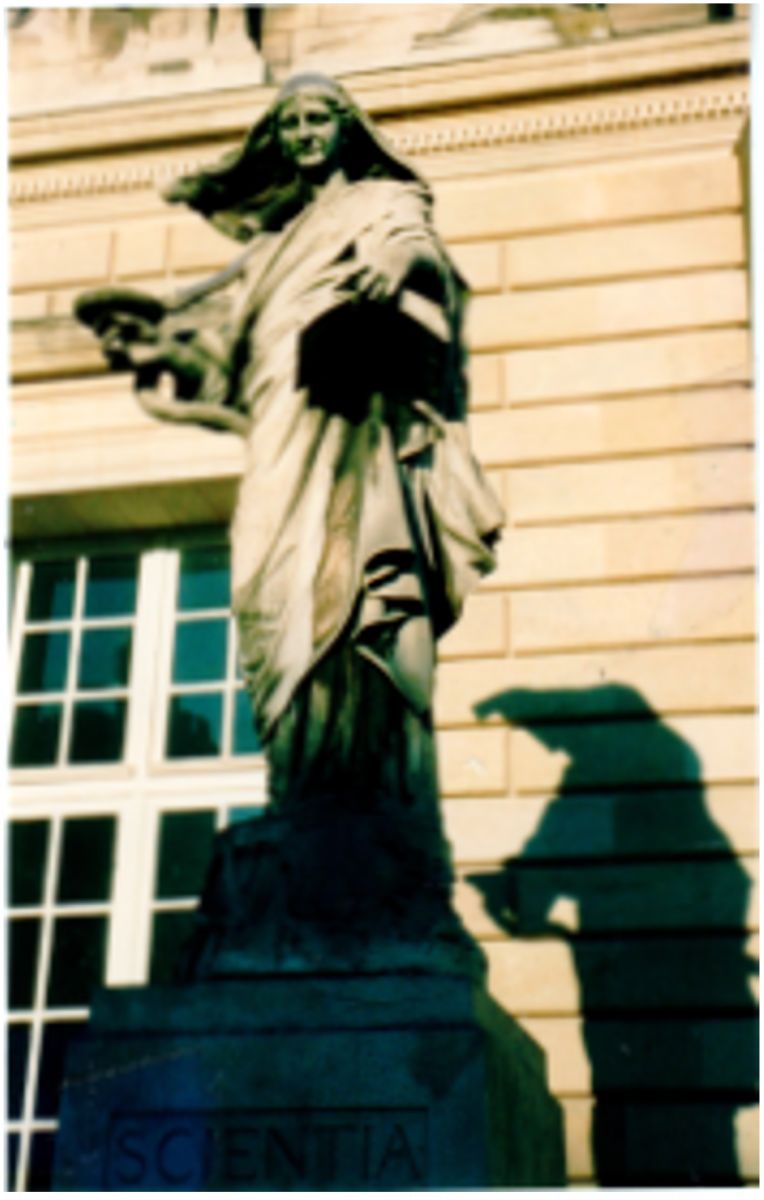
The Goddess Scientia, a book in one hand, a cup in the other,
from which a serpent, the timeless symbol of healing, sups.






Leave a Reply
You must be logged in to post a comment.