
THE MANY MASKS OF PIERROT
The smile was as fixed as plaster, a grimace really, over a body writhing in torment. Elegant hands became tortured claws in an attempt to peel the mocking grin from the white face. The ultimate inner conflict between persona and soma was being expressed on stage with shocking impact; this was one of the high points of creativity reached on the long and wayward path of Mime excellence. The artist – Marcel Marceau.
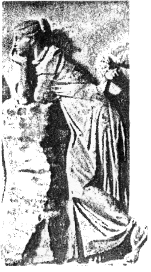
Of the Nine Greek muses, the fifth, Polyhymnia, is the Regent of Mime. She features in statuary in a gesture of repose, often with a finger to her lips – a solicitation to silence. Mime is indeed the silent performance art. Being the fifth of the Nine Muses, she represents balance. She is the central Muse, the Muse of the Rational Soul.
Polyhymnia’s son was Triptolemus (tri-ptolemy), a mortal – ourselves. He was the father of the House of Ptolemy. This cultural stream influenced Western civilization right down the ages, extending even into Egypt, where Ptolemy Soto (savior), founder of the Macedonian Dynasty, created the marvelous Library of Alexandria. (Alexander the Great was the dynasty’s most famous son.) The Ptolemys were patrons of scholarship – in a higher sense, Rational or Intellectual Soul. Our capacity for rationalization is in no small way indebted to these Ptolemaic foundations.
Triptolemus was favored by Demeter, Goddess of the Harvest; she gave him the first head of grain, and initiated him into the Eleusinian Mysteries – among which were the secrets of cereal culture and bakery!
He was told to travel widely, teaching these new arts. To assist in this, he was given a winged chariot drawn by serpents. The most celebrated daughter of the Ptolemies, Cleopatra, extinguished the dynasty by suiciding – by snake bite!
In the Eleusinian Mysteries, the neophyte learned that a particular cereal type, and preparation method, influenced the rational life of the consumer. Obsessive devourers of black brad would tend to dark thoughts – melancholia even; devitalized white bread, empty thought life.
Then there’s sweet breads with their happy ideas-based; and mixed grain with its propensity for muddled thoughts. With bread it seems to be a case of different kinds for different minds!
Mime was perfected in the Greek theatre because all dialogue was given by chorus, and not by the actors themselves. Each player wore a mask (still the paired symbols for theatre today) designating a specific character – and the expressions on the masks were fixed.
A comic character of Greek Mime, one who becomes a victim of a tragic event, would express the same visual contradiction as that depicted by Marcel Marceau above – an emotional ambivalence. Dramatic force was achieved with exaggerated and symbolic gesture, creating a language of bodily movements of universal recognition. Slumped shoulders the world over express dejection; the arched neck, aggression – and the pelvis pushed forward has erotic overtone (undertones?). Greek theatre brought a high degree of subtlety to this postural lexicon.
Roman-stage art continued the tradition; Mime flowered with secular themes and humor – a common feature being anti-authoritarian satire – or a general reversal of existing moral and religious codes. It was for this reason that, with the advent of Christian power into Europe, most theatrical forms with an entertainment value (as opposed to religious instructional dramas) was banned.
We all know of the new blossoming of liberal thinking – the new Rationalism – the Renaissance. Secular theatre was dramatically re-born in the form of the immortal characters of the Commedia dell’arte.
Robust Italian audiences delighted in the antics of Pierrot, Columbine, Harlequin, and that scandalous scallywag, Scaramouche! Although extremely popular in Italy, the Commedia advanced to a truly great art form in France. This was largely due to the language barrier – so many of the plots and dialogues had to be presented as Mime by the traveling Italian players to their French-speaking fans Most of the Italian names assumed their Gallic counterparts; for example Pedrolino became Pierrot.
Gordon Craig and other leading lights in latter-day theatre schools insisted on a major Mime element in their teaching program. This ameliorates stiffness – when the message has to be conveyed with the body only, suppleness is essential.
The late, great Mechtild Harkness, to whom this book is dedicated; she of European, American and Oz speech and drama teaching fame, was a committed advocate of Mime, and its correlative, choral expression.
France is the home of European Rationalism, with its philosophical, if not sophistical, disposition; represented by luminaries like Descartes and Jean Jacques Rousseau. Mime is a visualization of thought images, always containing of course an artistic element. Concepts, complex and simple, are expressed with articulated flourishes, symbolic costuming, but only token sets – in all, the human body, the artist’s instrument, remains paramount. Mime is Thought made Visible.
There were 12 major character types of Zanni – or servant clowns – in the Commedia dell’arte; representing the 12 Aspects of Human Nature. Pedronella, Pierrot’s unrequited lover, has good-hearted by mindless simplicity. The opposite, Harlequin, lacks compassion, but is laser-witted.
We have the perfidious Pulcinella, who migrated to England as Punch, the child-abuser, known for his penchant for throwing the baby down the stairs – and they show this kind of thing to children!
The Zani wore masks in the Greek tradition – often half masks only – but unlike the Greeks, they were expressionless – giving yet another imponderable dimension to their artistic valency.
Tabarrino had a metamorphic hat, which could be twisted, punched and folded to accommodate his chameleon ability to change character.
Tartaglia was the archetypal coward – his mask, huge glasses.
Pierrot’s melancholy mask was merely white face paint, he represented the eternal victim in life. His costume was innocence-white, a quality further emphasized by this youth, honesty and sincerity. In short, Pierrot, the most popular Zanni of all, was a metaphor of the virtuous Ego, that which makes us truly human. He was a character free of the duplicity so prevalent in French society of the 17th and 18th Centuries. Pierrot was an image of future man, one which has continued to inspire many modern theatrical characters; he may have changed in form, but not in substance.
The great 19th Century Mime artist, Jean Gaspard Deburau (French!), was a Pierrot; as seen in his shattering portrayal of a man trying to escape from a cage – a poignant allegory which plucked the lyre-strings of recognition within the souls of those privileged to see him.
Silent movie audiences saw Mime on yet another level – after all, the actors could not say anything! Charlie Chaplin and Buster Keaton are unforgettable as Pierrot tragic-comic types.
However, the greatest mimetist of all (Viva la France!) is Marcel Marceau. In his famous Bip, we meet Pierrot yet again – white faced and all. Ironically, when Bip ‘plays’ the violin, he creates a more intense visual reality than a real violinist! The hands become dramatic kinetic sculptures, creating music where there is none.
The final six Zanni provide further, at times subtle, insights into human nature: Columbine (‘little dove’) is the saucy one, the temptress; Scaramouche is the braggard, strangely unmasked, but dressed completely in black; Scapin is the fool, with long feathers and wooden sword; Brighella is the bearded bumpkin; and finally Pantalone, the solid, worthy Viennese merchant. These 12 are indeed the Maestros of Imagination.
And speaking of imagination, the key component of Mime, said Emile Jacques Dalcroze, Swiss-French (sacra blue!) founder of Eurythmics in the early 20th Century, is imagination. He also said that the more varied the physical activities a person masters, the more imagination s/he will have access to (schoolteachers take note). And Emile should now, Eurythmics Heightens the imaginative faculty by creating a kind of Mime to music; different from dance, the note values are expressed by the movement of feet and body – and time values by the arms and hands.
This is quite different from the movement art initiated by Rudolf Steiner (Australian!?) at about the same time – although the name of the art is almost the same – Eurythmy.
The artist in Eurythmy expresses, as well as tonal values, the sounds of speech itself. The remarkable human voice is the microcosmic expression of the silent sounding of the universe – the Word, in the John sense.
Sounds form specific air configurations, these are made visible by the artistic movements of the Eurythmist to the recitation or declamation of the speaker. The important thing is the veracity of the ordained movement to its sound – especially through the upper limbs. Eurythmy is mandatory teaching in Rudolf Steiner schools all over the world.
Conveniently, the Nine Muses are divided into three groups of three; the triune to which the lovely Polyhymnia belongs is the mneme – the three ‘memory’ or Mind Muses. The muse below Polyhymnia, Urania – the Muse of Astronomy, provides the aegis for Imitation. This faculty can be observed in small children – even animals are often good imitators. But Mime is more, much more, than imitation.
Thalia, she who resides above the Muse of Mime, is the muse of Eurythmy. Imitation expresses the Body, Mime the Soul, Eurythmy the Spirit – this trichotomy, this Mneme, a movement miracle, is a very high supersensible principle indeed!
The many faces of Pierrot have been a perennial mirror to Western culture. His countenance may change, but his essence remains the same. Pierrot’s humor and moral rectitude have played no small part in removing the fixed smile of European deceit for the last 300 years. He has helped reveal the miracle of Individuality beneath the mask.
Polyhymnia – take a bow.
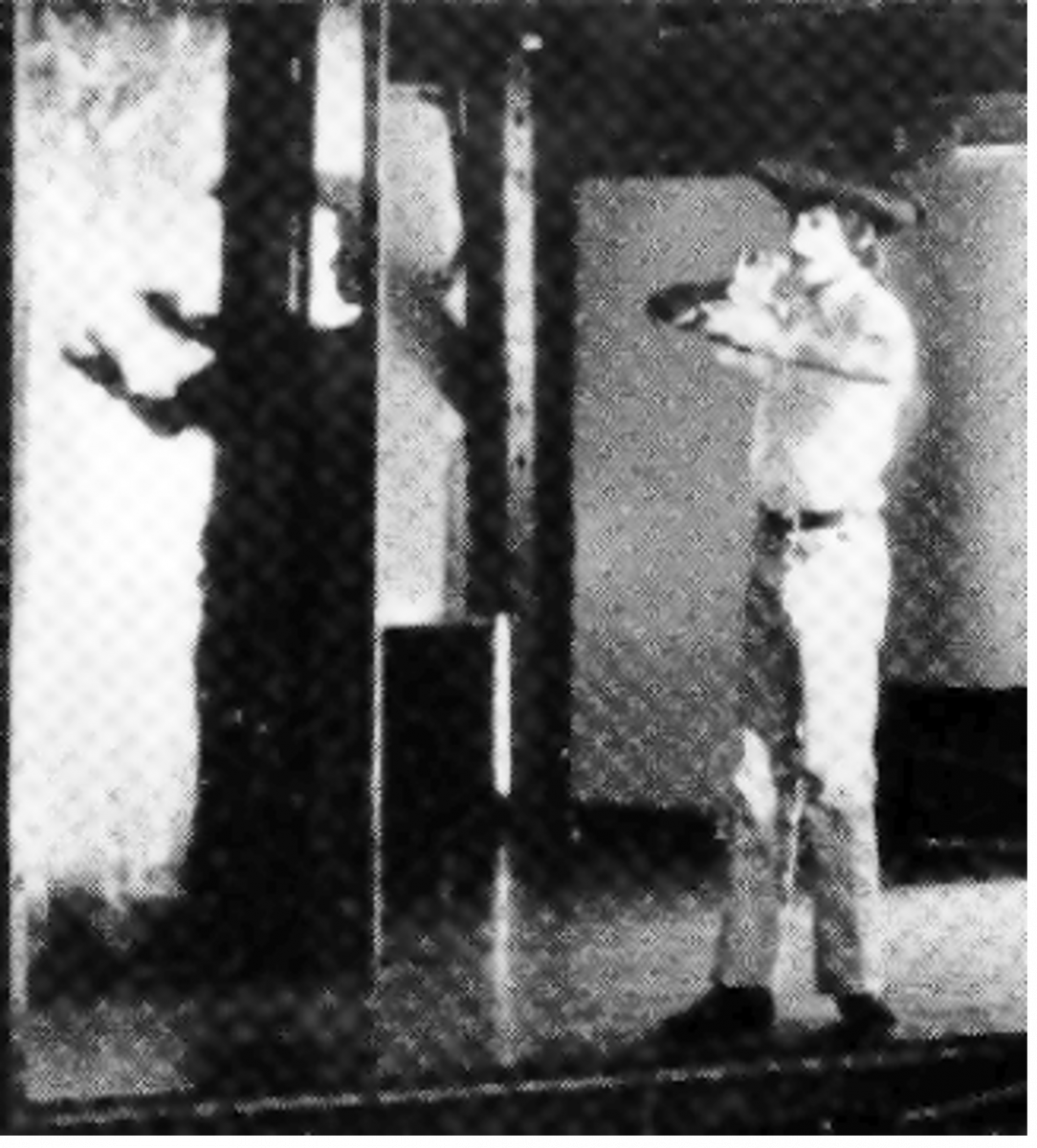
One of the author’s students; adding new spirit to an old art.










Leave a Reply
You must be logged in to post a comment.