
AN AVIAN COLLEGIATE!
“In a way the teaching profession is like a large aviary; teachers can be characterized as various types of birds. This is not to demean them in any way, merely to isolate and study the well ~ or should that be feed tray? – from which they draw their disciplinary prowess. In the most liberal terms, there are 6 kinds of disciplinarian: Mother Hen; Hard-working Wren; Far-flying Frigate Bird; Scintillating Hummingbird; Mellifluous Lyrebird; Alert- eyed Eagle.” Chairman James paused.
“Naturally a teacher can be more than one kind of disciplinarian (good teachers are usually many- faceted). This avian list is not definitive, another commentator attempting to allegorize this subject would arrive at quite different imagery. The 6 qualities are however the foundations of control – all aspects of human nature upon which good discipline depends are in some form or other fauna within the 6. Just as every primary child is dominantly one or either Temperament, so too is every teacher dominantly one of the ‘birds’ above – I shall explain!”
Ms. Uncial was sketching now – was that a chook she was drawing? James glanced over but continued “Now I ‘d like to ask someone from the audience to come up and describe the first – the Mother Hen, the Protective.”
Anna began to rise, sat down again, and when it appeared that there were no other volunteers, squeezed past M.s Uncial’s little table, squashing the wafer- thin journalist against the wall. She apologized profusely before beginning “Ahem, I believe good order to be obtained by recognizing an important 3-fold law of education, this is: Veneration for the child’s Past (a conviction in its pre-birth existence) – Protection for its Present – and Optimism for its Future (Ditto but read ‘post-death’.) But most important of the three is Protection for its Present.”
Anna ruffled her feathers, regarding her audience as she might a clutch of chickens.
“Children must know that they are secure, that there is an adult presence that will defend them and attend to their needs, whether physical or emotional. The ‘Protective’ discipline is in large part based on attention- to-detail. So much bad behavior is caused by neglect; the teacher misses things, like whether a child’s hands are cold, resulting in a kind of semi-aware misery, followed -possibly by the sulks. Or he might not see the furtive looks on his small charge’s faces as they run under the building (possibly too busy gossiping to an attractive colleague). The Mother Hen misses nothing, her school life is totally given over to the protection of her chicks.
“The Protective teachers have less accidents among their children. They notice if a hopper window, opening as it does over a set of stairs, will one day make steel-edged contact with the head of a child. The unconsciousness of a teacher of the child’s environment, right down to not noticing that the crayons are dirty, will result in chaos of some kind. Er, is that the kind of thing you meant?” said Anna, wiping a film of dust off the lectern with a cleaning rag she always carried up her sleeve.
“Yes – and thanks for that – and the input too of course! We must also be aware that, depending on the children’s ages, too much Mother Henning – ha, ha – can isolate them from the real world. This disciplinary factor tends to operate on an incremental scale, with more (especially physical) ‘protection’ needed for younger children; more emotional protection for older – especially in the fragile soul-world of the high school – er, that’ll be all thanks. (Wait for Protective Anna to return to her seat – oof! clatter! ‘Oh, I’m so sorry, let me pick those up for you – here’s your pad …)
“Now where was I? Oh yes, ‘unprotected’ children experience a creeping sense of vulnerability – a furtive angst; a sneaking fear that the world is potentially harmful to them. And so it is, thank heavens for the sense of protection exhibited by most teachers most of the time. Not like the lot I saw on the way to the Conference; a class was ‘walking’ from the school to a nearby playing field – instead of an orderly but informal stroll, the children had their leashes slipped and became a ragged mob, some racing ahead, some dawdling behind getting up to mischief among the neighbor’s gardens. Others were even playing ‘chicken’ (An apt name in Mother Hen terms!) with passing motorists – with others not even noticing the passing motorists – SCREEEEETCH!!!
“Everyone was at risk, the children of course; the garden owners peering hard- eyed from the slits in the venetians; the school, whose reputation was being demolished; and the teacher who, if something went tragically wrong, could (and should) lose his job.
“Another aspect of lack of protection and hence uneasiness, is when a teacher, in an imperious tone asserts ‘If one child speaks, the whole class will not go swimming next week.’ The children feel exposed yet again because the agenda can now be set by any child who doesn’t want to go swimming next week! A patently absurd pressure-tactic by the teacher – delivered in that stentorian, highly articulated, and pompous tone ‘You people will line up over here …’. This method has the ethical integrity of the Nazi reprisal system – many pay for the deeds (mis or otherwise) of the few. This is unfair, and the class perceive it to be so, responding with the kind of rebellion unfairness always provokes. It is a device to throw the blame for no swimming next week on the child, when in truth it’s the teacher’s fault, who probably unconsciously doesn’t want to go swimming anyway!
“A major benefit of the 7-year Class Teacher period is that the children sense this sustained…
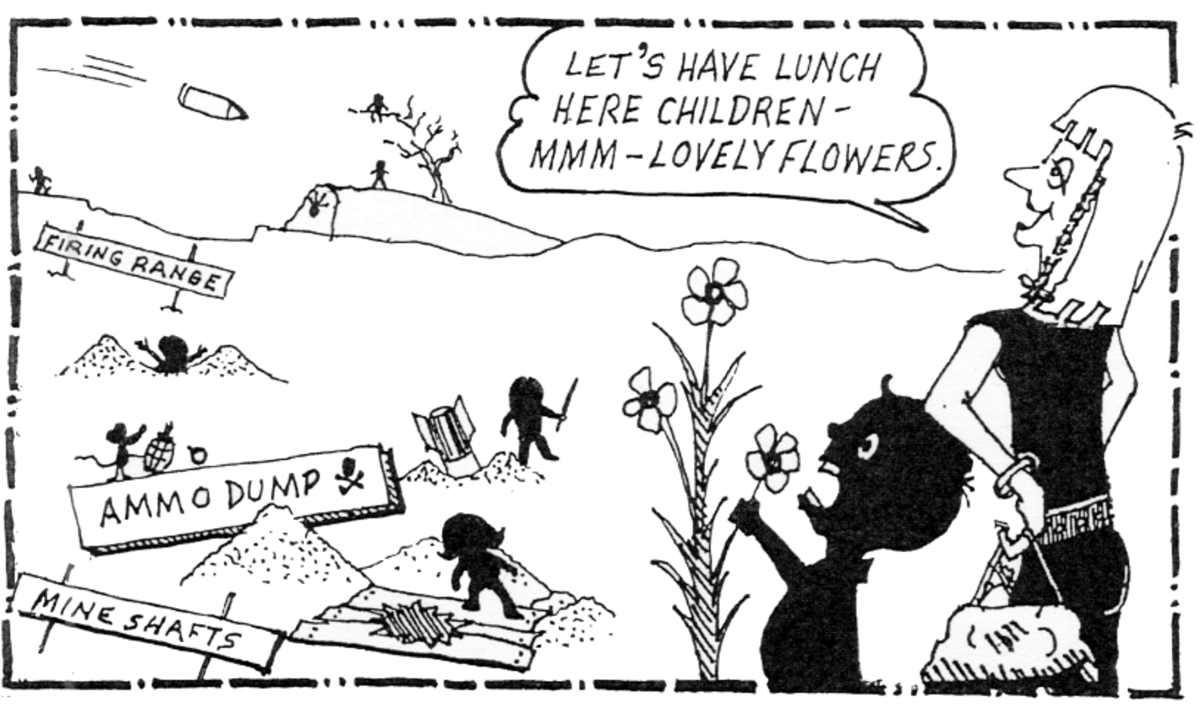
…protection, and can unfold in a healthy way beneath its mantle of security. For the child in a class where the teacher is blithely unaware of the ‘protection of the present’ factor, the 7 years can be a horror journey of anxiety; perhaps being terrorized by a bully, or ‘allowed’ to suffer various ‘accidents’ which could have been prevented through the eternal vigilance of the teacher.
“In one extreme case of Mother Henning, a teacher with a group of children was being intimidated in a country town by a group of the local teenage ‘good ol’ boys’ – shades of Easy Rider! So, in the spirit of protection (desperation actually), he bopped the ‘leader’ of the yokels on the jaw! Well anyway – cough – perhaps we should move on to the 2nd ‘bird’ of discipline, Hardworking Wren; the egg she hatched may have been a cuckoo – even at birth much larger than its surrogate parent. Miss Silver, can you outline the qualities of the teacher whose discipline is based on sheer hard work and unbending will?”
The very dignified teacher of many moons made her way to the front, she was not pleased to be interrupted, as she had been preparing a spelling list for her class next day. ‘Time is of the essence.’ she would inform her less industrious colleagues on any pretext.
“Thank you, Chairman Boanerges; now my theory is that a lot of poor conduct is caused by lack of effort – let’s call it laziness – of the teacher. They go home from school, plonk in front of T.V., grudgingly scribble a few preparation notes before bed when they can hardly keep their eyes open – arid wonder why there is a full-scale revolution in class next day! The teacher must have more quality material for a given lesson than the children can possibly do. These active little learners must feel that they are irresistibly drawn along by the urgency of their education. They must feel not only a sense of achievement at the end of the lesson in a job well done, but a delicious exhaustion as well! They are indeed little cuckoos – with huge learning appetites!
“A hard-working Main Lesson, and hence a harmonious one, might go something like this, let’s take geography: The first element in the learning day is the morning verse, this triggers the Will, working through the power of year-long repetition; Next a song or poem, perhaps from the lesson content. This tunes the Feeling life into the lesson; Then a quick quiz on material l earnt so far. (I’ve just written out a spelling list for this section.) Here we call in the 3rd aspect of the soul, Thinking. Then today’s serial of the long-running story containing many of the facts to be empirically taught in the following segment: which is – The Giant’s Breath, 5 Winds of Australia; then we draw a wind-pattern map in color; for those that finish that, a small research project on wind use – what? It’s time for playlunch is it? Well, a quick song to end the lesson – how time flies!
“I hope I’ve made my point, both busy teachers and children haven’t time to get up to mischief when the pressure is constantly on. Children actually love to work (providing it’s varied and interesting) and are happy in school when doing so. Of course, some classes are initially obstreperous even when plied with work, so young or learning teachers must set realistic goals. ‘Yesterday the children were unacceptably noisy for the whole lesson – today I will aim for 5 minutes of silent work – or peace at least. When this is achieved, I will try tomorrow for 10 minutes – and so on until the time comes (surprisingly quickly) when I can play the class like an orchestra – allowing a short time for hijinks – another for perfectly silent work – yet another for a pleasant subdued working atmosphere.
“In one school I observed, which had graded classes based on academic prowess, the ‘dumb kids’ spent much of the day wandering around doing menial tasks, like gardening – and they wondered why many of them became delinquents!
“One way to destabilize teachers is to insist on them attending endless enervating meetings after school and in the evenings. This ‘hard work’ is counter-productive, draining the attendees emotionally and physically. The worst however is the pushing aside of precious preparation time; in meetings I often plan some activity, like drawing or craftwork, to productively fill this mostly unnecessary ‘windbag’ time. When administration over-rides the teacher’s creative work, the children sense the unhealthy imbalance and play up accordingly. Ironically the meetings, which are ostensibly designed to bring order into the school, actually create chaos! Take this conference; how many people have to teach tomorrow?”
“Thank you, er, perhaps there’ll be time for questions when we adjourn.” The chairman had briskly stepped in front of the senior teacher, now well into her stride. She withered him with a steel-rimmed glare and returned to her seat – and her spelling list!
“Now the 3rd disciplinarian is Masterly Frigate Bird – this gracious creature lives its life on scything dihedral wings, sculpting the wild sea winds and travelling great distances. In short, these birds derive their authority because of impressive skills.
“And the children admire teachers who have developed a strong skill base. I remember one instance where a maths teacher in high school was regarded by the students with, at best, indifference. That is until the rumor was born (hatched) that he was purportedly the best maths teacher in the State. How this was arrived at I can’t recall! From then on, his path was smooth; being afforded the respect due to such a ‘quiet achiever’. On another occasion … but I must remember my impartial role. Could someone address us on the subject of Discipline and Skills?”
Curly came out this time, in a no-nonsense sort of way; his brow was furrowed in recollection- as he began. “A fellow teacher saved my bacon once with a primary class I was having difficulty with. I was a student teacher and could not find the measure of some of the scallywags. An experienced colleague saw (or heard!) my dilemma and just happened to mention to the class that I had helped him move furniture on the weekend (which I had); and how incredibly strong I was (which I was) – a fact which had escaped their notice. The attitude towards me changed immediately – the children began speculating whether I was as strong as someone called Arnold … I forget. (I was not – but I didn’t let them know!) Actually, this same teacher used to hear the fracas and agonize whether to rush in and intervene. I’m glad he didn’t, I had to master the situation myself – a kind of Initiation by Insolence if you like.
“Naturally this conviction in the children that the teacher is skilled can span a wide range of faculties; many children debate the simple postulate of who is good, better or best in the teaching fraternity -with no help from us! We must enlighten their minds with ‘Good at what?’. One teacher may speak very well; another might tell the most exciting stories; yet another may do fabulous blackboard drawings. A teacher- education program where evident skills are developed – most important of all; speech, painting and eurythmy – pay endless dividends. However continuous skill-development after I graduation I is equally valuable,
“The competence and confidence of prowess can compensate for a lack of professionalism in other areas. For ·example with limited knowledge of child-development or general classroom skills, a teacher may enthrall with a display of say mechanical physics. Her skill with machinery, levers, and pulleys will have a car lifted up into the trees; the whole class balanced on a seesaw by only one child; lift a huge rock with a lever, and so on. ‘That was a great lesson!’ they enthuse later – based almost exclusively on the inherent capacity of the presenter.”
Curly leaned on the lectern for a moment of silent emphasis – then it collapsed! Chairman hurried around inconsequently mumbling something about ‘…getting a man in to fix it …’; but Curly was already on the job. He always carried a multi-purpose army knife and was tightening screws, cutting little spacers, and adjusting the rocking. “There, that’s better,” he said banging the now-solid lectern alarmingly “all teachers should carry a knife like this – with the children (and colleagues) borrowing it all the time, you use it at least a hundred times a day.
“You see, skills are synonymous with freedom. At its highest level, self-discipline makes you free. There are two teenagers at the swimming pool, both want to attract the attention of the local belles.
“Difficult children should be the concern of the whole College of Teachers.” Rudolf Steiner; Stuttgart, 1920.
One has learnt high diving; he climbs to the loftiest board – flies into space and slips smoothly into the water like a javelin. The other boy idly flips through a magazine. The first is a freer individual because he can do both activities at will.
“And skilled teachers are more effective, and hence liberated, beings – in whatever areas they choose to concentrate their skill-base. They are also more likely to maintain better discipline. Did I mention self-discipline? How do we encourage this in children if we expect them to respond like automatons to- every barked instruction from 7 to 17 – and then wonder why they don’t show any initiative, having to be led by the nose along the learning path! A path probably regulated by bells, like a prison. There is no better preparation for life than calling on these slumbering forces of self-discipline by eliminating the school bell. From primary age on, the Etheric or Timely Body is itself being liberated – the children should merely be told ‘The Main Lesson begins at 9 a.m., and you’re expected to be there.’ From my experience, they usually are! As punctually, if not more so, than the schools that regiment their day with those infernal bells.
“Self-discipline is required also of the teacher. What a poor example it is if she arrives to the lesson late. And then wonders why co-operation dissolves. The children’s spleens, organ of Cronus, or Time, intuitively told them that at 2p.m. play was over, and woodwork begins. Instead, there is no teacher there and nothing to do. Why was she surprised when they started throwing chisels into the wall?
“Ideally a teacher is always waiting for the children when they come into class. If they regularly arrive before her, they sense the teacher’s unconscious reluctance to be there at all! And again, behave accordingly. Anyhow, it soon becomes clear to children that if their educator has little self-discipline, why should they bother?”
Chairman Boanerges stepped forward after Curly had returned to his seat, he tested the lectern appreciatively and looked up. “The next discipline type we characterize as the Beautiful Hummingbird; the smallest but most lovely bird on earth – or on the wing more like it. Hummingbirds hang motionless on jewel-like, blurred wings, sipping nectar from heavy scented tropical blossoms. Children have an instinctive need to experience their learning material elevated onto a higher soul plane through Art. Especially primary children, where the single most important quality the teacher must have is that of the artist. An artless world is for children a poverty- stricken one. Now who wishes to address us on the Artist as disciplinarian?”
“I do, and I’m already up here!”
“What?”
“Or down here at least – hey!”
“Oh, I’m sorry, I didn’t see you – er, Rosebud will share with us her insights into how art can be used to create order in a classroom. Thank you, Rosebud, – here, stand on this chair.” The tiny teacher tossed a golden curl or two before beginning.
“Chairman James didn’t leave me a lot to say, but here goes. There is a perennial need in the soul for artistic expression; some Class 7 children will muck up like mad if say the 12 Figures-of-Speech are presented in a prosaic way – yet the same little larrikins enter the lesson with enthusiasm if the content is transformed into say 12 circus characters – content which can be expressed (and very well learned) through a whole range of artistic activities, like a play; painting; cartooning; verse-writing; and even music – especially music!
“People often say ‘That’s a difficult class!’ as they make a battered-retreat – the next teacher goes in and they’re like lambs. The first had a conventional (read boring) approach; the second, a living artistic one. Classes are not difficult – teachers are! But then one must be careful that an activity is really artistic, and not just vapid fantasy. Some teachers give the children a rubber mold into which they pour wet plaster – sometime later, out jumps a frog! He is painted green and bingo! A very clever and highly finished product. Alas the whole exercise fails to draw from the deep well of the child’s artistic soul. They feel a nameless frustration at this artistic hypocrisy ‘Darling, did you really make that!?’, and creeping cynicism takes hold, its cold fingers provoking the child to regard school as ‘Dumb!’.
“How much better if they model the frog themselves in clay or wax, expressing their own unique formative forces – true self-expression. Often a stunning breakthrough can be made with the class delinquent (usually a reject from another school) by finding her artistic reserve – and tapping it. She may find to her surprise that acting is more fun than garroting the bus driver! You know what I mean.
“Even humor is a kind of art form, so many difficult children can be reached by humoring them. There is no better grist for the rebellious mill than the ‘galloping major’ teacher with a soul about as funny as a Stone Fish – and just as hard! How effective it is to find the key to their funny bone. Laugh with someone and they’re not as likely to let your tires down!
“A teacher can weaken control by presenting themselves unaesthetically; they might offend the child’s sensibilities by wearing heavy make-up; or some nose-numbing perfume – or a lady teacher might have long, red fingernails and always, wear black, looking as if she just stepped out from behind a crypt. Children love color, light, laughter – and above all, naturalness. The human being is the most perfect artistic creation on earth – more beautiful in their own way than even the Hummingbird – Mister Chairman.”
“Of course, cough – I was just drawing an analogy. I suppose the less we interfere with perfection the better, eh?”
“Indeed ‘imaginative ‘cognition’ – imagination – is the next thought faculty to be developed in humanity’s long spiritual evolution. Children often intuit a lack of imagination as an expression of hatred; and often they’re right, the opponent of imagination is intellectualism – a loveless word (and quality) if ever there was one.
“Mind you imagination must not be confused with spiritless fantasy – the children soon treat such devices with scorn. The usual hollow images of monsters, princesses and so on are examples of this – the first is modern mischief-making with the child’s image-life; the second is simplistic and hoary, totally inapt for the complex picture-needs of the modern child. Perhaps we need another Great Debate on Stories and Content? No? Oh well, these old images were once spirit- filled, but no more.
“The artistic teacher can call on many things to enthuse the class; one I knew would come in a different hat each day to color the particular story she was to tell – another would write simple little songs with comic lyrics about the lesson content; which the class could learn very quickly – and with such joy! However, another would tell stories she ‘d written which must have been dredged from the bottom of a swamp – they always contained 1muddy 1 images. Little wonder that this teacher had discipline problems; the children’s fine sense of artistry was offended. Learning without imagination is forcing concrete boots on little winged. feet. And dress? Some people think uniforms help control the young…”
“I’ve actually written an article on that – perhaps if I pin it on …”
NATURE AND ART AS THERAPY
Dealing with Discipline; before it’s too Late!
After the shivers of horror have subsided following the reading of the gruesome details of the three strangulation murders committed by Rodney Cameron, a moment of reflection reveals a curious anomaly.
When Rodney was 10 years old, already a habitual delinquent, his court record included a dismissive one-liner by a consulting psychiatrist; it stated – ‘no therapy was available that would be of use to him’!!?
Surely he meant ‘I know of no therapy … etc.!
This absolutism from a discipline that prides itself on an open-minded pursuit of the mysteries of human nature, casts the shadow of indigence over the whole profession. A beautiful maxim for our so-called caring society is ‘No man shall be abandoned.’ This psychiatrist abandoned little Rodney Cameron.
Workers in all fields of childcare might differ from the eminent man’s conclusions; the therapy options are limitless, unless one relies only on the analyst’s couch. Here the already suspicious child is confronted by an unctuously smiling stranger, who proceeds to probe into the sanctuary of the subconscious with an inquisitional coat hanger. Little wonder that success with these children is most often achieved by child workers in the field.
One ringingly successful venture took on board (a buckboard actually) a group of delinquent adolescents. These were coerced into taking part in a wilderness adventure – on horseback. A day or so out in the bush, the withdrawals occurred; the awesome silence of the forest intimidated the anxious teenagers, weaned for the first time from the security of graffiti can and hot-wiring gear.
In passing through their fear, the young people experienced a new spirit of self-reliance – coupled to this was a heightened sense of responsibility, as the welfare of the horses (and each other) was dependent on them. At the end of the adventure, a reasonably well-balanced constellation of young adults emerged from the bush. So different from the destructive (self and otherwise) rabble of a few weeks previous.
On another occasion an extremely distressed child was brought through the darkness of despair; again, bush therapy was employed. This seemingly ruthless adult took the child’s hand, and a satchel of food, and strode off into the scrub. The unlikely pair tramped for hours; up hill, down gully, through thicket – and lots of other punishing prepositions as well! At first the adult had to almost drag the protesting ‘patient’; but soon the pure will to survive was all that mattered to the panting child- Any small kindness, like stopping for a snack or a drink from a stream, was greeted with grudging gratitude – an emotion she had never previously indulged in!
Again, when they returned, scratched, and exhausted, the child was chatting happily with her new friend, her eyes shining. The little girl never went into remission; bush therapy’s like that, the medicine tends to be permanent. Unlike the addictive, uppers, and downers (stimulants and sedatives) so often given to children as a gratuitous gesture to their psychic pain.
Perhaps the psychiatrist had never heard of ‘art therapy’ either? One 12-year-old boy was pure criminal material, an inveterate liar, thief, and social outcast. Like Rodney Cameron, his psychotic tendencies were masked by a margarine-wouldn’t-melt-in-the-mouth personality – he was a seasoned con-child. The class in which he finally found himself was the last chance before boy’s home – the College of Criminality!
In a social studies lesson, various socio-economic types were being role-played. From a previous school participation of blanket noncooperation, this boy threw himself into the spirit of creativity in the room; not demanding a glamorous role even, but acting, with uncanny insight, the part of an impoverished old lady collecting sticks in the cold winter. Acting is a kind of con too it would seem!
The kudos received, and the expressive satisfaction, was an epiphany for this boy who, with the continued promise of dramatic activities, became a valuable and, as he was highly intelligent, contributing member of the class.
Modern psychiatry seems to comprise the most mind-numbing platitudes; another quote from a ‘professional’ who prepared a report for the court on Rodney Cameron in 1974 – ‘I consider there is more than sufficient evidence to support the diagnosis of a personality disorder of the antisocial type. In his case, I think this takes an extreme form and some observers would certainly call him a psychopathic personality.’
‘Some observers’!? After two horrendous murders, even the Three Blind Mice could come up with that diagnosis!
Surely a psychiatrist must have heard of the beneficial effects of pets? (See ‘horses’ above.) A hardened killer can turn into an old softie when allowed to keep a canary in his cell. Animal therapy works – especially with children. Maybe if little Rodney had been prescribed a puppy, three innocent people might be alive today. But has our ideas bankrupt psychiatrist heard of ‘plant therapy’?
A case history details an uncontrollable child of about 9 years (the age Rodney moved into pursuit mode) who was, in desperation, sent to a small country school from a larger impersonal one. This school had a rich gardening program, with children involved in orchard work, veggie growing, bees, and flowers.
This hard-headed little boy found, after some initial discussions with the gardening tools, that he could actually grow Sweet Peas! He was hooked on flowers, graduating to prize-winning Proteas! The bad behavior diminished, and finally ceased – his eyes glowed with fulfilment as he decorated the classroom with his sweet-smelling triumphs!
Who really strangled Florence Jackson, Francesco Giliberto and Maria Goellner? Oh yes, the pitiless hands around the necks were Rodney Cameron’s all right. But the intangibles laid into the soul of the child, which are the ingredients of character in the man, are partly culpable.
Like his mother who abandoned him; or his foster mother who later allegedly commented that he should have been drowned; or the psychiatric industry which dismissed him so callously. There is a therapy for every troubled child, one just has to persevere – to never give up on them.
Is society to blame? Did we let this unhappy child stagger from crisis to crisis, ignoring all the alarm signals he so conveniently provided – like a penchant) for grabbing necks from a tender…
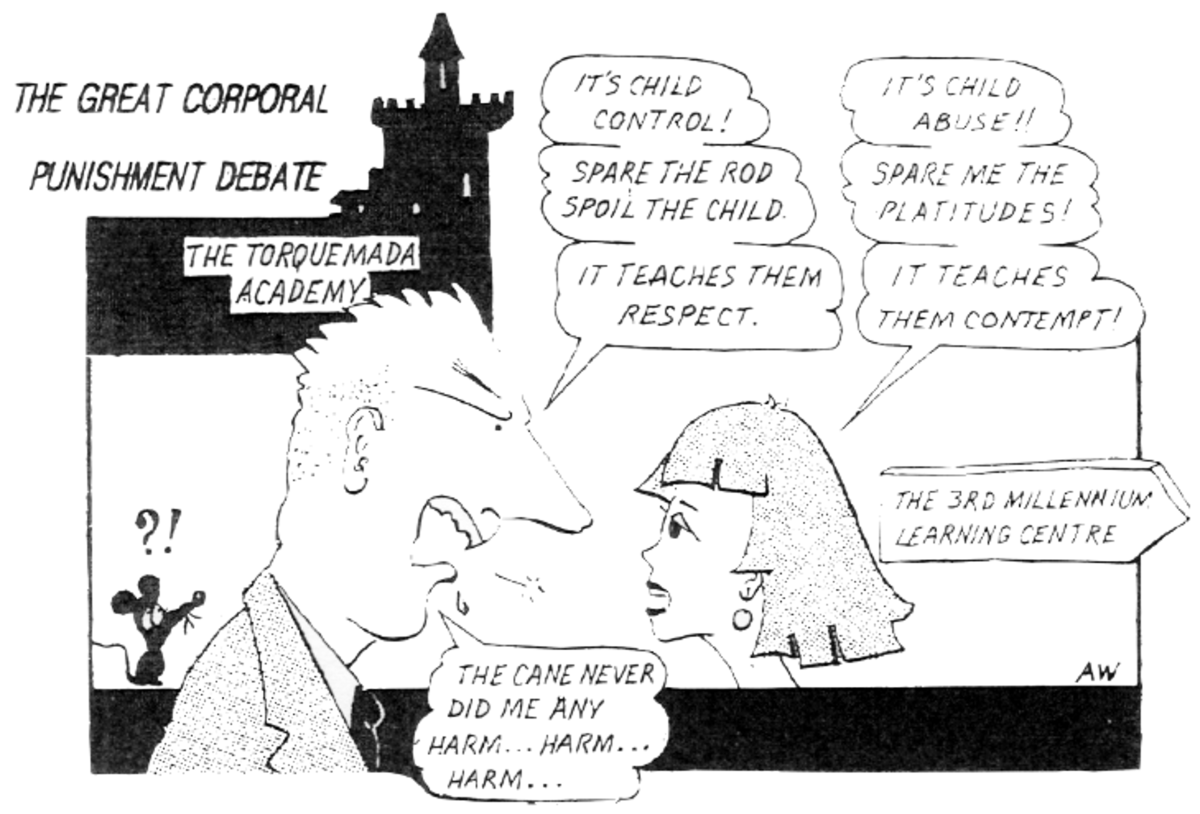
…age. Is there a mal-adjusted ‘Rodney’ in your street, school, community? By our negligence, are we incubating more monsters to grow out of the innocence of childhood?
Or is there still time to apply the therapy that really works for our disturbed children – Life – in all its healing majesty.
Important Earthschooling Notes
Copyright Alan Whitehead & Earthschooling: No Part of this book, post, URL, or book excerpt may be shared with anyone who has not paid for these materials.
Alan speaks in a very symbolic and esoteric manner in some parts of his books. Although they can be read anthroposophically, passages speaking of Atlantis, archangels, gods, etc. do not need to be taken literarily to be meaningful. The more you read, the more you will realize he uses many different religions to express ideas in a symbolic manner and not in a religious manner. His writings are not religious. In some places his writings are meant to refer to religious events in a historical way. In some places he is using religious figures (from Christianity, Judaism, Islam, Buddhism, Hinduism, Paganism, Ancient Roman and Greek Religions, etc.) in a symbolic manner. However, at no point is he promoting a specific religion or speaking from a religious point of view.
I have kept the writing as close to one-hundred percent original so you will also find that he speaks of Australia often and some spelling or manners of speaking may be cultural. Any words I have changed are presented like this: <word>.
Also keep in mind that these books are written by a Waldorf teacher with decades of experience who also studied with a Steiner student himself, so he speaks to an audience that is dedicating their lives to the Waldorf method without exception.
Because of this, all of his views are not reflected in the Earthschooling curriculum and not all of them may be ones you want to embrace or are able to use. In all of Alan Whitehead’s writings the opinions are his own and may not align with Earthschooling or Waldorf Books. In some cases, we will be updating some of these chapters in the future with additional and/or updated information.
Ultimately, however, as I read through these passages I find I can distill wisdom from even those paragraphs that do not resonate with me.
We invite you to read with an open mind and heart and with eagerness to learn and discuss.
END NOTE
Alan has presented dialogue in his writings in an expressive form, where he tries to capture the accent of the person he was with to give his writing more authenticity and to allow the reader to “be with him” in his experience. In no place in his writings is he using expressive language to make fun of or demean the speaker. So, as a person with a linguistics and anthropology degree I find this enriching and informative to me as the reader. Thus, we have made the decision to leave all expressive writing in its original form.










Leave a Reply
You must be logged in to post a comment.