
SPIRITS OF POWER
Physics Main Lesson – Physical Sciences – Class 1
The human being experiences the reality of science from the moment of entry into this physical world – as he tumbles out of the womb, he is already aware of gravity! From that time on, life is a continuum of coming to terms with the manifold laws of science.
The young child will feel physically empowered by making dams in the sandpit or balancing a pencil on its end. Formal education in science however must not begin before Class 1, and even with these tender young souls, it must be in the form of story, games and artistic expression of all kinds.
Rudolf Steiner was adamant that scientific laws per se, as expressed in the intellectual concepts of cause-and-effect and the like, should be withheld until about the 11th or 12th year, when the faculty of critical judgement is emerging. This is so especially with science dealing with the inanimate world, like geology and physics. He rather recommends in the early years, transforming these concepts – the stones, even man-made objects – into food for the soul; this is achieved through creativity and the power of invention. Turgid descriptions of how things work are indeed ballast in the belly of the child: enthusiasm-filled images, spiced with humor and artistry, are psychic bread!
Science means knowledge; knowledge of the world. As such, it takes its rightful place as one of the 4 main-lesson streams, taught in the first two hours of the day; those devoted essentially to the academic unfoldment of the child. But science also suggests the tangible as well as the conceptual. Of the 4 main-lesson streams, Science expresses, qualified by the ‘head’ or thinking forces, the Physical Body. (Language, Maths and Social Science express ego, astral and etheric respectively.)
The word physical means ‘natural’, in some ways a synonym for ‘science’. The divinely-inspired Steiner ‘curriculum’, to use the term loosely, is 12-fold – there are 12 main subject areas; this is a reflection of its cosmic origins. The 12 all relate to (except sport, the purely ‘earthly’ subject – the 13th!), and draw inspiration from, one or other zodiacal sign. The first 4 are to a large degree dealt with in the main lessons. In culturalterms, the zodiac begins in Aries – aptly of the skull or ‘head’. This subject Zodiac moves clockwise, indication gits sun implications (the sun turns clockwise on its axis).
Man’s Evolutionary Zodiac, that which is earth-based, travels anti-clock, as does our shining planet on itsaxis. In the Greco-Roman age, the sun rose in Aries – at present the vernal equinox (Northern Hemisphere) has progressed anti-clockwise to Pisces.
So we find a progression, moving from the highest learning area, Language, on through the 12 signs of the zodiac. Maths, the 2nd, calls on the astral forces of Taurus; Social Science, the 3rd, on Gemini, with its sense of ego – the study of man! And Science, the 4th main lesson stream, and subject, resides in the House of Cancer, with its Quality of Initiative Ah, initiative, the spirit of discovery – the heartbeat of science! This is supported by the sense of touch, the Cancer sense – the experience of the tangible world.
Saint Thomas was the Cancer initiate of the 12 Disciples – ‘Touch me not.’ Said the risen Christ to Thomas. The skeptical disciple evangelizes India, the civilization which reached its zenith when Cancer was the Northern Hemisphere vernal sign. Doubting Thomas might well be considered the first post-Christ scientist!
These initial thoughts provide a spiritual texture for the lessons to come, rescuing them from the pedantry of materialism – a high-hazard area in science teaching. How appropriate too is the introduction of science in Class 1; this is the Cancer year in the Educational Zodiac!
In 12 years of formal schooling (yep – there’s that number 12 again!), the pupils/students journey through a full zodiacal cycle; in this there is an organic process (neither cultural nor evolutionary), so the Fantastic Firmament Voyage begins with Cancer; the quality of initiative indeed initiates the child’s formal learning in Class 1 with divine fire.
Steiner, when referring to scientific/organic processes, like the evolution of the 12 Animal Phyla, began in Cancer – in this case with the single-celled amoebas, the definitive ‘touch’ animals.
Science, like the other 3 main-lesson streams, subdivides into 3 strands: in the case of science, there are; Physical Sciences, Life Sciences and Human Sciences. These appeal to body, soul and spirit respectively, creating yet again that all-important, that sublime balance; with each element of the child being focused in one or other lesson. In drawing up a teaching program for the year, nothing should either be emphasized or neglected – our biases should not be evident, rather should we strive to manifest the spirit of universality of learning.
The physical sciences, about which this article will eventually be about, informs first the unconscious, in infancy; then the sub-conscious before 11 or so; and after this, the conscious forces of the physical body.
All physical laws are embodied in man: the eye is a ball; the red corpuscles, wheels; the cochlea is the hydraulic system – and so on and on. When these principles are revealed to children – artistically we hope! – there is a nameless resonation in their bodies – an acknowledgement that – “There go I, I am the world.’. To draw this subtle experience too quickly up into the head, by reducing it to laws and formula, is to destroy this small, still voice. Up till the 11th year, it remains in the protected garden of imagination and play.
Main lessons awaken (to use Steiner’s term, in preference to ‘educate’) the head forces – science is the physical body main lesson. This, in physiognomic terms, manifests through the central band of the head; the face in particular. This band extends down from the top of the central brow, right to the point of the chin. It is this region that receives, and is enlightened by, things scientific. The brain is merely a monitor of the various learning-area/subjects distributed over the whole body.
The physical sciences are the ‘body’ science lessons; there are 3 regions of the face which are epicenters of consciousness for the learning of science. The central forehead band relates to the spirit/human sciences – eyebrows to top lip, soul/life sciences. That with which this article is concerned, the physical sciences, is the lower region of bottom lip to chin; this expresses body forces.
Knowing this, we don’t slip into a wrong emphasis in our teaching, thinking perhaps that physics has the same spiritual dimensions as anatomy, a human/spirit science. Of the manifold world of physics, one could never, in a mere 3 weeks, cover even a tiny fraction of the potential content. We work rather representationally.
As long as the broad areas are covered, say with one impartial example from each, then the pattern is established in observing and understanding the physical world.
A safe way to proceed is by drawing experiences from the 4 Elements. The mineral world expresses through mechanics; then there is the liquid; the air or gas; and finally heat – an element which should be approached with reserve, though not ignored. After all, Don Maclean in his immortal American Pie sang that – ‘fire is the devil’s only friend; – not God’s only friend!
Stories that the teacher creates, where adventurers are empowered by controlling their physical world through, say, mechanics, calls on the beneficent presence of a lofty group of spiritual beings indeed – the Thrones. In the cultural procession of the 9 Choirs of Angels through the first 9 years of human life, the 7thHierarchy, the Thrones, are particularly busy, if vicariously, in Class 1 – with 7-year-olds.
The Thrones are Power beings, also known as Spirits of Will, Establishment – or Magic! So magic should imbue all our created stories for Class 1 with its mystery.
The so-called ‘9 ½ year split’, when the child crosses the threshold of objectivity, is an indication of the completion of this 9-fold, 9-year Angelic dispensation. From then on, in this sense at least, the children are on their own – they have a level of spiritual independence hitherto unknown.
So there are only 3 years of elementary school which are endowed with this spiritual inflow – Class 1, 2, and 3. These are influenced, in the best possible way, by the Spirits of Magic, Wisdom and Love respectively; all 3 are denizens of the 1st Hierarchy – the highest – The Father Realm. This is why Rudolf Steiner recommended, as a fundamental thread through the first 3 years of primary, the teaching of ‘fairy’ (magic) stories in Class 1; animal fables (wisdom stories) in Class 2; and stories of sacrifice – of saints and the like – in Class 3. Thrones are Magic – the cherubim are the Spirits of Wisdom – and the Seraphim of Love. ‘When Wisdom is cultivated in an atmosphere of Love, then Power will reign down on the earth.’ So saith the Master.
So it is the Thrones – a throne is a seat of power – who are active in the souls of 7-year-olds; the children continually want to be informed on the nature of power – ‘How strong it is?’ – ‘Can the great, big Nephilim beat the clever Hob?’.
This interest in power, or strength, accords with another aspect of the 7 year nature; in Class 1 the children are unfolding, in Rudolf Steiner’s 49-fold Man understanding, the Spacial Aspect of the Etheric Body. This ‘spacial’ factor relates to the physical world; how apt then to have some of its mysteries revealed to the sensitive and as yet unmarked etheric bodies of these young earth inhabitants. 7-year-olds must inform their incipient etheric bodies of the nature of space, one way or another. That’s why they love see-saws, swings, and other ‘physics-physical’ games – play forms which subliminally whisper to the child of the eternal laws of physics – of space.
The mineral/mechanical world can be brought to the children with stories; role-play; games, etc. – all drawn from the 5 major elements of mechanics: the pulley; wheel; inclined plane; lever; wedge.
Those charming wooden dolls which climb up strings might both amuse and instruct children. Or they can lift each other using a simple rope pulley; one colleague, in the equivalent mechanics/physics lesson in Class 7, where formula are taught, had the class lift a car into a tree with pulley – though this is a bit too ambitious for the littlies!
Games with wheels are always fun – hoops, balls, rollers, skateboards – and don’t forget the anti-wheels; a facetted pencil won’t roll down a slope. This could be included in a story where the hero/ine saves a valuable cylinder from rolling away, by making it facetted in some way.
The inclined plane could provide games with springboards and riding bikes sideways up hills. One imaginative pedagogue set up a small game in the classroom, by attaching a simple cardboard trough on the wall; down this the children rolled marbles. The angle of inclination could be changed for different tolling velocities. The invisible Thrones ignited the children’s souls and they took over, the teacher becoming a mere backdrop for the fun to follow. They would stay in at lunch to extend the ‘runs’ right around the room. At one time there might be 50 marbles flying/dawdling along, jumping gaps; struggling uphill; dropping to another un below, and so on.
The creativeness and enthusiasm of the children seemed inexhaustible – ‘Yes, they’re only playing – but oh how they’re learning!’ the happy teacher remarked.
Then there’s the lever; games and stories about moving giant rocks; scales, scissors, the woomera, slings – and even the simple oar – all illumine this marvelous mechanical principle. Care must be taken not to cancel one experience out by another; the success of the marble runs was due to the fact that they were not competing, on that day, with 4 or 5 other physics games or whatever. The most impactful way is to focus on one phenomenon, and get the best possible mileage out of it.
For instance, in the story our hear/ines may have escaped their wicked pursuers by learning – after a few obligatory near-miss mistakes – how to cross the abyss on a thing log – by using a balancing bar. Later in the lesson, we all go outside – ‘How convenient, there’s a long pole – let’s play balancing. We’ll see who can walk along that fence using the bar!’
This is the age of the regency of the Archangel Michael; all of our children are, in this global sense at least, Michaelian. One of Michael’s great gifts to man is Cosmic Intelligence. How rich the stories and descriptions are when our tale protagonists use this higher conceptual power in their problem-solving.
In the balancing case, one person in the story might have observed the cheeky gibbons as they walked along thin branches (Look and ye shall see!). These extended their long arms to achieve greatest possible balance as they ran around the treetops. These long arms are of course the balancing bar. Observing from nature, in which all physical wisdom is enshrined, is applied cosmic intelligence – and the children can sense it! Michael is, appropriately, the physical body representative of the 4 cardinal archangels.
The wedge games can involve splitting timber, bows of boats (Ever tried to steer a circular boat?), wings, and screws – Archimedes’ spiral water lifter perhaps?
There is a plethora of liquid-element games. One good one, drawn from the story, involved suction. Precious water was hidden some 2 feet down a rock hole. Dying from thirst, our travelers cut a long, thin, hollow reed from the nearby dry creek bed, and sucked the water up; even transporting it to a waiting container by keeping the top sealed – ‘Look, I’m magic (not the word) – there’s a hole in the bottom of the straw, but the water doesn’t fall out!’
Other physics/chemical laws that could be explored are: condensation; evaporation; hydraulics; shrinkage; osmosis; capillary action; absorption; water level; density et al. It’s fun to add several colored liquids – like oil, turps etc. – to a bottle of water – shake it up, and leave to stand The liquids separate into beautiful laminates. Always try and include an artistic element if possible – and try it out at home first to avoid the chaos and disappointment of failure!
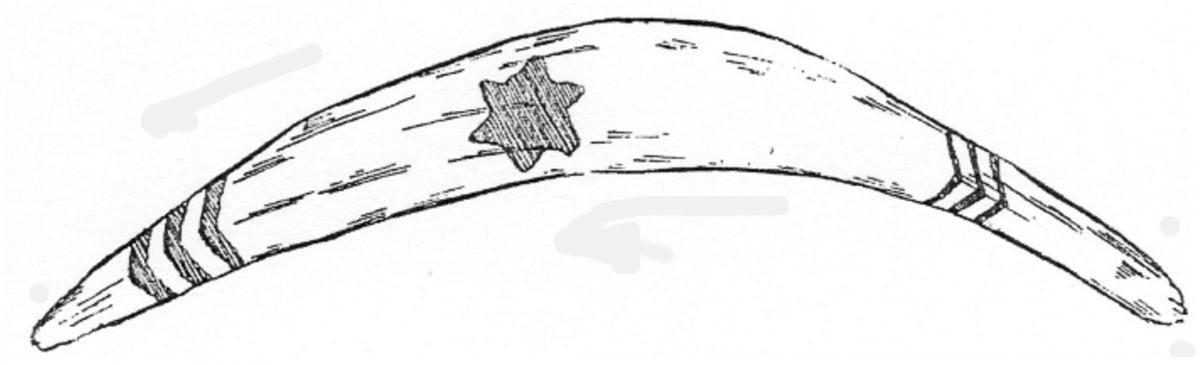
Air games are great, how about: kites; balloons; paper planes; windmills; sails; boomerangs; frisbees; parachutes – the little ones that is! How the children love these circular silk (hopefully) ‘toys’. Tie as many strings around the edges as needed, use a heavy steel nut as a weight, climb to a high launch pad – and we’re airborne!
These physics activities should always relate to the outer world, and engage the human being. They must never take the sterile science-bench approach, divorced, as it so often is, from reality.
Exercising the caution mentioned earlier, fire and heat activities might include actually building and lighting a small fire – lighting it with one match that is! Or they could burn their names in wood with a magnifying glass. Other activities might demonstrate some of the many functions of heat: expansion; contraction; melting; absorption; reflection; radiation; convection; desiccation; boiling (milk boils much faster than water); insulation – the story could have our brace and smart hero/ine effect a dramatic fire rescue using some natural insulations material. In their excitement, the children actually forget they’re learning physics – and so they should!
Thrones are power beings, through them mankind exercises power in the physical world – in short he changes it. This power brings with it responsibility. The maxim, ‘power corrupts, and absolute power corrupts absolutely’, is to a large degree true. But not if we continually bear in mind that any changes we make to the world must be for the better. If I kill the grass, and its Lilliputian community, by building a house, then the house must serve some higher purpose – say the cultivation of the arts for instance. Only then can this intrusion into nature be justified, morally that is.
There are 7 – why not?! – methods of change recognized by modern physics, there are: movement, to change the position of something in space; to open; to close; to transform or mutate; to conserve; to enlarge; to reduce. A balance could be brought into the lesson, experienced by the children only on a metaphysical level of course, by having an example of each, spread through the 3 weeks. But there is also a wicked 8th – to destroy! This is the dark Mystery of Kali. Only the gods are at liberty to destroy the earth, as only they have the lofty vision to see when something is out of its time – and hence evil. Destruction is the ultimate canon of materialism, of the Physical Body.
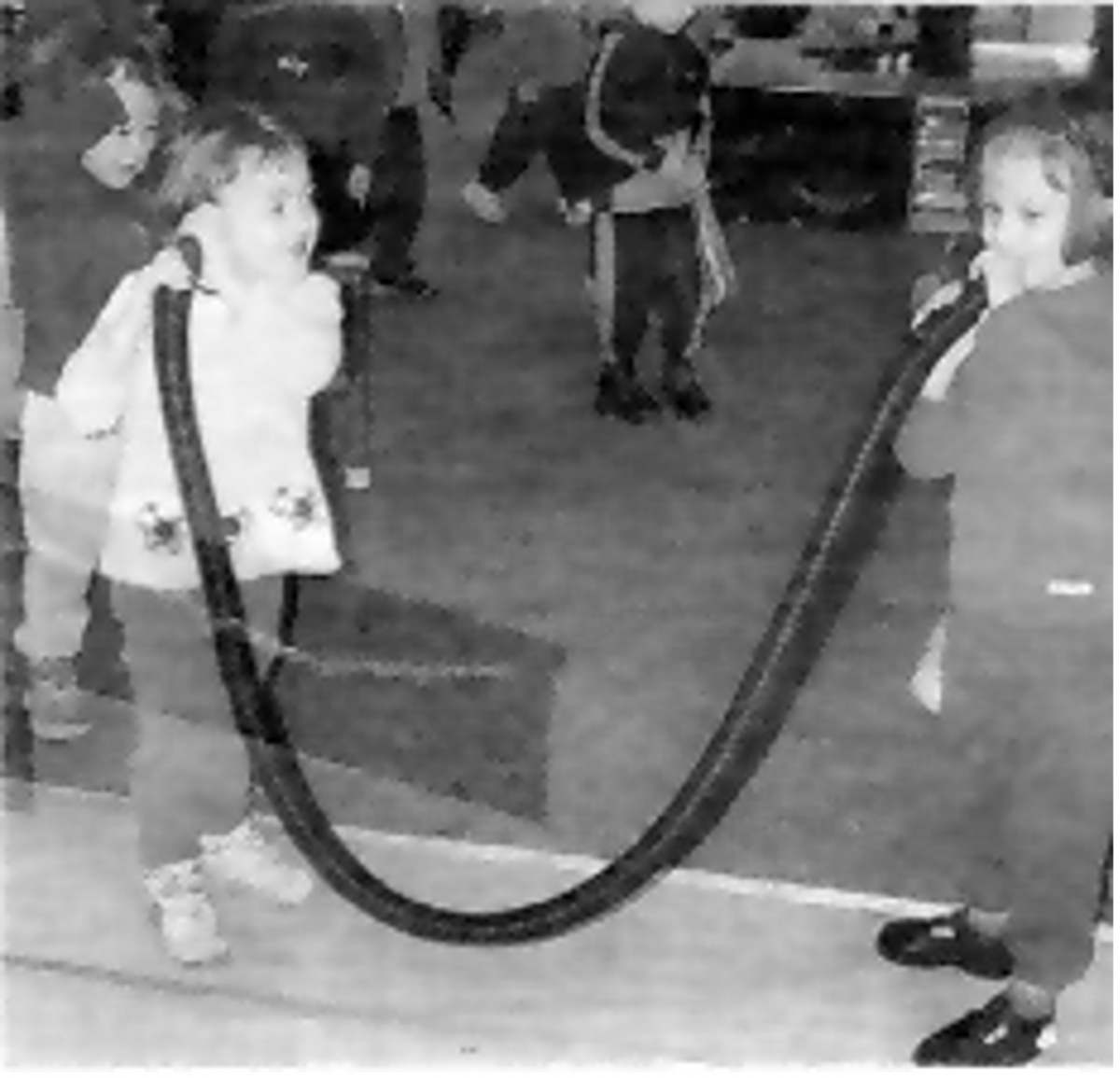
A new pinnacle in the IT revolution, the telephone tube!
This also embodies the Ahrimanic element in physics; one which lurks behind the consciousness of those who would have the temerity to change their world. Somehow we must seed the souls of our young charges with these far-reaching moral imperatives.
If as adults our children choose to exercise power over matter, we hope it is with a deep – a religious – sense of responsibility and obligation – a true reverence for creation. A Throne-inspired physics main lesson in Class 1 goes some way in achieving this.
The gravity of the pendulum is the
square root of the weight over distance of arc…
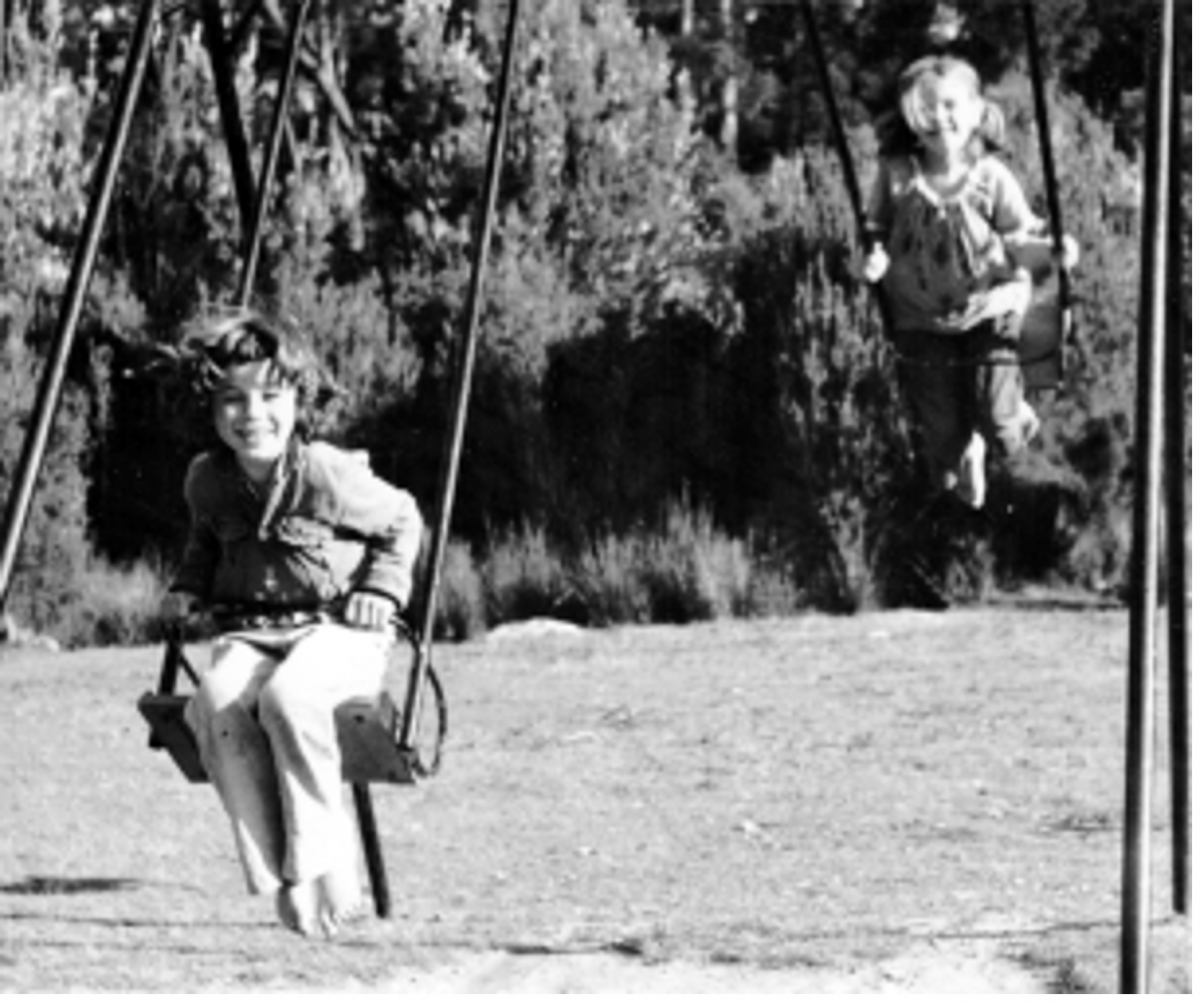
swings are not only interesting, they’re fun!









Leave a Reply
You must be logged in to post a comment.