
MY GEOLOGY TEACHER’S AN OLD FOSSIL!
Rock Cycle Stories
Physical World Middle Lesson – Human Sciences – Class 1
It was a beautiful piece of diatomaceous earth that evoked a sweet but nameless ringing on the lyre-strings of the 14-year-old’s psyche.
“It looks like a cradle for the fish.” He said quietly as he slowly turned the big lump of chalk over in his hands, reflecting on the black Sea Perch fossil encased. The science teacher glanced up and smiled briefly. From that moment, the boy’s interest in the Class 8 Petrosphere lesson unit was kindled with a new enthusiasm.
The teenager could not quite raise the image to clear consciousness, but how similar this rock specimen was to a story he was told when he was 7 years old – when he was in Class 1. Given a memory nudge, he might be able to recollect the story of Dia and Tom, the Diatom Folk. They wore smart little jackets all starched and white; and how happy they were, swimming in the limitless ocean. He might recall how they made friends with a small Sea Perch, Percy, who was sadly lost, separated from his school by Stern Storm – and how the two reluctantly left poor Perc when the call to Deep Abyss drew them down into the black depths. Percy was now lost and lonelier than ever; he tried to follow Dia and Tom, but he couldn’t find them in the dark, and without Happy Sun’s smile to warm his aching heart, he went fast asleep.
Using the eerie light of the strange abyssal fishes, like gulper and The Angler!, the two friends fund Percy lying on the bottom, in a very deep sleep indeed – so deep that they couldn’t wake him, no matter how hard they tried – and they did try! He has to be protected in that dark, hostile world, so they made a chalk cradle for him, in the hope that one day, when Great Ocean parted and Happy Sun streamed in, he would wake up and swim away – into the Sky Sea. He would of course leave behind a kind of black photographic image, his own special signature, to show where he’d slept for so long…
7 years separated the two learning experiences, but in essence they were the same. The rock Cycle Stories middle lessons were a tableau of rich images expressing the phenomena of rock-forming into non-intellectual pictures suitable for assimilation by 7-year-olds. They did not even hear the term ‘diatomaceous chalk’!
But the 14-year-old did in his Petrosphere lesson; this same story, minus the personified embellishments, was told in scientific detail of the evolution of this remarkable fossil-rich substance. He was told of how the tiny silica (white jackets) diatoms were once free-floating in the ocean – of how their crystalline skeletal forms sink down into the abyssal depths in illimitable numbers (where the lantern-carrying horror fish are – Gulper and The Angler!). these millions of diatoms created, under enormous pressure, thick, sedimentary layers of chalk. They were told how dead fish, sinking from the sunny waters above to the black ink below, are sandwiched between the sediments, where they become fossilized. The tale continues with the shifting oceans, and of violent uplifts which leave the great chalk beds high and very dry.
Dia and Tom’s saga is known as ‘fully transformed image;, where the unconscious, the will, takes in the soul-enriching content. This provides a basis for the enthusiasm necessary to receive – and redeem – the harder scientific expositions of high school. Oh if we could remain children forever, but we can’t.
The ‘man’ factor must enter into the Class 8 deliberations – ‘Chalk? What have I to do with thee?’. We study the chalk industry; we see its place in the mosaic of the earth’s crust, the Petrosphere – ‘…and we see it right here and now.’ Says the high school teacher, holding up a fan of colored chalks.
But back to the littlies; one method of presenting a Rock Cycle Story to the children, is to have, set up in the classroom, a small boulder of say granite – hopefully with detectable facial features – a little head indeed! This is ‘semi-transformed image’, we have moved from pure being, to a personified rock, as such it is taken on board by the subconscious. The rock sits…correction, he sits proudly on a special stand, one with a nice cover (don’t neglect the ‘sense of occasion’ in these little dramas!).
A spirit of formality prevails; the children come running happily in from play – ‘What’s that?!’. The teacher keeps them guessing, with an enigmatic – “Who’s that you mean, you’ll just have to wait and see.’.
When all are seated, an announcement is made – ‘We have, as you see, a visitor. Gritty Granite has kindly agreed to come in and tell us his story; naturally it is in ‘rock speak’, so I’ll have to translate. Of course Gritty will stop me if I say something wrong – won’t you Grit? …He said yes.’
The teacher then unfolds the saga of Gritty’s long journey (with some token interruptions by the little rock for effect – a teacher does have to be an actor!) from his erstwhile inner-earth home, right up to today – where he sits staring impassively at the class.
The story must still be couched in Being; 7-year-olds understand this far easier than the cadaverous concepts of natural science – ‘Granite is a plutonic rock, comprising feldspar, quartz…’ (Yawn!). Yet the facts of the story must be accurate; Gritty’s provenance is the plutonic heat realm of the inner earth, the Forge of Hephastos. His white pants, pink waistcoat and natty black bowler hat are the large white, red and black crystals in many granites. These facts give the story-creator the plot line; the discovery of suitable images for these truths is dependent on the imaginative flexibility of the teacher – on his creativity. Here the facts not only do not get in the way of a good story, they create it! Whatever, these original tales make a nourishing soul meal indeed for children – unlike the amoral, atavistic material used in many classrooms.
The images/facts slip down into the subconscious of the children on a light-path of love and joy. Children are animated by these, asking questions, pouring in their own little contributions. Some people think that because children listen robot-like to a story, mouth hanging open eyes glazed (the way they do with unoriginal, creatively indigent material) then they must be taking it in on a spiritual level – the truth is they’re taking it in on the same level as they do television – the symptoms are identical. The belief that a story must be repeated many times, in exactly the same way, derives from the (correct) practices in schools for the handicapped. These children live behind a dark soul-veil, and one way to make contact, is to repeat stories, daily routines and the like. This is insulting to the modern, Michaelian child, who lives in his stories with great, and often overt, intensity.
The positive attitudes formed in the Rock Cycle Stories lesson grows inwardly over the years, to re-emerge when triggered at 14 by the clear concepts presented in the Petrosphere lesson. It transforms into Will forces – the capacity to unite geology with his/her world view – to do something positive with the knowledge.
Because these will-forces have been built on a foundation of Love, there is inherent in the new knowledge, a moral component. Oh, if only some of our captains of industry had been taught this way; the world might not today be staring its own extinction in the face!
Of course to write such stories for Class 1, a certain amount of elementary geology must be researched; but hopefully with a holistic, rather than clinical approach. Everything has Being – the planet has Being, in an external sense, very like man.
We have a Warmth organization – the earth has a Pyrosphere. We have a Skeleton, the earth a Lithosphere – we are 70% Fluid, and our shining planet has its Hydrosphere. We are Breathing beings, and the earth has its Atmosphere!
It helps with our conviction that the earth is a Being, if we can find these significant and surprisingly accurate comparisons. This is so even with the 4 major rock groupings, all of which should, to maintain balance in content, be dealt with in this unity; here we see the formative processes of the 4 elements.
Plutonic rocks, such as granite, are created by slow cooling in the inner earth, allowing large crystals to form – the element of Fire is the formative force of plutonism.
With igneos rocks (a somewhat misleading term), Air is the creative element. Obsidian, or ‘black glass’, is shot out of the furnace of the volcano, straight up into the freezing stratosphere; this prevents crystal formation other than of a microscopic scale. At the other end of the air-spectrum, we find white pumice, opposite from its obsidian cousin in every way. Pok, Pok, Pok – little balls of pumice sail gracefully through the smokey air like Roman candle balls – little lithic pom poms which float off on their adventures on the seven seas! Both obsidian and pumice are created from the same homogenous magma; yet they are as different as two rocks can be – it’s all in the ejaculation!
Sedimentary rocks, like sandstone, limestone – and Chalk, are laid down my Water, the 3rd element. Their structure often mirrors the undulating flow-dynamics from which they came. This is so whether they were laid down under the sea, or from alluvial mud, like shale.
The Earth element itself is the formative-force which pushes the Metamorphic rocks into their tortured shapes – earth is the element that applies pressure. When an irresistible force, such as India, meets an old immoveable object, like Asia – that’s pressure! The result, large piles of metamorphic rock – the Himalayas. These rocks like quartzite (metamorphosed sandstone), and slate (ditto shale), are mostly found in mountain conflict-zones. This earth force is so great, it changes the very nature of the rock itself, its crystalline structure.
Rock Cycle Stories work well with a linking thread; like a character to whom the children can bond their sympathies across the whole unit – a loved or respected entity who could feature in all the stories, a character like, um…Menhir the rock Man! An ancient, a source of wisdom who appears mysteriously when needed by the ‘goodies’ in the tale.
The choice of this ‘rock rep.’ is unlimited; however tradition has been consistent on certain qualities these igneos beings possess. They are often miners or stone workers of some kind – or guardians! They do not suffer fools, mountebanks or parvenues gladly; they’re as short of temper as they are of stature – and they are highly intelligent. Depictions of these ‘gnomes’ or whatever in modern stories are often inept. A well-known but insulting sobriquet for one of these ‘little people’ is Dopey. This is about as far from the truth as you can get – a damaging error injected into the child’s soul.
Other devices which can be used to fill out the lesson: a work book in which the child briefly records the story with text and colorful drawings; they could make little rock people with pebbles and glue; the teacher could pen funny-but-deep rock verses – or write a Rock Song! The class might make charming rock shrines and leave gifts for the night visitors (who said they don’t?!)
Naming these rock people can be fun; a limestone rocker might be Seeay Seeoh – 7 years later, calcium carbonate receives its chemical formula, CaCo. The 14-year-old smile inwardly, and doesn’t know why!
When children respond warmly – with love – to an inanimate object, they invest it with Being, with soul; how important it is for us to encourage this for our so-called ‘inanimate’ planet. Love is a force which will play an increasing role in earth-rescue; the task of saving our spinning space-ship home will fall to our children. A good thing really, they know how to love all right – and they’re not dopey either!
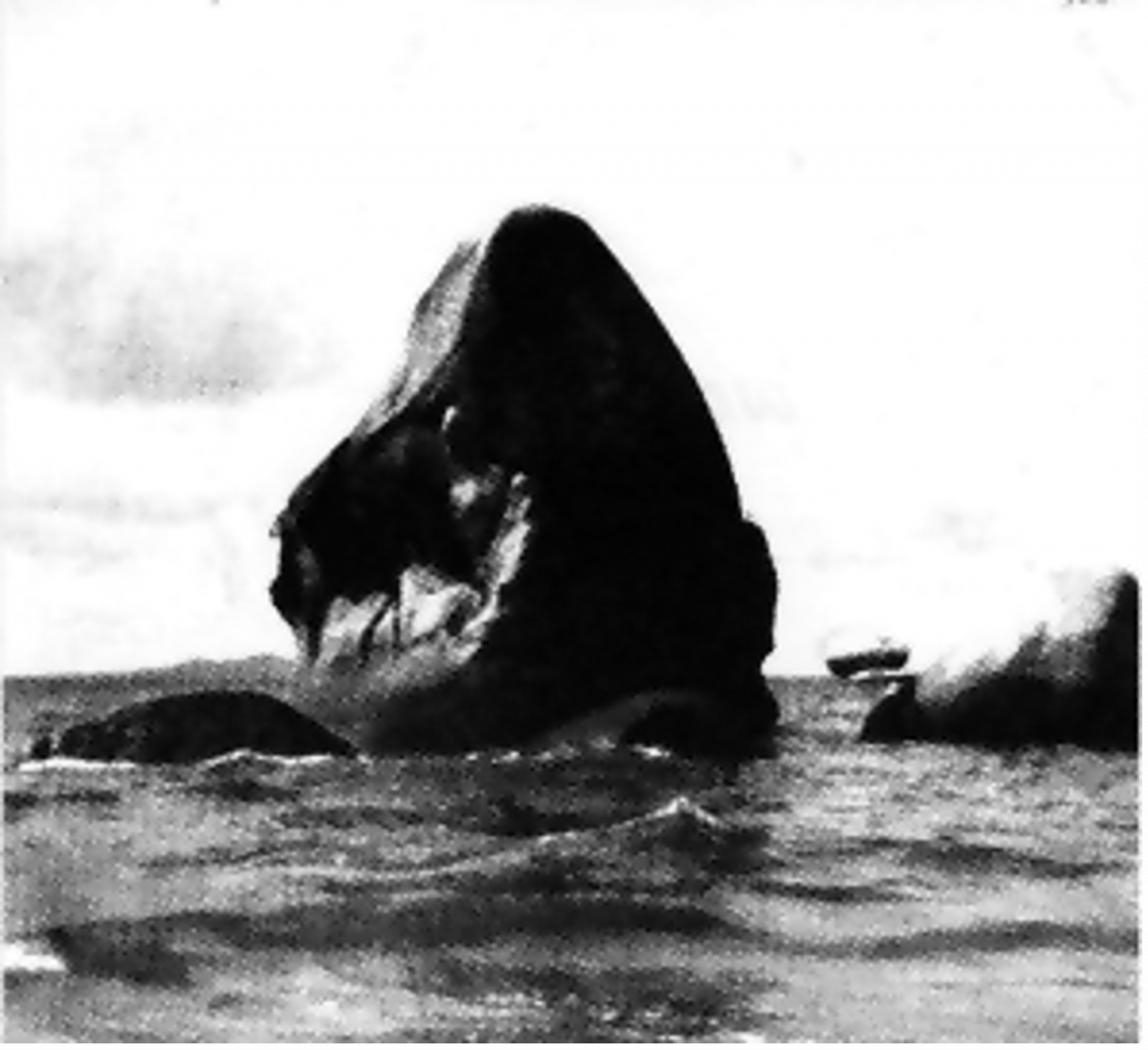
When I left my fiery home, my Mum didn’t tell me
that I’d have wet feet for the next ??? eons!










Leave a Reply
You must be logged in to post a comment.